
Last updated November 4, 2026
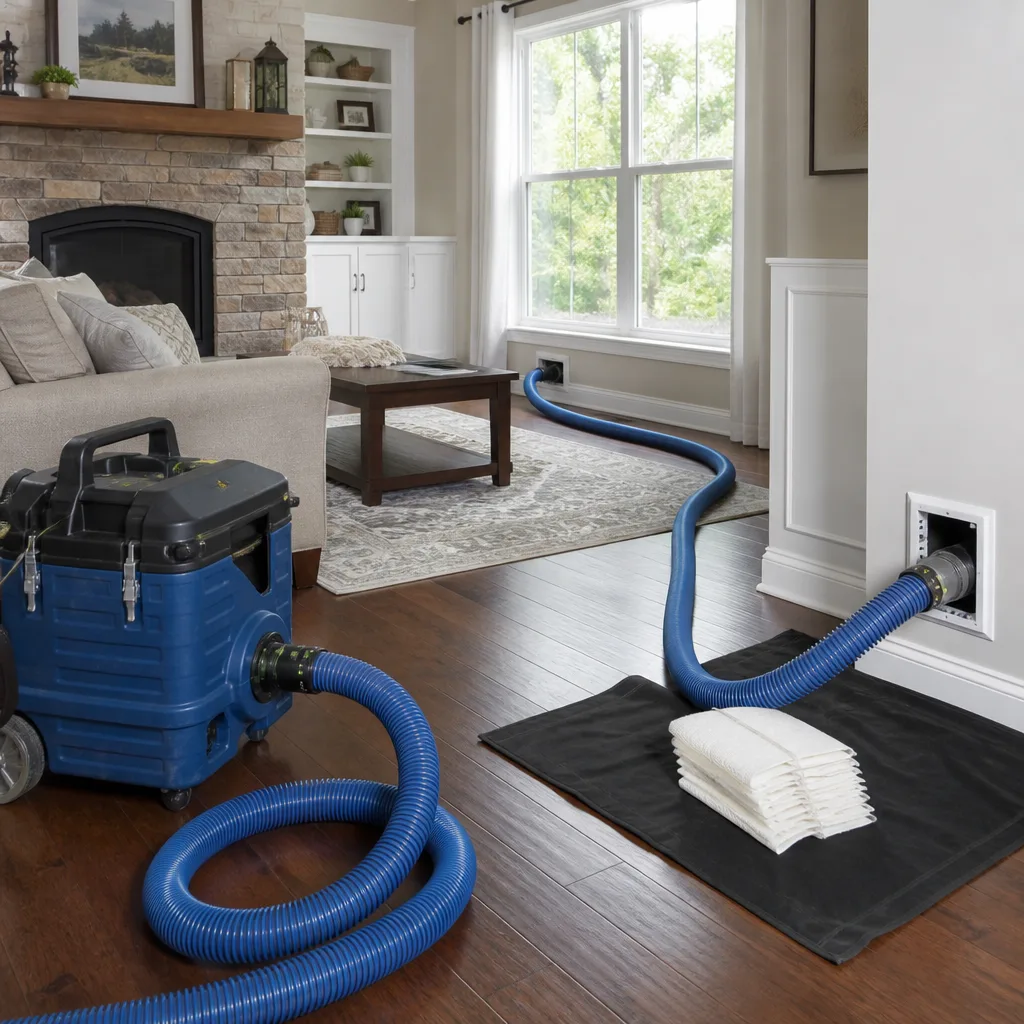 Whole-home duct cleaning
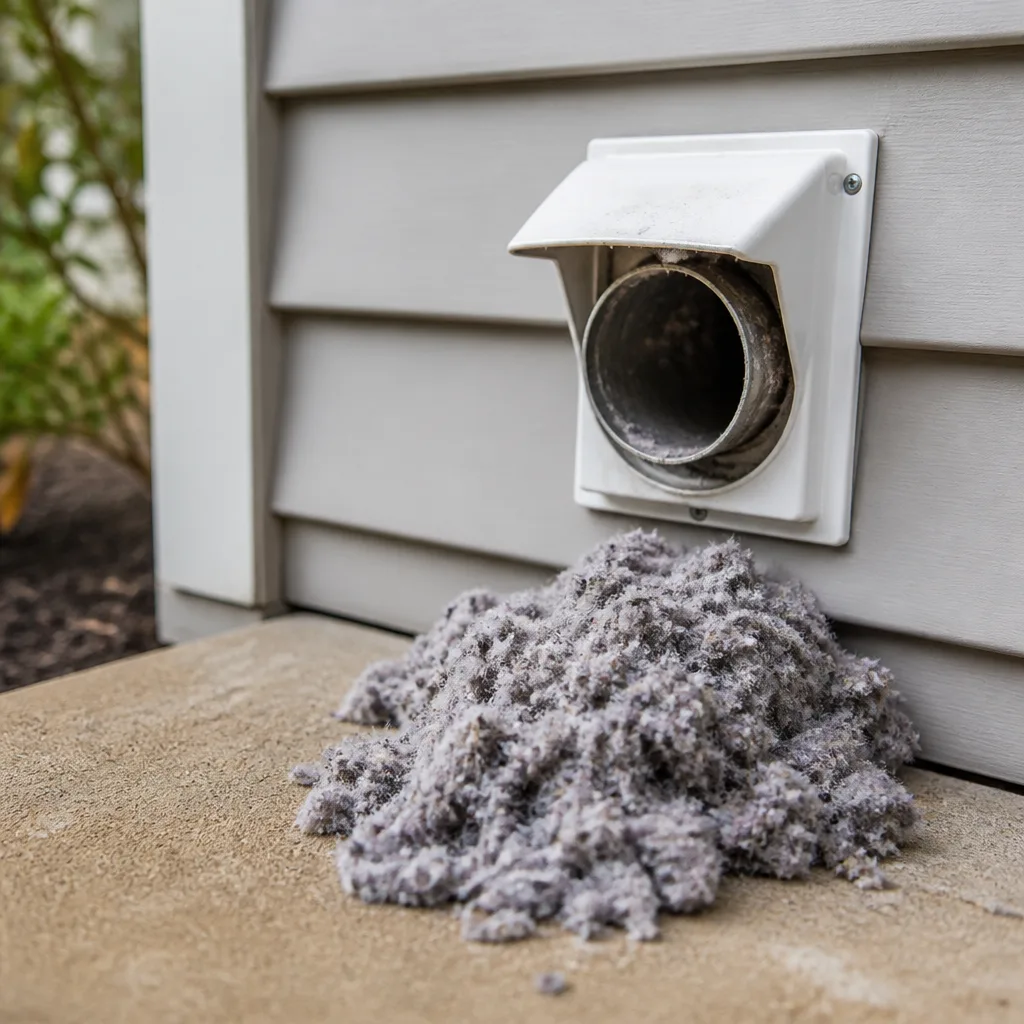 Dryer vent cleaning
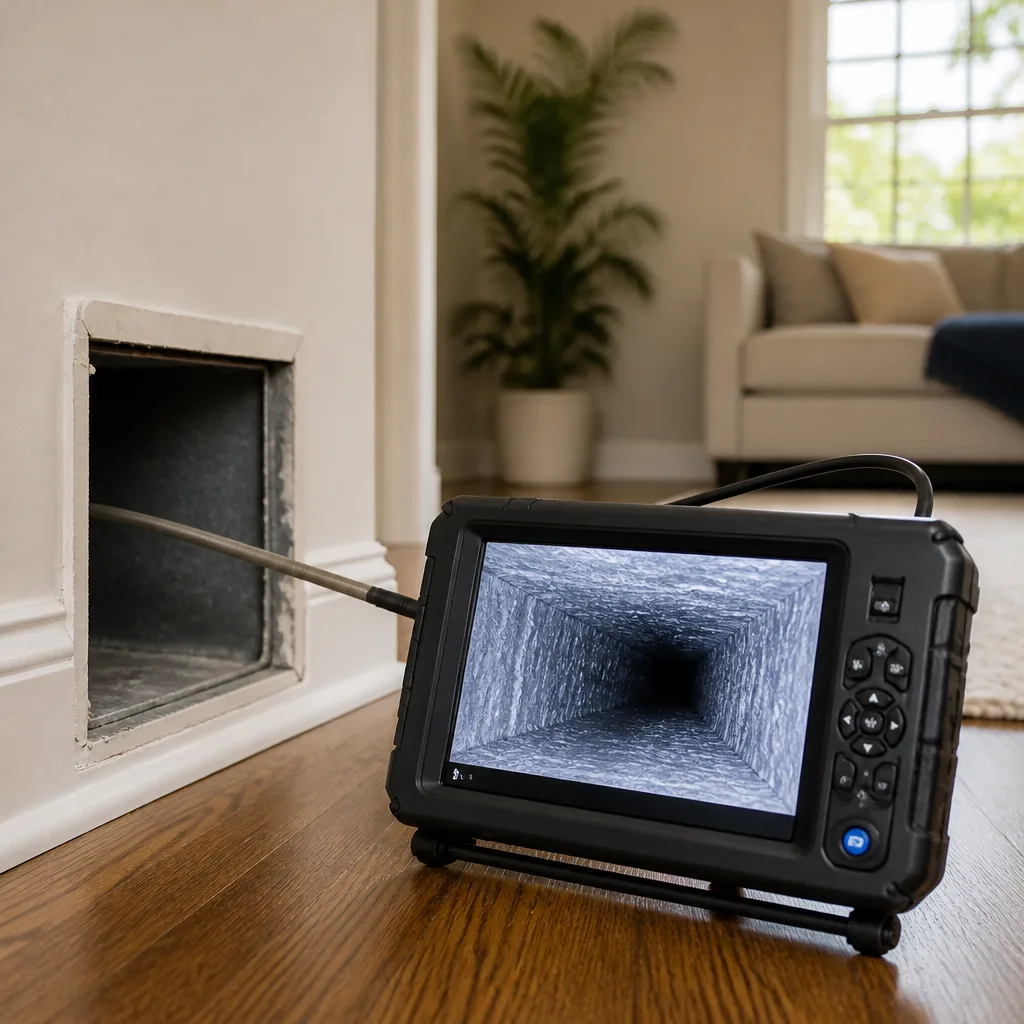 Camera inspection
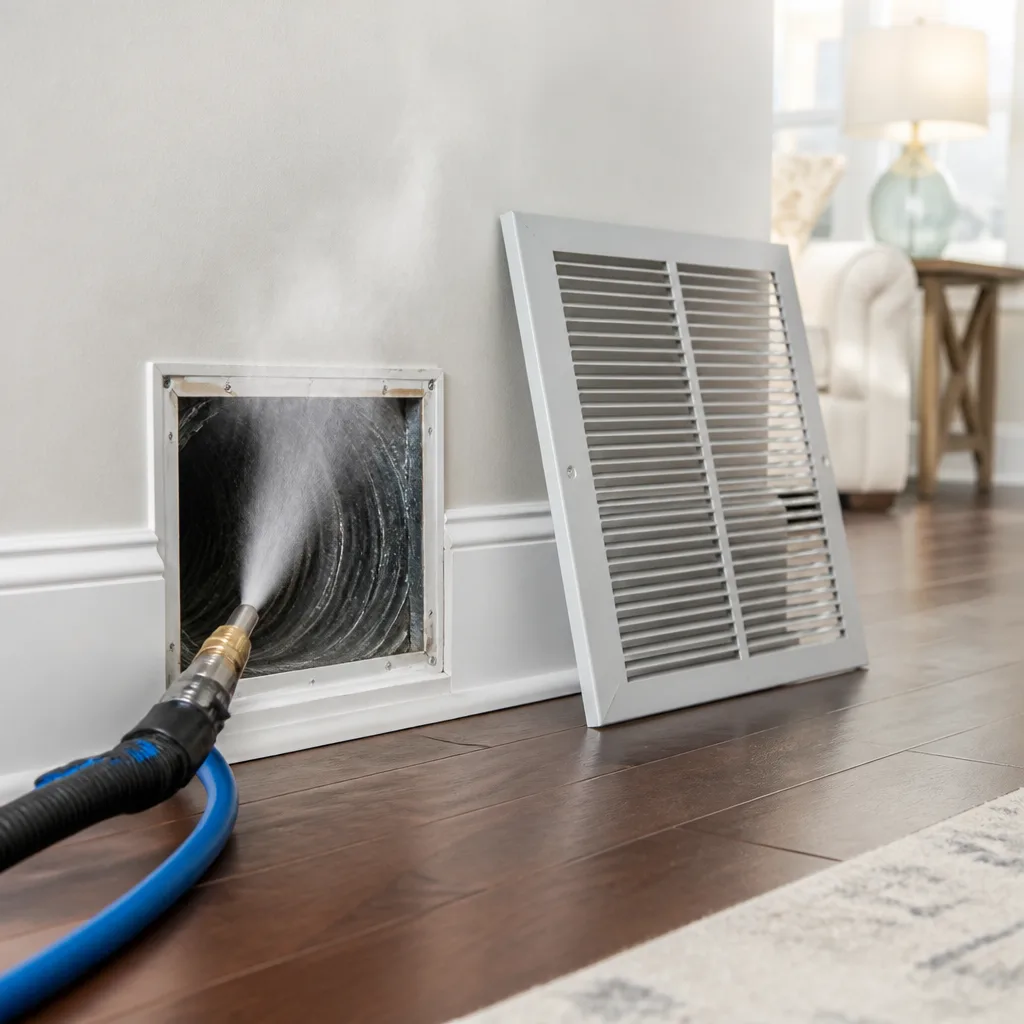 Sanitizing & deodorizing
Whole-system duct and dryer vent check with before-and-after photos - you see exactly what came out of your vents
That "$99 whole-house special" is a bait ad - the real number appears once they are in your hallway, or the "clean" is a shop-vac at the register. We photograph the inside of your ducts before and after instead.
Air Duct Cleaning Emergency Preparedness Guide for Pomona Homes
Here’s the thing most Pomona homeowners don’t realize until smoke is already in the house: your HVAC system is not a passive bystander during a wildfire event. The return air pathway actively pulls outside air into the duct system and pushes it through every room, often faster than smoke seeps through window gaps. This guide explains what to do in the hours after smoke or ash intrusion, how to assess what actually got contaminated, and when professional air duct cleaning is the right call versus when a filter change handles it. We’ll also cover pre-season steps that make the next Santa Ana wind event less of a scramble.
Quick Answer
After wildfire smoke reaches your Pomona home, shut the HVAC system down at the thermostat, seal the return air grille with a damp towel or plastic sheet, and keep the system off until outdoor air quality improves and you’ve replaced the filter with a MERV 13 or higher unit. Schedule a professional inspection if the system ran continuously during heavy smoke, you see visible soot at supply registers, or occupants experience new respiratory irritation; full contact cleaning with negative-air extraction is typically needed when smoke exposure was prolonged, not brief.
Styles & brands we work with
- Whole-home duct cleaning
- Dryer vent cleaning
- Camera inspection
- Sanitizing & deodorizing
Table of Contents
- Immediate Response Protocol During a Smoke Event
- Assessing Post-Event Contamination: Brief Exposure vs. Continuous Operation
- What Wildfire Ash Does to Flex Duct Liner and Adhesive Joints
- The Professional Assessment Protocol After a Significant Smoke Event
- Pre-Season Preparedness Steps for Pomona Homeowners
- Why Cleaning Method Matters After Smoke Exposure
- Dryer Vents and Smoke: A Separate Fire Risk You Shouldn’t Ignore
Immediate Response Protocol During a Smoke Event
When you first notice smoke odor inside your Pomona home during a wildfire event, the sequence matters. Your HVAC system’s blower is actively distributing whatever the return air pathway pulls in, so the first step is stopping that circulation loop.
- Set the thermostat to OFF, not AUTO. Even in AUTO, the fan can cycle on for temperature changes. OFF means OFF.
- Close all exterior doors and windows. You’re reducing the amount of contaminated outdoor air entering the living space.
- Seal the main return air grille. Use a damp towel, plastic sheeting, or painter’s tape over the return. This prevents the duct system from drawing in more contaminated air if the system does restart accidentally.
- Check and seal secondary returns. Many Pomona homes built in the 1970s and 1980s have multiple return air openings. Walk the house and cover each one.
- Do not run bathroom or kitchen exhaust fans continuously. They create negative pressure that pulls outdoor air in through any gap. Use them only as needed and turn them off immediately after.
- Wait for outdoor air quality to improve before removing seals. The South Coast AQMD provides real-time data for the Pomona area, and you should check it before restarting the system.
When air quality readings return to acceptable levels, replace the system filter with a MERV 13 or higher unit before restarting the HVAC. A standard MERV 8 fiberglass filter will not capture the fine particulate that wildfire smoke carries. Most hardware stores in Pomona stock MERV 13 filters during fire season, but it’s worth buying one or two in advance.
The damp towel method isn’t elegant, but it works. The goal is creating a physical barrier between the return air pathway and the contaminated air in your living space while the outdoor event continues.
Assessing Post-Event Contamination: Brief Exposure vs. Continuous Operation
Not every smoke event requires professional Duct Cleaning Pomona service. The critical variable is how long and how hard your system pulled contaminated air. A system that ran briefly during a passing smoke plume is a different situation than one that circulated heavily for forty-eight hours of continuous exposure.
Brief exposure signs:
- Smoke odor was noticeable for a few hours, then cleared
- You shut the system down quickly after noticing the smell
- The filter was relatively new when the event started
- No visible soot or residue at supply registers
- Occupants experience no new respiratory symptoms
If all of these apply, a thorough filter replacement and a few days of running the system with a MERV 13 filter may resolve the issue. Monitor for lingering odor. If the smell persists beyond a week, particulates have likely settled into the duct liner or on coil surfaces.
Continuous operation signs:
- The system ran for a day or more during heavy smoke conditions
- You were away from home during the event and the system ran on schedule
- Visible gray or black residue on supply register covers
- Persistent smoke odor that doesn’t fade after filter replacement
- Occupants report new headaches, coughing, or eye irritation while indoors
Continuous operation is the scenario where professional cleaning becomes the responsible recommendation. Smoke particulate doesn’t just pass through; it deposits on every surface the air touches, including duct walls, coil fins, and blower components. Air pressure alone won’t remove what’s adhered to those surfaces.
What Wildfire Ash Does to Flex Duct Liner and Adhesive Joints
This is where Pomona homeowners get surprised. Wildfire ash is not inert dust. It carries compounds that can be chemically active, particularly when combined with the humidity cycles we get in the Inland Empire during late summer and early fall. Flex duct, common in attic installations throughout Pomona, has an inner liner that ash residue can degrade over time. The adhesive joints where flex duct connects to metal boots are similarly vulnerable.
Here’s what’s actually happening at the material level:
- Ash particulate embeds in flex duct liner. The liner has a slightly textured surface. Fine ash works into that texture and resists removal by air pressure alone.
- Chemical residue accelerates material breakdown. Ash from structure fires contains compounds that, combined with condensation inside ducts, can soften adhesives and break down liner materials faster than normal wear.
- Compromised joints leak conditioned air. Once an adhesive joint weakens, the duct system loses efficiency and pulls unconditioned attic air into the supply stream.
- Odor persists because material absorbed it. Flex liner and duct board can absorb volatile organic compounds from smoke. Air blowing across the surface releases those compounds back into your living space for months.
This material degradation issue is why we emphasize contact cleaning rather than blow-and-go methods. Rotating brush contact physically removes embedded particulate from duct surfaces. Air pressure alone leaves residue that continues off-gassing and accelerating material wear.
The Professional Assessment Protocol After a Significant Smoke Event
When a Pomona homeowner calls us after a wildfire smoke event, we follow a structured assessment sequence. This isn’t a single glance and a quote; it’s a methodical evaluation designed to identify what actually got contaminated and what didn’t.
- Visual inspection of supply and return registers. We remove register covers and photograph what’s visible at the opening. Soot staining at supply registers indicates contamination in the supply side, not just the return.
- Filter housing inspection. The filter and its housing tell us how much particulate passed through. A heavily loaded filter with bypass staining suggests the filter was either undersized or not sealed properly.
- Return air pathway assessment. We inspect the return plenum and accessible return duct runs. This is typically where the heaviest contamination occurs because it’s the entry point for contaminated outside air.
- Supply duct sampling at multiple points. We open access points along the supply trunk and branch runs to check for uniform contamination versus localized deposits. This determines whether full cleaning is needed or whether targeted service addresses the issue.
- Coil and blower inspection. Smoke particulate deposits on evaporator coils reduce efficiency and hold odor. The blower wheel can carry a surprising amount of residue that recontaminates cleaned ducts if not addressed.
- Flex duct liner evaluation. We check liner condition in accessible sections. If material breakdown has begun, air duct cleaning alone won’t solve the problem; repair or replacement may be required.
Findings that trigger full cleaning include visible soot at multiple supply registers, smoke odor present with the system off, heavy return-side deposits, and any evidence of liner compromise. Findings that support targeted service include light deposits isolated to the return side only, clean supply registers, and no odor with the system off.
This assessment matters because it prevents unnecessary work while catching problems that a quick glance would miss. We show you what we find, with photos, before recommending any service.
Pre-Season Preparedness Steps for Pomona Homeowners
Fire season in the Pomona area is not a question of if but when. The Santa Ana wind corridor reliably pushes smoke and particulate through the Inland Empire, and homes in northern Pomona near the foothills experience heavier exposure than those further south. Preparing before the next event means less scrambling and better outcomes when smoke arrives.
What you can do now:
- Upgrade your return air filtration. If your system currently runs a basic MERV 8 filter, talk to an HVAC professional about upgrading to a MERV 13 or higher. Confirm the system can handle the increased static pressure before making the switch. Homes with Honeywell media filter cabinets can often accommodate deeper, higher-MERV filters without modification.
- Document current duct condition with photos. Open a few register covers and photograph what you see. This baseline documentation helps later when assessing whether new contamination appeared after a smoke event.
- Establish a relationship with a service provider before fire season. When smoke hits and every neighbor in Pomona calls the same week, having an existing relationship with a duct cleaning company that knows your home’s layout speeds everything up.
- Identify your return air locations. Walk the house and note every return grille. You’ll need to seal them during a smoke event, and knowing where they are in advance saves time when it matters.
- Stock MERV 13 filters. Keep one or two on hand. When air quality events hit, local hardware stores in Pomona sell out quickly.
- Check your dryer vent, not just your HVAC system. Dryer vent cleaning is a separate fire-prevention service, but it should be part of your preparedness thinking. A clogged dryer vent combined with elevated indoor temperatures during fire season is an avoidable risk.
The homeowners who handle smoke events best are the ones who’ve thought through the sequence in advance. The protocol isn’t complicated; it’s just specific.
Why Cleaning Method Matters After Smoke Exposure
Most duct cleaning outfits use negative pressure alone: they connect a large vacuum to the duct system and rely on air movement to pull contaminants out. That works for loose dust. It does not work for smoke residue, which deposits on surfaces with enough adhesion to resist simple air flow.
We approach post-smoke cleaning differently. The Rotobrush contact-cleaning system uses rotating brushes that physically scrub duct walls while negative pressure extracts what the brushes dislodge. That contact is the difference between residue remaining embedded in flex liner and residue actually removed from the system.
The extraction side matters equally. We run Nikro HEPA negative-air machines during cleaning, the same containment-grade equipment used in professional abatement environments. The air leaving your ducts during cleaning passes through HEPA filtration before it’s exhausted, so we’re not pulling contaminants out of your ducts and pushing them into your living room.
Filtration standards on the job come from Abatement Technologies, which means the airborne particle control standard applied to your home matches what professional remediation contractors use. That’s not overkill after a smoke event; it’s the appropriate standard when the contaminant is fine particulate that behaves like abatement-grade material.
And when we find structural problems during cleaning, we can address them in the same visit. Duct repair is one of our core services, which means a compromised flex duct joint or separated boot gets fixed, not just reported. Clean it, then fix it.
Dryer Vents and Smoke: A Separate Fire Risk You Shouldn’t Ignore
During wildfire season, your dryer vent deserves attention for reasons that have nothing to do with the smoke itself. Lint accumulation in dryer exhaust ducts is always a fire risk, but the conditions that come with Pomona’s fire season make it worse: elevated outdoor temperatures, dry air, and the fact that households run dryers more frequently when outdoor air quality makes line-drying unattractive.
Your dryer vent is a fire risk waiting to happen when lint builds up to the point where exhaust airflow drops. The dryer runs hotter, the lint acts as tinder, and the result is an avoidable structure fire. Dryer vent cleaning is a dedicated service we provide, not an upsell afterthought. If you can’t remember the last time the vent was cleared, it’s overdue.
The connection to smoke preparedness is simple: during and after a wildfire event, you want every system in your home functioning correctly. A blocked dryer vent adds heat and combustion risk to an already stressful situation. Clearing it before fire season removes one variable from the equation.
Common Mistakes to Avoid
- Restarting the HVAC system immediately after outdoor air clears without replacing the filter. The loaded filter recontaminates the airstream and pushes captured particulate back into the living space. Always replace before restart.
- Running the fan in ON mode to “clear out” smoke. Continuous fan operation during an active smoke event pulls more contaminated air into the system. Shut it down, don’t flush it.
- Assuming a standard fiberglass filter protected the system. MERV 8 fiberglass filters capture large particles, not fine smoke particulate. The system components downstream of that filter got exposed.
- Hiring the cheapest duct cleaning company after a smoke event. Smoke residue requires contact cleaning and HEPA extraction. A blow-and-go service leaves residue behind and you pay twice.
- Ignoring persistent odor because you “don’t see anything.” Smoke compounds absorbed into flex liner and duct board off-gas for months. Invisible doesn’t mean absent.
- Forgetting about the dryer vent in the post-event cleanup. The HVAC system gets the attention, but the dryer vent remains a separate fire hazard that needs its own maintenance schedule.
- Waiting until smoke is visible to think about duct system preparation. The time to establish your provider relationship, upgrade filtration, and document baseline condition is before fire season starts, not during it.
See the difference
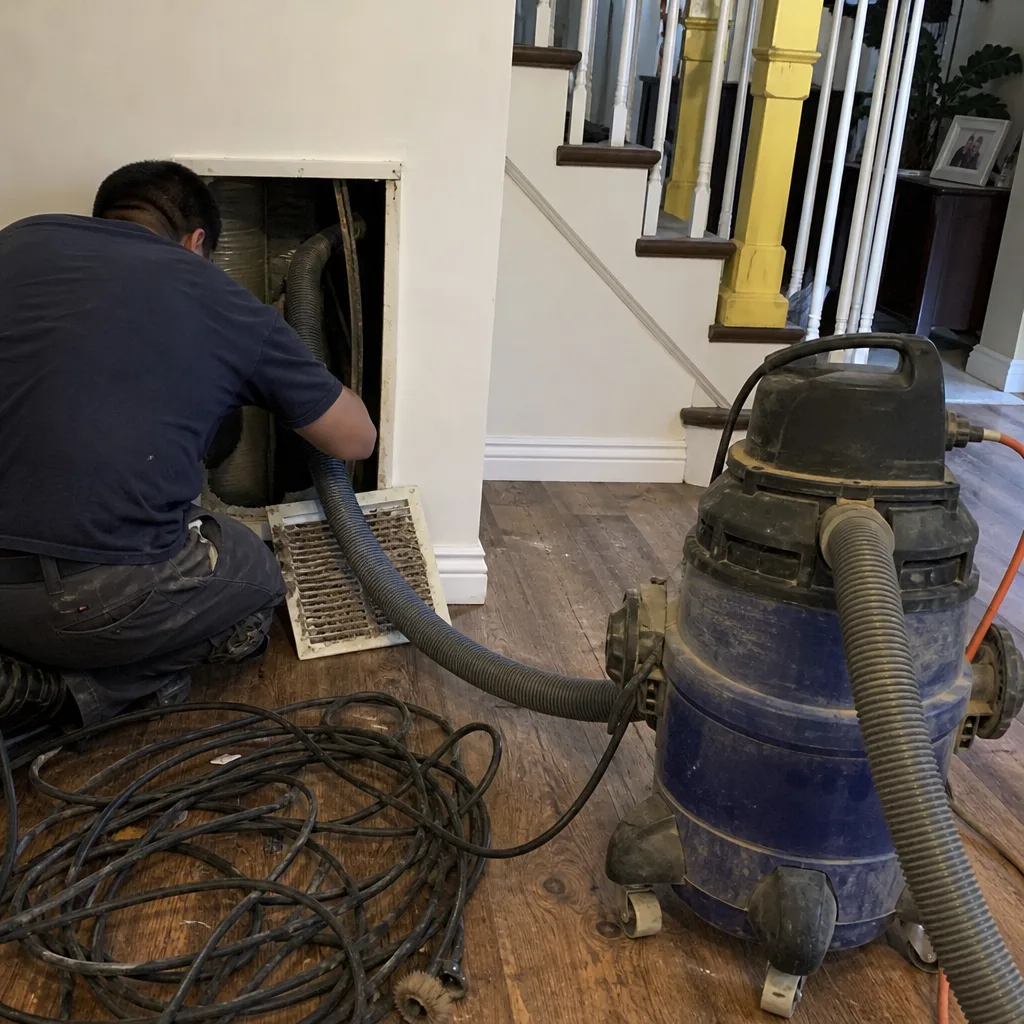 Before
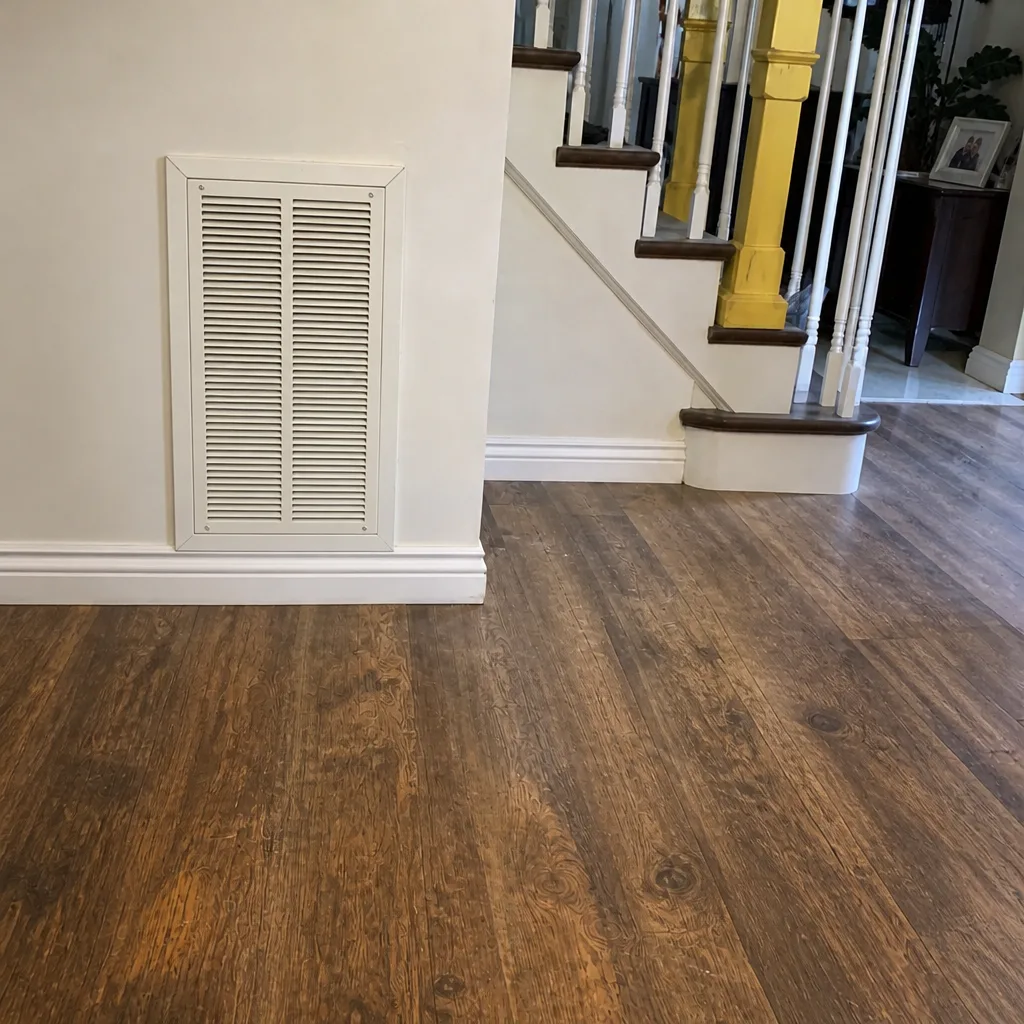 After
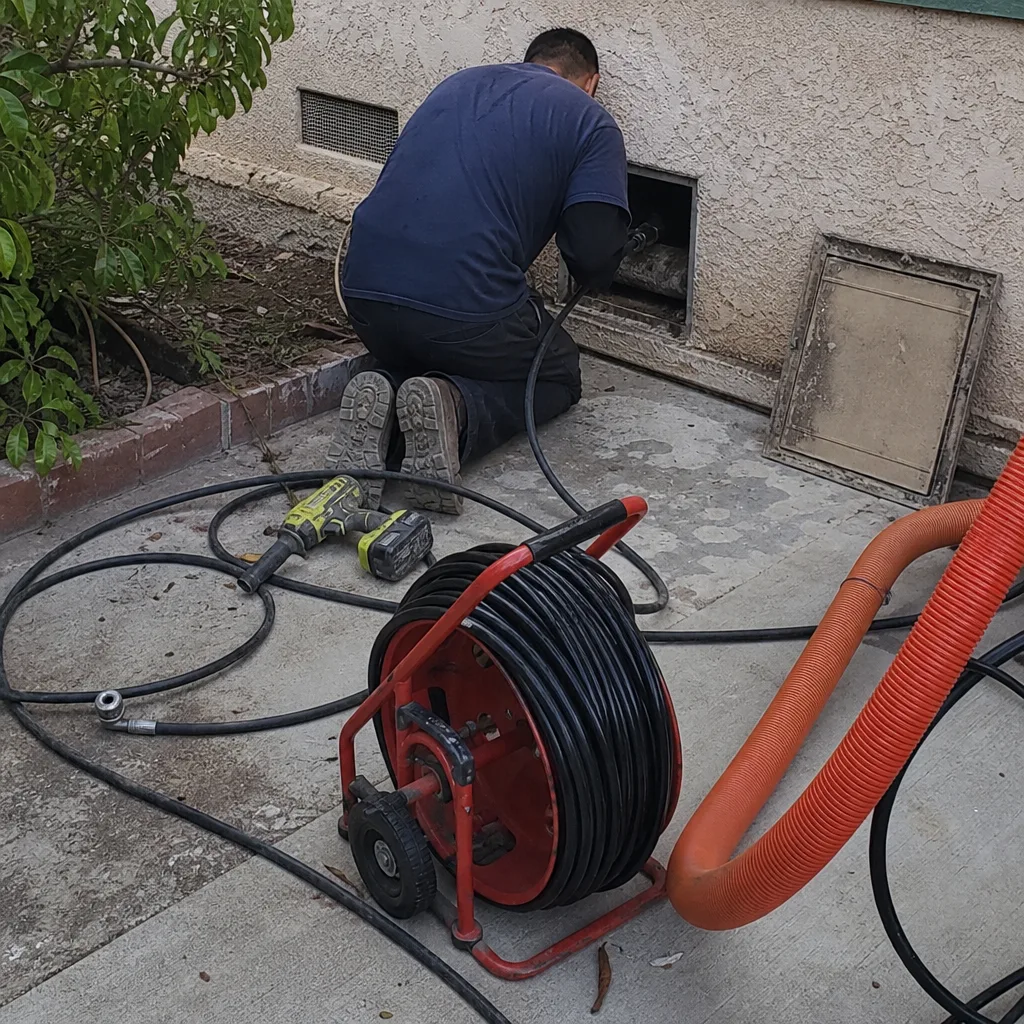 Before
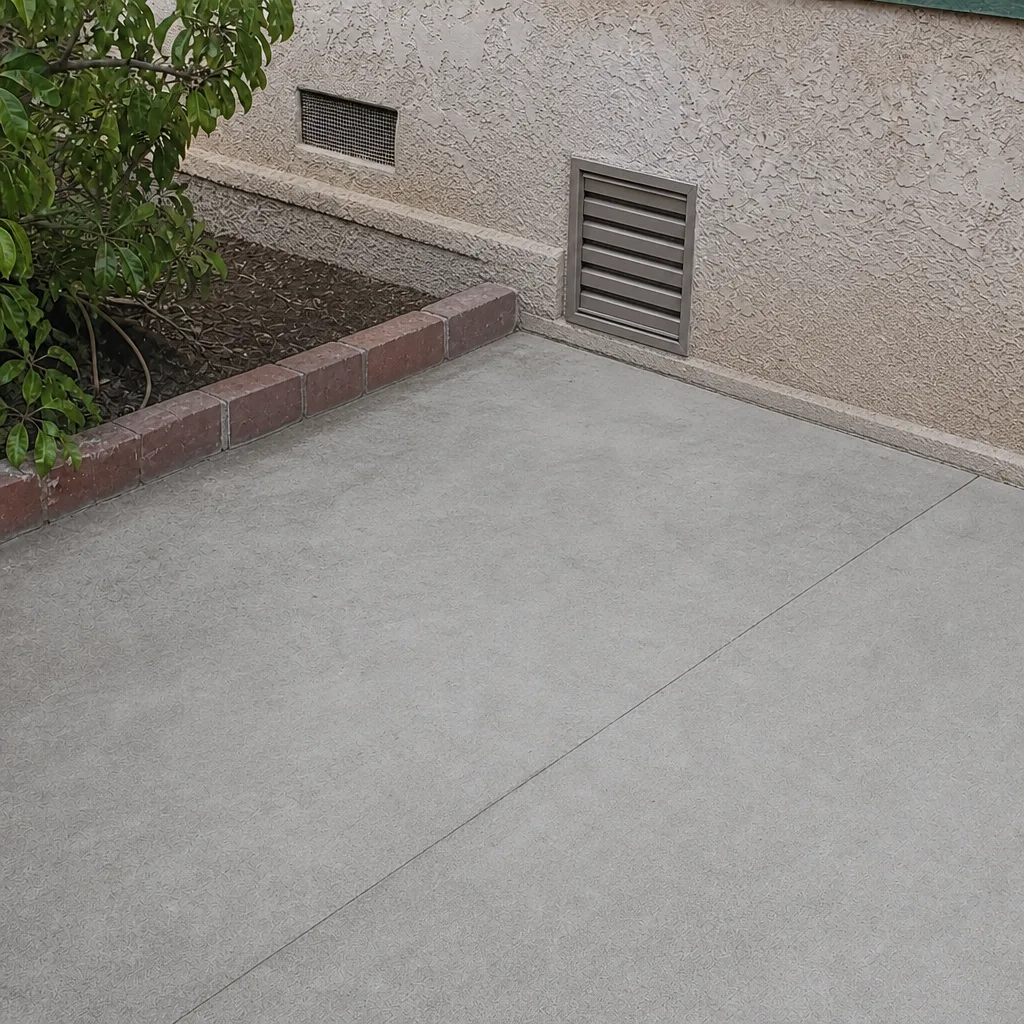 After
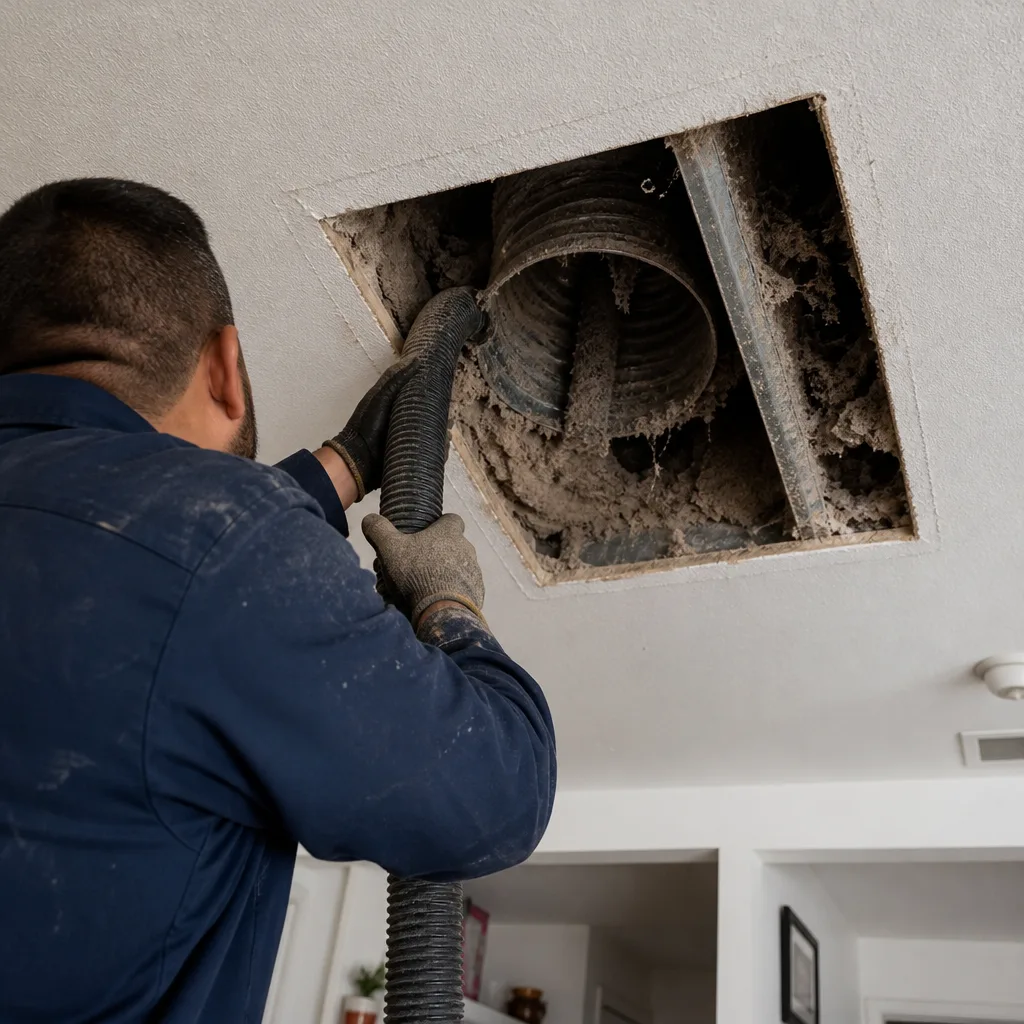 Before
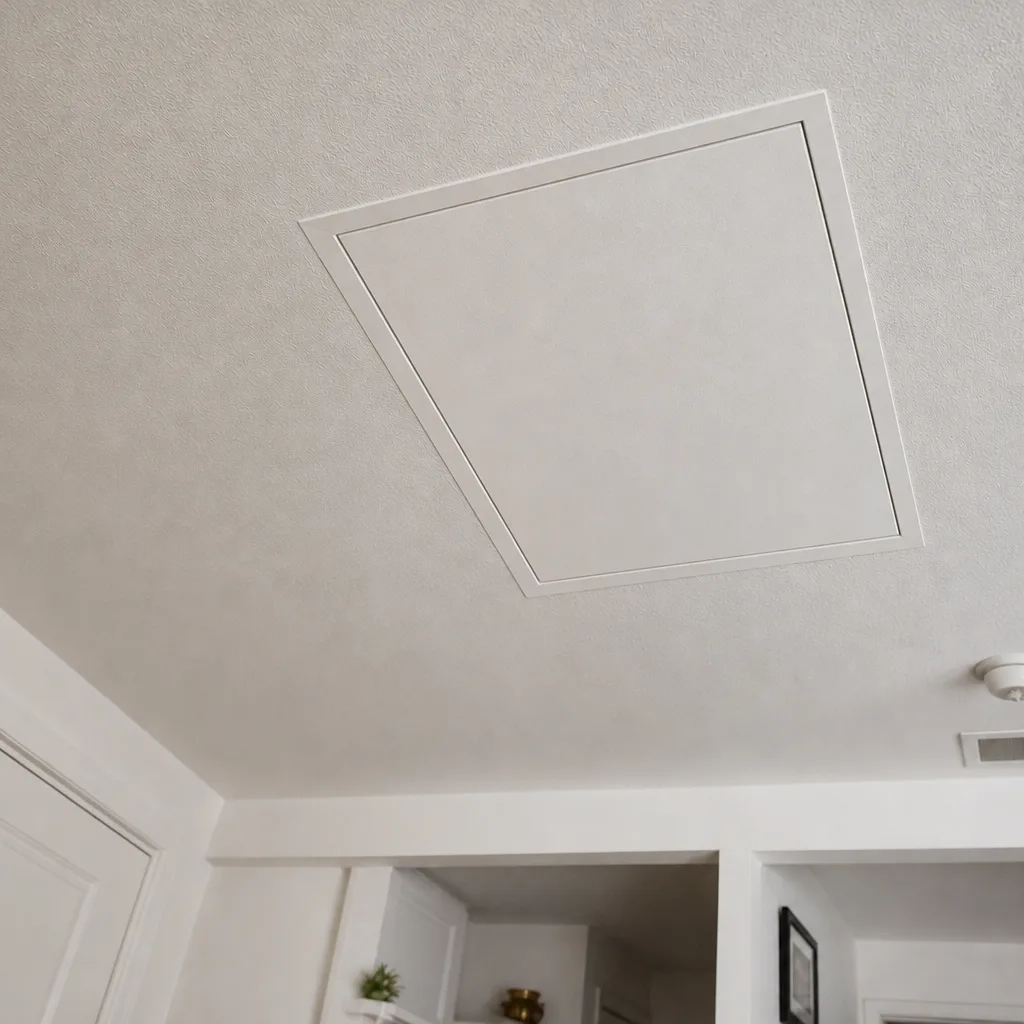 After
When to Call a Professional
Call a professional duct cleaning company when the system ran continuously during heavy smoke, visible soot appears at supply registers, smoke odor persists beyond a week after filter replacement, or occupants experience respiratory irritation specific to indoor time. Any evidence of flex duct liner breakdown or adhesive joint failure also warrants professional assessment, since cleaning alone won’t fix material degradation.
Duct Cleaning Pomona offers free estimates in Pomona. Call (833) 589-9571 and we’ll walk you through the assessment protocol described in this guide, show you what we find, and recommend only the service your system actually needs. We answer 24/7. Fast dispatch from 7am to 7pm, Sunday through Friday.
Frequently Asked Questions
Post-smoke duct cleaning in Pomona typically runs $450 to $1,200 depending on system size, contamination level, and whether structural repairs are needed. The written estimate we provide after inspection sets the final price before any work begins, so the number you’re quoted is the number you pay. Call (833) 589-9571 for a free assessment.
Wait until outdoor air quality in the Pomona area has returned to acceptable levels for at least 48 hours, then schedule the inspection. Cleaning during active poor air quality means the system re-contaminates while you’re working on it. The South Coast AQMD air quality index is the reference point we recommend.
A MERV 13 filter captures a meaningful percentage of smoke particulate, but it does not prevent all contamination, especially if the system runs continuously during heavy smoke. Filtration reduces the load; it doesn’t eliminate it. Post-event inspection is still warranted after prolonged exposure.
Ask for before-and-after photos of accessible duct surfaces. A legitimate contact-cleaning service using rotating brushes will show visible difference at the same access points. If the company can’t or won’t provide documentation, the work probably didn’t include contact cleaning. We show you what we found.
Many homeowner’s policies in the Pomona area include coverage for smoke damage remediation, but coverage terms vary significantly. Contact your insurance provider before scheduling service. We can work with your insurer by providing the documentation and photos they typically request for smoke-related claims.
Post-wildfire cleaning requires contact cleaning with rotating brushes and HEPA negative-air extraction because smoke residue adheres to duct surfaces in a way that loose household dust does not. Standard air-pressure cleaning leaves the chemically active residue behind. The equipment and method standard for smoke work matches what abatement professionals use, not what a shop-vac service provides.
The Bottom Line
Wildfire smoke in Pomona is not a hypothetical; it’s a recurring seasonal reality that demands a defined response protocol. The immediate steps are simple and DIY: shut the system down, seal returns, replace filters before restart. The assessment step requires experience and honest evaluation, not a sales pitch. When contamination is significant, contact cleaning with HEPA extraction is the only method that removes embedded smoke residue rather than redistributing it. Prepare before fire season, respond correctly during the event, and get professional assessment after. Call (833) 589-9571 for a free estimate in Pomona. We answer 24/7. Fast dispatch from 7am to 7pm, Sunday through Friday.
Written by the team at Duct Cleaning Pomona, serving Pomona since 2015.