
Last updated November 4, 2026
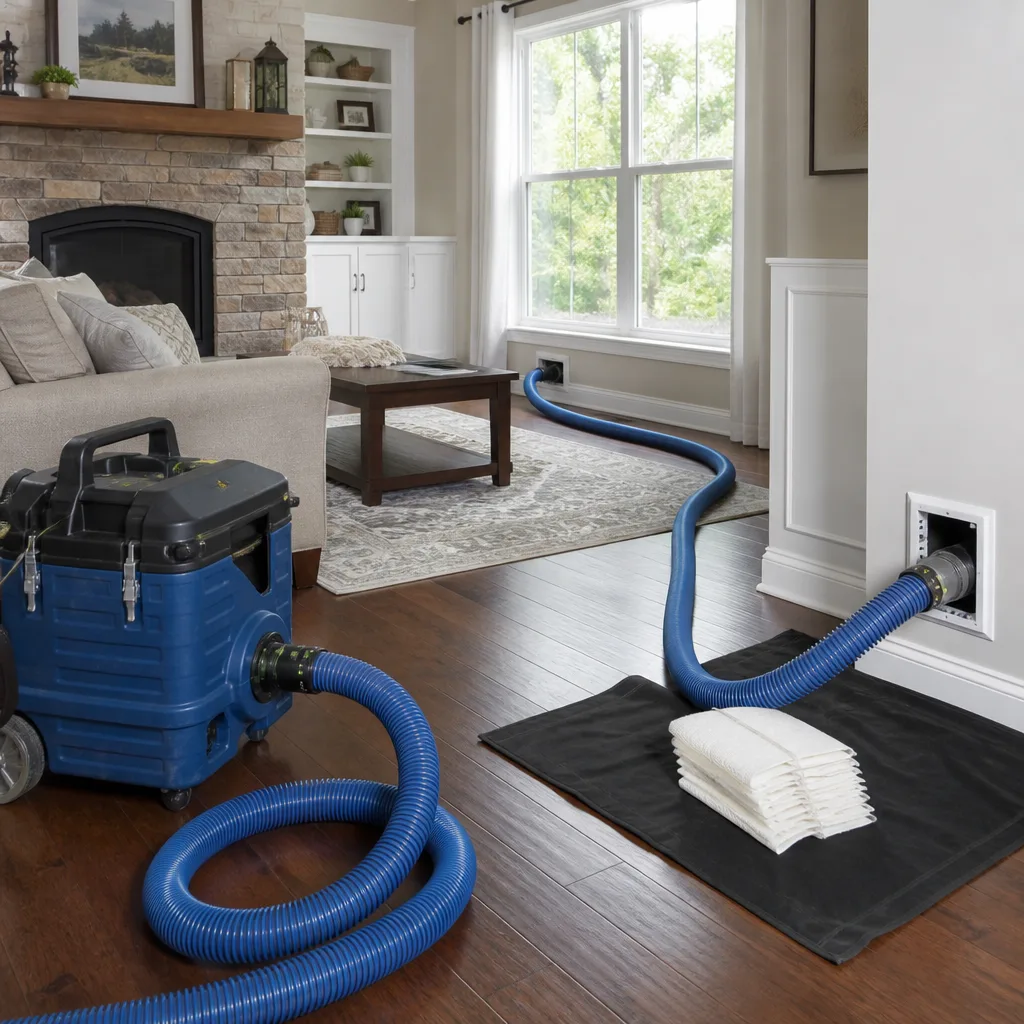 Whole-home duct cleaning
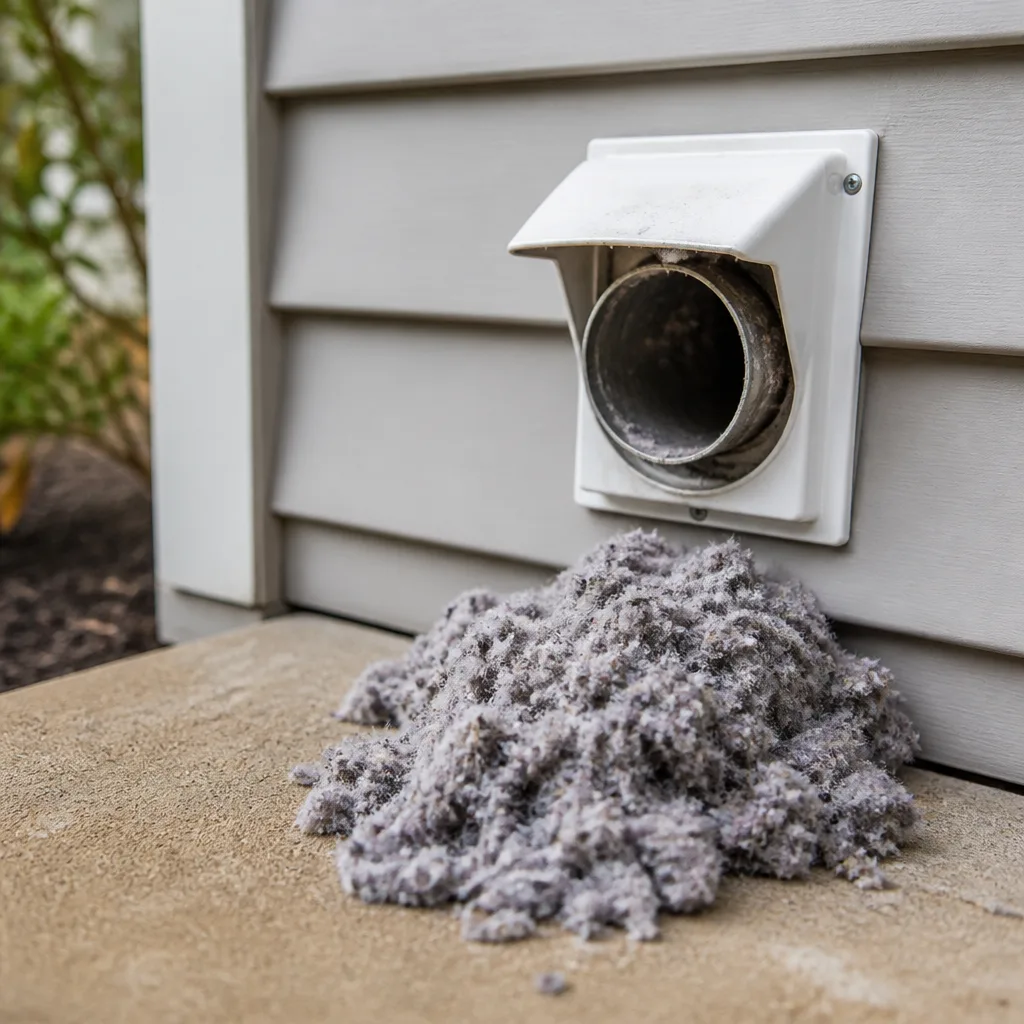 Dryer vent cleaning
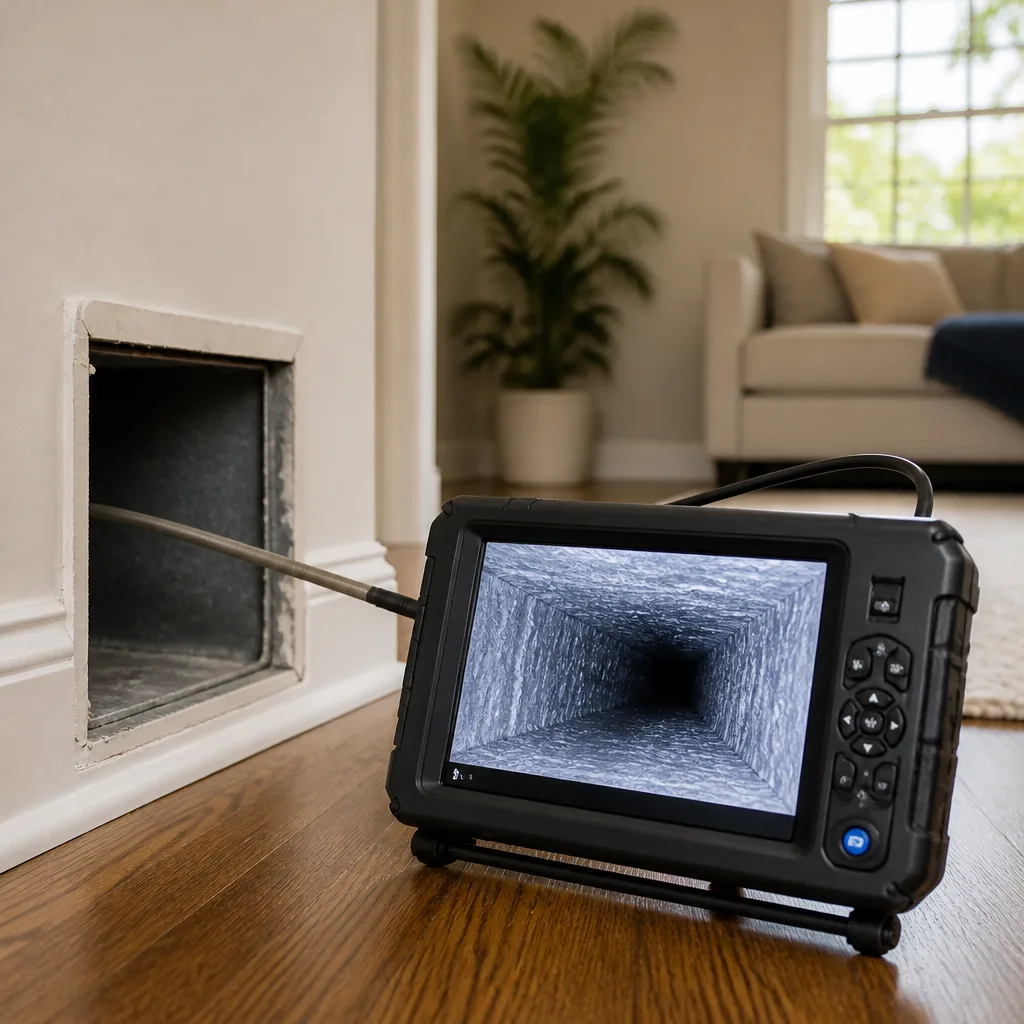 Camera inspection
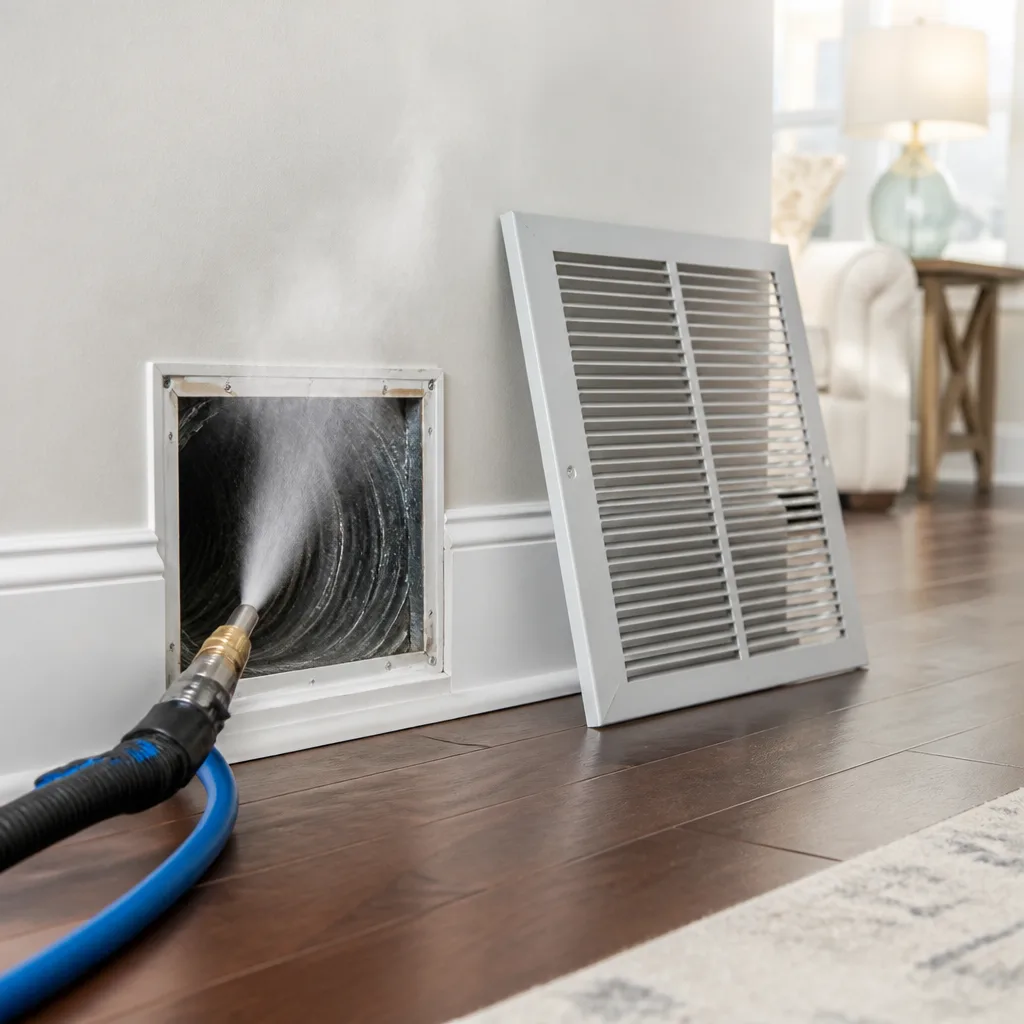 Sanitizing & deodorizing
Whole-system duct and dryer vent check with before-and-after photos - you see exactly what came out of your vents
That "$99 whole-house special" is a bait ad - the real number appears once they are in your hallway, or the "clean" is a shop-vac at the register. We photograph the inside of your ducts before and after instead.
Seasonal Air Duct Cleaning Care for Pomona: Year-Round Homeowner’s Guide
Most national HVAC advice tells homeowners to service their systems in spring and fall. In Pomona, that calendar misses the two events that actually threaten your ducts: October Santa Ana winds pushing fine grit into return pathways, and June startup on systems that sat dormant through a mild spring. This guide maps your duct care to the Inland Empire’s real weather patterns, not a generic seasonal checklist. You’ll learn what happens inside ductwork when attic temperatures climb past 110°F, how to prepare for fire season without choking airflow, and why winter brings a moisture problem most Pomona homeowners never see coming.
Quick Answer
Seasonal air duct cleaning in Pomona should follow the local climate, not a national calendar. The critical windows are May (before summer cooling demand), November (after Santa Ana wind events), and December (before heating startup). A professional contact-cleaning with negative-air extraction, performed during these windows, removes the fine particulate, smoke residue, and biological growth that Pomona’s heat and wind cycles drive into duct systems.
Styles & brands we work with
- Whole-home duct cleaning
- Dryer vent cleaning
- Camera inspection
- Sanitizing & deodorizing
Table of Contents
- The Pomona Seasonal Calendar: What Actually Matters
- What 110°F Attic Heat Does to Your Duct System
- Preparing Return Air Pathways Before Fire Season
- Post-Santa Ana Assessment: The November Reset
- The Winter Moisture Problem in Older Pomona Homes
- Month-by-Month Filter and Register Inspection Cadence
- When to Bring in Professional-Grade Equipment
The Pomona Seasonal Calendar: What Actually Matters
Pomona’s climate doesn’t punish ductwork the way colder regions do. There’s no freeze-thaw cycle, no ice dams, no basement humidity to fight. What Pomona does have is a distinctive rhythm: mild, sometimes damp winters, a spring that arrives early and quietly, a long hot summer that peaks in August and September, and autumn Santa Ana events that arrive as dry, gusty wind carrying fine dust from the inland valleys. Each of these periods stresses a duct system differently, and each calls for a specific response.
Here’s the seasonal map we use when advising homeowners in Pomona:
- May – Pre-summer startup inspection. Systems have been idle or running lightly for months. Before the first real heat wave, check registers, replace filters, and consider a professional cleaning if the system hasn’t had one in over three years. A clean system runs more efficiently when the compressor is working hardest.
- June through September – Peak cooling season. This is when existing duct problems show themselves: rooms that won’t cool, whistling at registers, musty odor when the blower kicks on. High attic temperatures accelerate adhesive breakdown and liner degradation. Monitor and address issues early rather than mid-August.
- October through November – Santa Ana season. Gusty northeast winds drive fine particulate into return pathways and exterior vent openings. After the last major wind event of the season, inspect registers and consider a post-event cleaning if you see visible dust accumulation.
- December – Heating startup check. Before you run the furnace consistently, inspect the duct system for moisture that accumulated during cooler, damper periods. This is also the right time for dryer vent cleaning before holiday laundry loads increase.
- January through April – Low-demand monitoring. Systems cycle less. Use this quieter period for non-urgent repairs or a full-system cleaning when scheduling is easier and demand on service is lower.
If you’ve been following a spring-and-fall HVAC maintenance schedule from a national guide, you’ve been missing the point. The local calendar is tied to fire season, Santa Ana events, and the specific heat profile of the Pomona Valley. Adjusting to it isn’t a minor refinement; it’s the difference between a duct system that holds up for a decade and one that degrades quietly, season after season.
For homeowners who want the full picture on what a proper cleaning actually involves, our guide to air duct cleaning explains the method and equipment in detail.
What 110°F Attic Heat Does to Your Duct System
Attic temperatures in Pomona routinely exceed 110°F during summer afternoons, and that heat is the single most destructive force acting on your ductwork. Understanding the mechanism helps you understand why some duct problems appear only in July and August, even though the damage was set in motion months or years earlier.
Most residential duct systems in Pomona are either flexible duct (flex duct) made from a wire coil, insulation layer, and inner plastic liner, or rigid sheet metal duct with external insulation. Both types suffer under sustained high heat, though flex duct is more vulnerable. Here’s what happens:
- Flex duct liner degradation. The inner plastic liner becomes brittle when repeatedly exposed to temperatures above 110°F. Brittle liner cracks, flakes, and eventually separates from the wire coil. Once the liner is compromised, fiberglass insulation particles can enter the airstream.
- Adhesive failure at joints. Duct sections are joined with tape and mastic. High heat accelerates adhesive breakdown, especially on older systems where mastic was applied thinly. When a joint fails, conditioned air leaks into the attic and attic dust gets pulled into the system through the same gap.
- Insulation compression. The insulation layer on flex duct can compress over time under high heat, reducing its R-value. That means your cooled air warms up as it travels through the attic, which lowers efficiency and can cause condensation in longer runs.
- Dust bake-in. Dust and debris that would be blown out or cleaned easily at lower temperatures can bake onto duct surfaces during prolonged heat cycles. This baked-on layer is harder to remove with air pressure alone, which is why contact cleaning matters.
What does this mean for air quality? When the liner degrades, the system begins circulating microscopic fragments of plastic and insulation. When joints fail, the blower pulls attic air, which in Pomona contains dust, rodent droppings, and fine particulate from surrounding canyons and open land. The occupants breathe all of it.
This is why we use the Rotobrush contact-cleaning system rather than a blow-and-go approach. Rotating brushes physically scrub duct walls to remove baked-on debris and degraded liner material. Paired with Nikro HEPA negative-air machines for extraction, the system removes contaminants instead of recirculating them into the living space. For Pomona’s heat-stressed ducts, contact cleaning isn’t a luxury; it’s the only method that addresses what prolonged high heat actually does to the surfaces.
Preparing Return Air Pathways Before Fire Season
Fire season is a fact of life in the Inland Empire, and the Santa Ana winds that arrive in autumn carry smoke and fine particulate from wildfires into Pomona’s air basin. Your HVAC system responds to this by drawing that particulate into return air pathways. The question isn’t whether smoke will enter the system, but how much accumulates and what you’ve done beforehand to limit it.
Preparing return air pathways is different from sealing them. Closing off returns or blocking airflow creates negative pressure problems, reduces system efficiency, and can damage the blower motor. What you want is filtration and surface preparation, not blockage.
Here’s a practical sequence to prepare before fire season:
- Upgrade filtration before the season starts. Install the highest MERV-rated filter your system can handle without excessive pressure drop. Many systems can accommodate a MERV 11 or 13, but verify compatibility with your equipment. Higher MERV ratings capture more smoke particulate.
- Clean return registers and the visible return duct openings. Use a vacuum with a HEPA filter to remove surface dust from register grilles and the first few inches of return duct. This removes existing material that would otherwise combine with incoming smoke particulate.
- Inspect and replace the filter during smoke events. Filters load quickly when wildfire smoke is present. Plan to check them weekly during active fire periods, not monthly. A loaded filter restricts airflow and can force the system to bypass filtration through gaps at the filter frame.
- Keep exterior doors and windows closed during Santa Ana events. This seems obvious, but many Pomona homes have older windows with poor seals. Smoke enters through these gaps, gets pulled into returns, and settles in the duct system.
- After a significant smoke event, have the system cleaned. Smoke particulate that passes through the filter settles in the ductwork. Once it’s there, it releases slowly into the home for weeks or months. A professional cleaning with HEPA extraction removes it.
One point worth emphasizing: the equipment matters. We run Abatement Technologies filtration standards on every job, which means the air leaving the duct system during cleaning is cleaner than the air entering it. For a Pomona homeowner whose ducts have been through a heavy smoke season, that standard is the difference between a true reset and a cosmetic touch-up.
Post-Santa Ana Assessment: The November Reset
Santa Ana winds are the most predictable air-quality disruption in Pomona’s year. They arrive in autumn, usually October through November, carrying dry air and fine dust from the high desert into the valleys. For a duct system, the aftermath of a Santa Ana season is the accumulation window that most homeowners ignore.
During a Santa Ana event, the wind drives dust into every exterior gap: roof vents, soffit vents, poorly sealed window frames, and especially the fresh-air intakes on HVAC systems. Return pathways in attics and exterior walls pull in a portion of this dust. Over the course of a single season, the accumulation can be significant even when the home looks clean.
Here’s what to check in November, after the last major wind event:
- Visible dust on register faces. If you see dust collecting on supply registers within days of cleaning them, the system is circulating particulate that’s accumulating inside the ducts.
- Filter condition. A filter that’s unexpectedly dirty in November, after relatively mild weather, is a sign that the duct system is pulling in exterior particulate through gaps or intakes.
- Airflow changes. Rooms that cool or heat unevenly after a wind season may indicate that dust has settled in specific duct runs, restricting airflow in those branches.
- Odor when the blower starts. A dusty, chalky smell that appears only in the first few seconds of blower operation is often dust that resettles on the heat exchanger or coil between cycles.
If these signs are present, a professional cleaning in November addresses the season’s accumulation before the heating system starts pulling that particulate through the home all winter. It also means the system enters the holiday season with clean surfaces, which matters when the house fills with visitors and the system runs longer hours.
For homeowners in Pomona who’ve never evaluated their system after a wind season, this is the most overlooked maintenance window of the year. The fix is straightforward: assess, clean if needed, and replace filters. What you don’t want is to carry three seasons of Santa Ana dust into the next cooling cycle.
The Winter Moisture Problem in Older Pomona Homes
Pomona doesn’t get freezing winters, but it does get cool, damp periods between December and February, especially overnight and in the early morning. That temperature drop creates a condensation problem in duct systems that most Southern California homeowners don’t know to look for.
Here’s the mechanism. When warm, humid indoor air meets a cool duct surface during the brief cold periods, moisture condenses inside the duct. This happens most often in uninsulated or poorly insulated sections of duct, especially in crawlspaces, attics, and along exterior walls. Older Pomona homes, built before modern insulation standards, are particularly vulnerable because their duct systems often predate current code and lack adequate exterior insulation.
The condensed moisture sits on the duct surface. If the system is clean, the moisture evaporates during the next warm period, and the problem resolves itself. But if the duct surface has accumulated dust or organic debris, that moisture becomes a biological growth medium. What starts as condensation ends as a musty odor when the system runs, or worse, particulate released into the living space.
This is why December is the right time for a heating startup check in Pomona. The sequence goes like this:
- Inspect registers for moisture staining or visible condensation. Signs around supply registers in the morning are an early warning.
- Check for musty odor on blower startup. This odor is the leading indicator that moisture has interacted with accumulated organic material somewhere in the system.
- Evaluate the duct insulation. Especially in attics, where cold overnight air lingers. Ducts with compressed or missing insulation are the highest-risk surfaces.
- Clean before running the heat steadily. A system cleaned in December enters the winter dry and clean, which reduces the surface area for biological growth to take hold.
The alternative, waiting until spring, means running a heating system all winter with whatever biological material has established itself. By March, the problem is larger and harder to address. A December cleaning is a preventive step tied to what actually happens in Pomona’s mild but real winter.
Month-by-Month Filter and Register Inspection Cadence
A seasonal duct care plan only works if you’re checking the system between professional cleanings. Filters and registers are the first line of defense, and the inspection cadence should follow Pomona’s actual conditions rather than a blanket recommendation. Here’s a month-by-month guide calibrated to what tends to happen in the Pomona Valley.
| Month | Local Condition | Action |
|---|---|---|
| January | Cool, damp mornings; moderate system use | Inspect filters after holiday use; check registers for moisture staining |
| February | Mild; system use declining | Standard filter check; note any lingering musty odor from January moisture |
| March | Spring arrives early; pollen season begins | Replace filter; consider upgrading MERV rating for allergy season |
| April | Pollen peaks; windows often open | Check filters more frequently; vacuum return registers |
| May | First heat waves; pre-summer prep | Full inspection; consider professional cleaning if it’s been 3+ years |
| June | Heat builds; system runs daily | Monitor airflow in all rooms; note any new odors or noises |
| July | Peak attic heat; system at max load | Check filters every 2-3 weeks; look for uneven cooling |
| August | Hottest month; heat-related duct damage appears | Address airflow issues promptly; don’t defer repairs through peak season |
| September | Heat persists; Santa Ana season approaching | Pre-fire-season filter upgrade; clean return registers |
| October | Santa Ana events begin | Check filters weekly during wind events; keep windows closed on gusty days |
| November | Post-Santa Ana assessment window | Full register and filter inspection; schedule cleaning if accumulation is visible |
| December | Heating startup; winter moisture window | Clean or replace filter before steady heating; inspect for condensation |
This cadence isn’t burdensome. Most months require five minutes at the registers and a quick filter check. The deeper work happens in May, November, and December, and that’s where professional support makes the biggest difference.
When to Bring in Professional-Grade Equipment
A homeowner can monitor, inspect, and maintain filters. But some duct conditions in Pomona require professional equipment and expertise. Knowing where that line is saves time and prevents the frustration of trying to solve a professional problem with a shop vacuum.
Here are the situations that warrant a professional call:
- Visible dust blowback from supply registers after the system has been running for several minutes. This indicates accumulation deeper in the system that register cleaning won’t reach.
- Persistent musty odor that doesn’t resolve with filter replacement. This suggests moisture interacting with organic material inside the duct, which requires removal, not masking.
- Post-renovation dust. Drywall dust and construction debris settle in ducts and are too fine for standard homeowner removal. Post-renovation cleaning requires HEPA extraction.
- Post-wildfire smoke exposure. Smoke particulate that enters the duct system requires professional contact cleaning and containment-grade extraction to remove fully.
- Visible duct damage, including collapsed flex duct, separated joints, or torn liner. These require repair, not just cleaning, and a professional can clean and repair in a single visit.
- The system hasn’t been cleaned in five or more years. At that point, accumulation has likely baked on, and professional contact cleaning is the only effective method.
For homeowners in Pomona, the decision to call a professional usually comes down to one question: is this something I can see and reach, or is it deeper in the system? If it’s deeper, professional equipment is the answer. Duct Cleaning Pomona offers free estimates throughout the city. Call (833) 589-9571. We answer 24/7. Fast dispatch from 7am to 7pm, Sunday through Friday.
Key Takeaways for Pomona Homeowners
- Follow the local calendar, not the national one. May, November, and December are the critical windows in Pomona. June startup and post-Santa Ana assessment matter more than the generic spring-and-fall schedule.
- Heat is the silent enemy. Attic temperatures above 110°F degrade flex duct liners and joint adhesives over time. Annual inspection catches the damage before it becomes an air quality problem.
- Fire season preparation is about filtration, not sealing. Upgrade filters before Santa Ana season, keep windows closed during smoke events, and clean after significant exposure.
- Winter moisture is real, even in Pomona. Condensation on cool duct surfaces during brief cold periods can trigger biological growth if the system isn’t clean. December is the right time to check.
- Contact cleaning beats air-blown cleaning. When accumulation has baked on, only rotating brushes physically remove it. HEPA negative-air extraction captures what the brushes dislodge.
- Clean it, then fix it. The best single-visit outcome is a cleaning that identifies structural problems and a team that can repair them on the spot, not refer you elsewhere.
See the difference
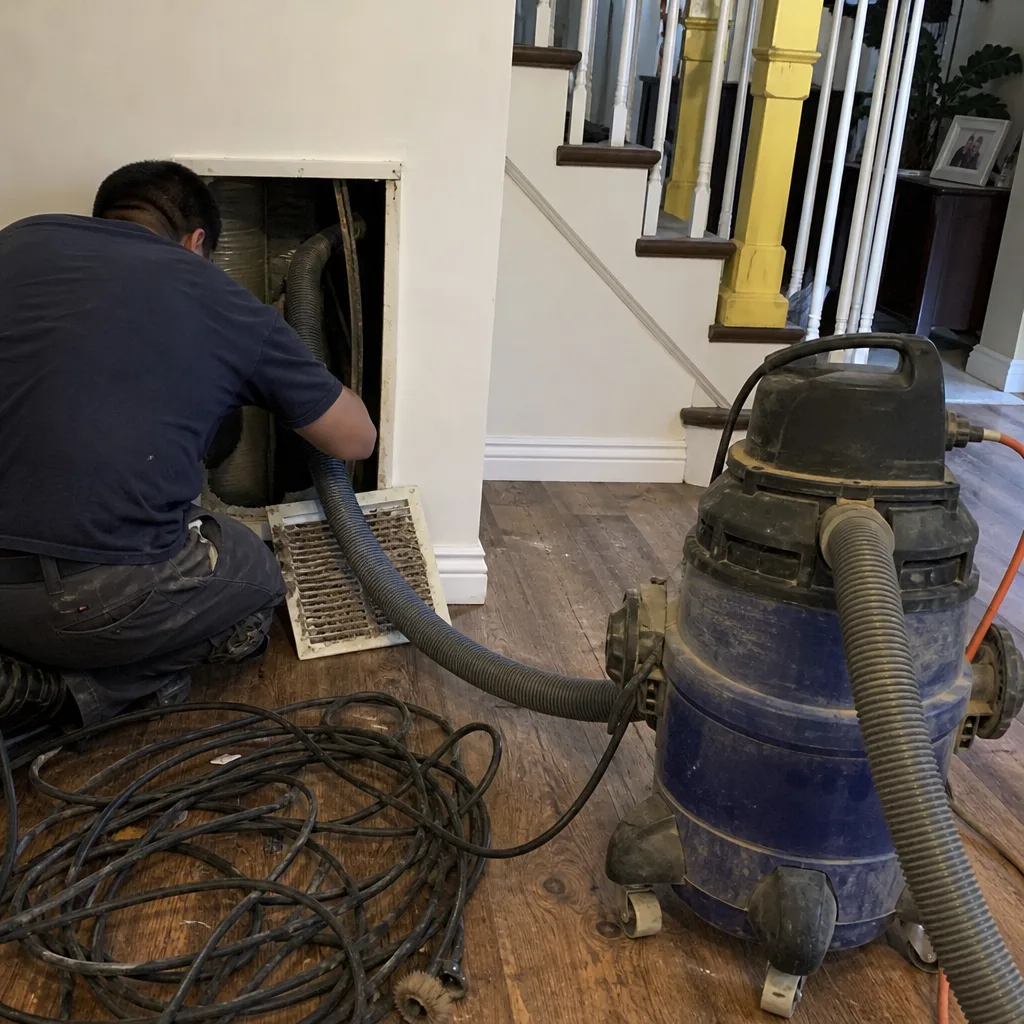 Before
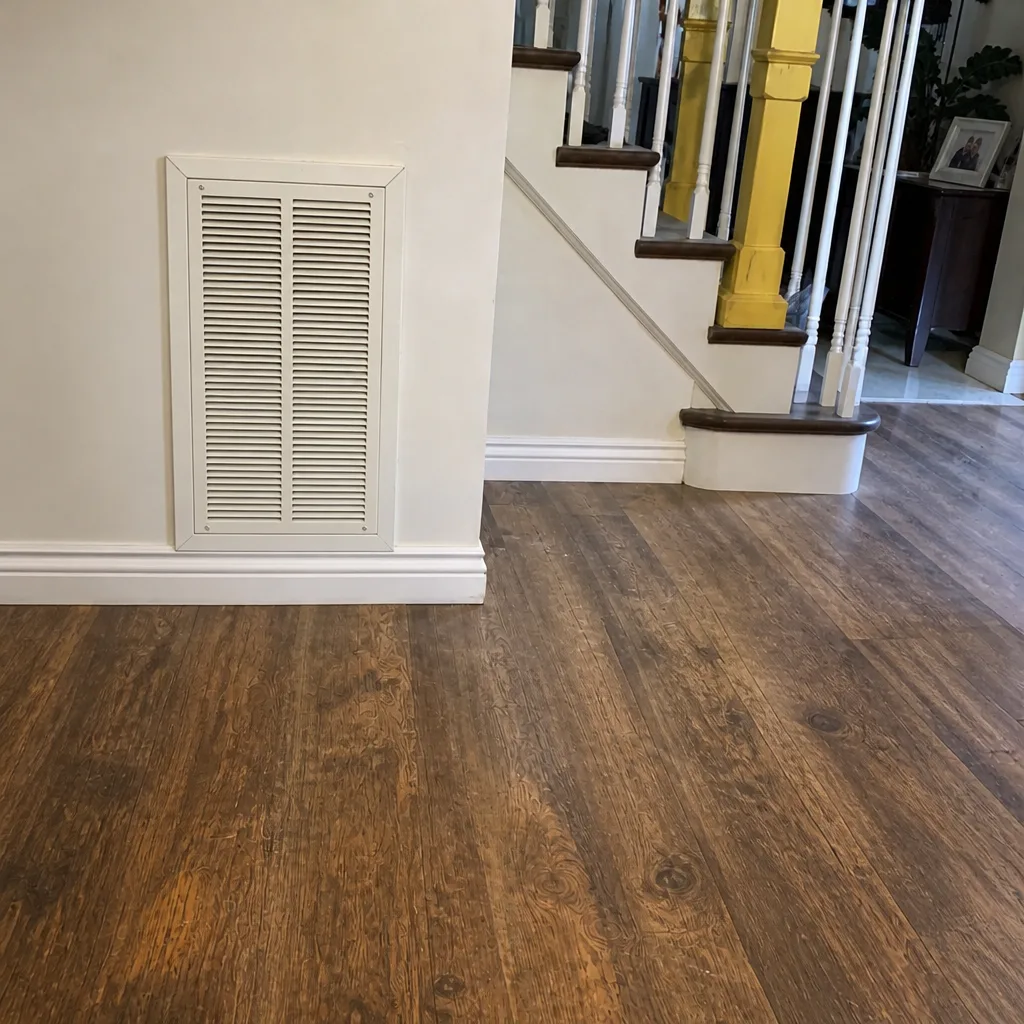 After
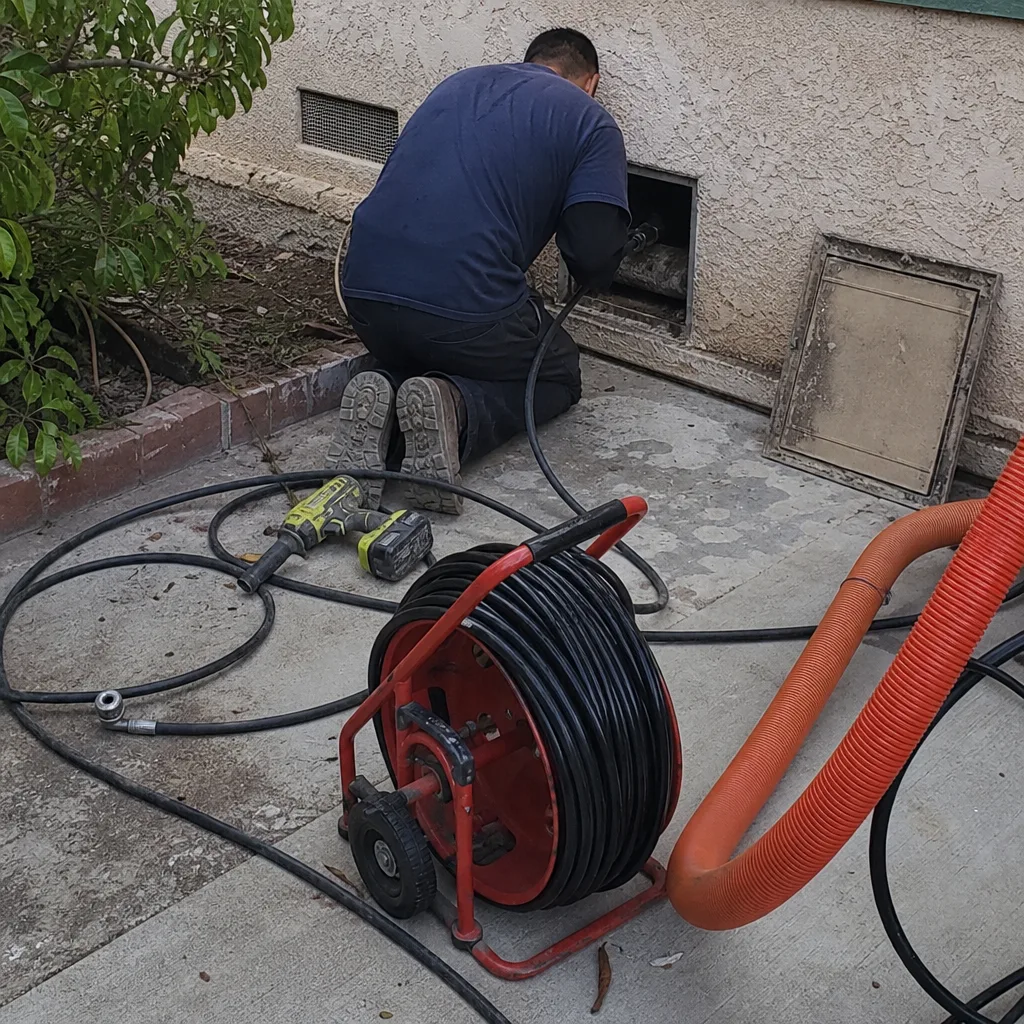 Before
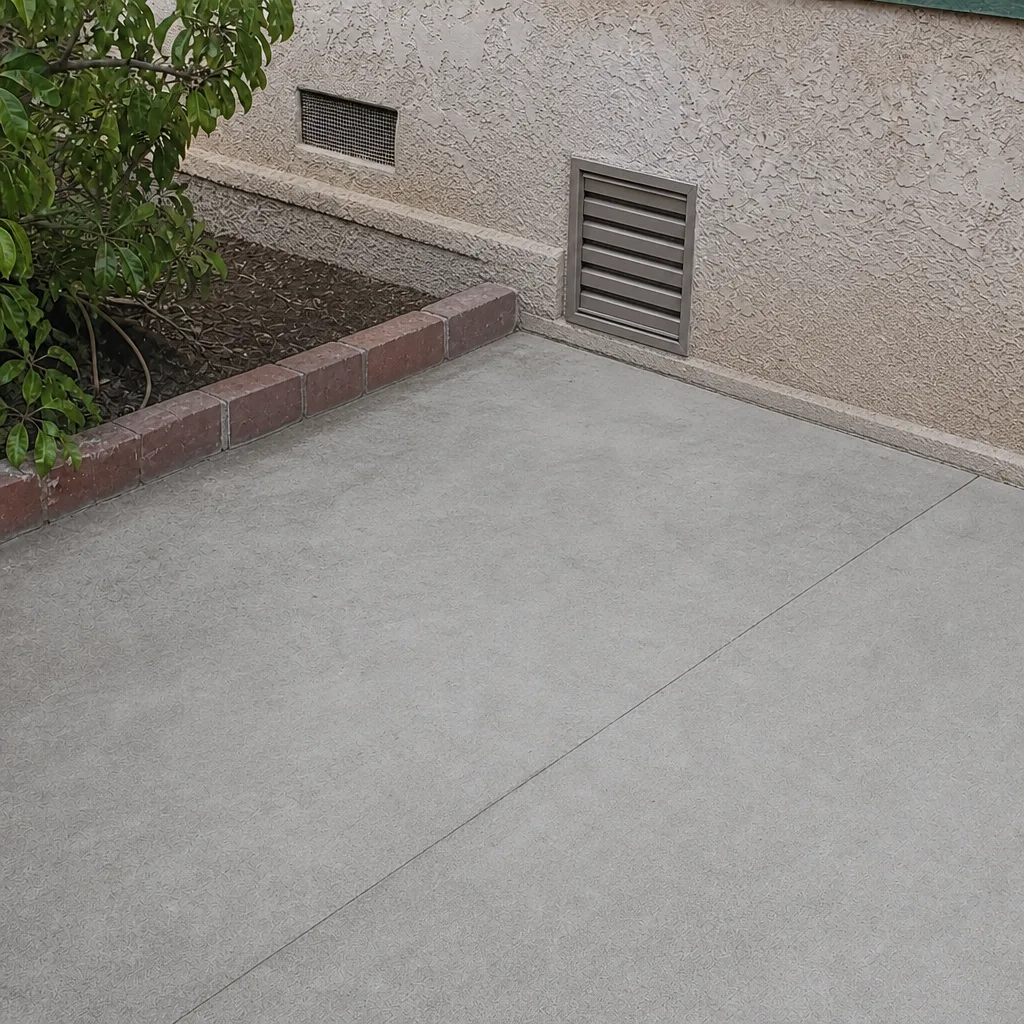 After
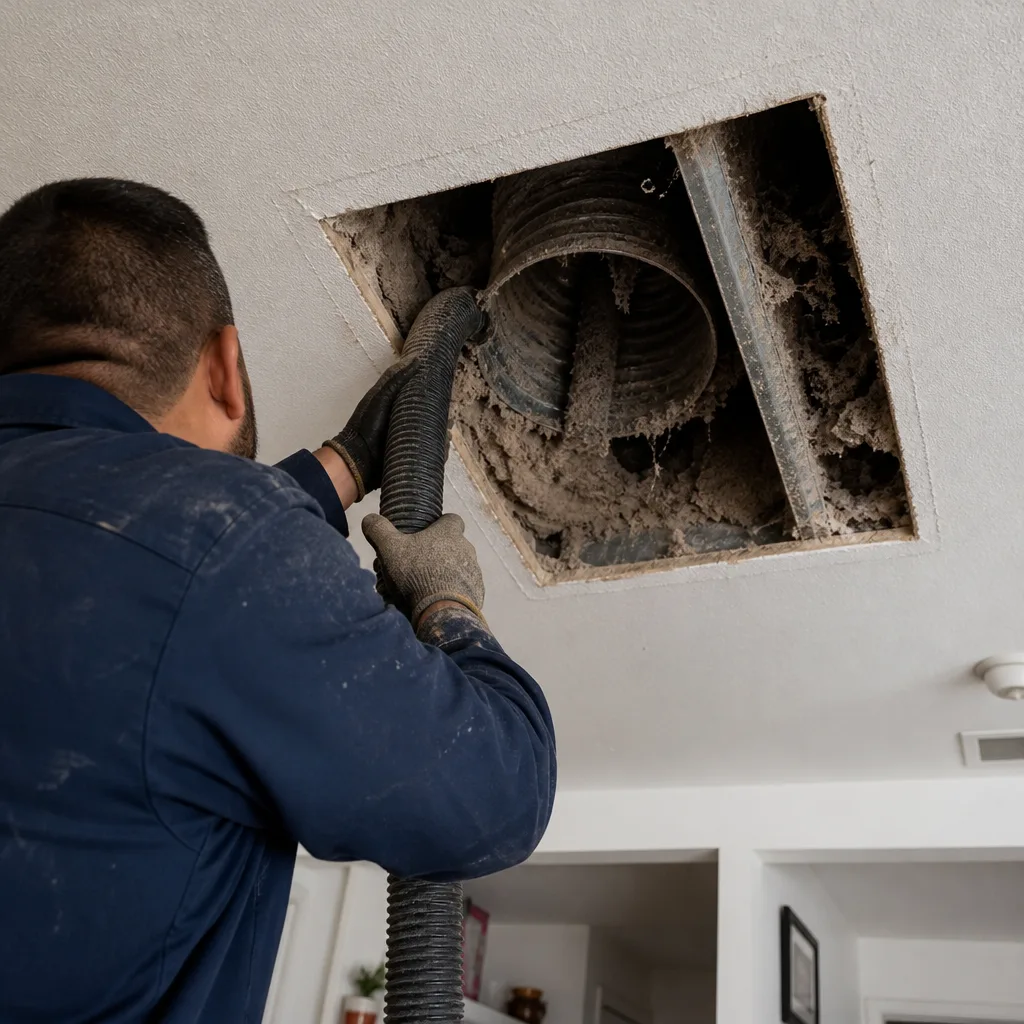 Before
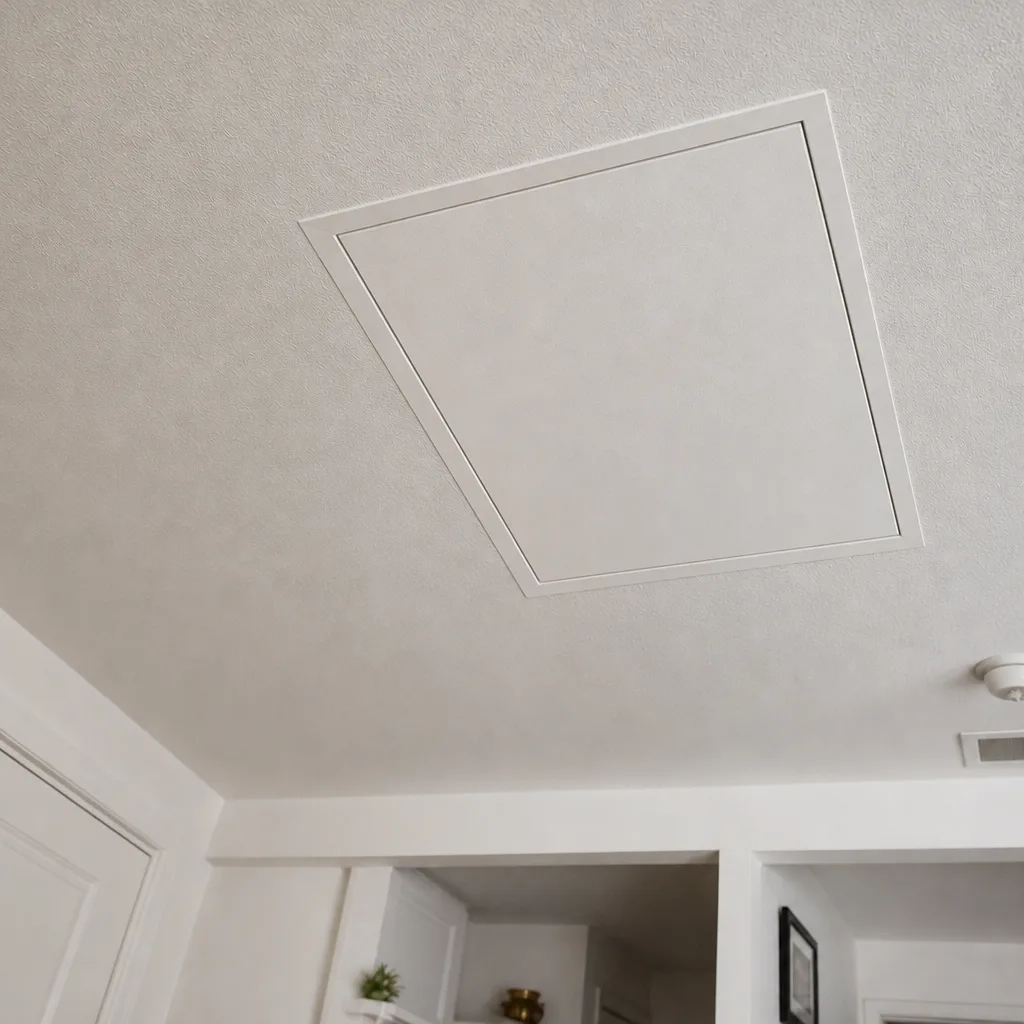 After
Common Mistakes to Avoid
- Following a spring-and-fall schedule from a national guide. Pomona’s real events are June cooling startup, October Santa Ana winds, and December heating startup. Cleaning on a generic calendar means you’re always a season behind.
- Sealing return pathways to keep smoke out. Blocking returns creates negative pressure and can damage the blower. The correct approach is better filtration and post-event cleaning, not airflow restriction.
- Ignoring musty odors in winter. A musty smell when the heat first kicks on is the leading indicator of moisture interacting with accumulated debris. Waiting until spring gives biological growth months to establish itself.
- Using the same filter for a full year. Pomona’s pollen season and Santa Ana events load filters unevenly. A filter that worked in March may be fully loaded by May, and one that survived summer may clog quickly during a smoke event.
- Assuming a clean-looking home means clean ducts. Duct systems pull from attics, crawlspaces, and exterior intakes. A spotless interior doesn’t tell you what’s accumulated in the return pathways.
- Deferring duct repairs until fall. Heat-related damage discovered in July gets worse through August and September. The repair doesn’t get cheaper by waiting, and the system runs inefficiently the whole time.
- Choosing air-blown cleaning because it’s cheaper. Air pressure alone doesn’t remove baked-on dust from heat-stressed ducts. What you save on the front end, you pay for in reduced air quality and the need to re-clean sooner.
When to Call a Professional
Call a professional when the problem is deeper than the registers. That includes visible dust blowback from supplies, musty odor that persists after filter changes, any post-renovation or post-smoke event situation, visible duct damage, or simply a system that hasn’t been cleaned in over five years. These are not homeowner-solvable problems, and attempting to address them with consumer equipment usually makes the situation worse by loosening material without removing it. Duct Cleaning Pomona offers free estimates in Pomona, and our team can assess the system, show you what we found, and provide a written estimate before any work begins. Call (833) 589-9571. We answer 24/7. Fast dispatch from 7am to 7pm, Sunday through Friday.
Frequently Asked Questions
In Pomona’s climate, most homes benefit from professional air duct cleaning every three to five years, with the interval shortened if the home has been through wildfire smoke events, renovation work, or if residents have significant allergies. Homes with pets, older duct systems, or those in areas with high Santa Ana dust exposure may need cleaning more frequently. The May pre-summer window and November post-Santa Ana window are the best times to schedule.
Yes, and more than most homeowners realize. Santa Ana winds carry fine dust and particulate from the high desert into Pomona, and that particulate enters homes through fresh-air intakes, soffit vents, and window gaps. Once inside, it gets pulled into return air pathways and settles in the duct system. A November inspection after the last major wind event will show whether the season’s accumulation warrants cleaning.
It can. Wildfire smoke particulate is fine enough to enter through exterior gaps, and your HVAC system’s fresh-air intake, if present, draws exterior air directly into the return pathway. The filter captures some of it, but what passes through settles in the ducts. After a significant smoke event, a professional cleaning with HEPA extraction removes that particulate from the system.
That odor is typically moisture condensing on cool duct surfaces during Pomona’s brief cold periods and interacting with accumulated dust or organic debris. It’s most common in older homes with uninsulated or poorly insulated duct sections. The fix is to clean the system before steady heating begins, removing the material that moisture activates.
The difference is in the method. Air-blown cleaning loosens some surface dust but leaves baked-on material. Contact cleaning with rotating brushes, like the Rotobrush system, physically scrubs duct walls, and HEPA negative-air extraction removes what’s dislodged instead of recirculating it. In Pomona’s heat-stressed ducts, contact cleaning is the only approach that addresses what prolonged high heat actually does to duct surfaces.
May, before summer cooling demand peaks, is the best window for most homeowners. November, after Santa Ana season, is the second-best and is especially important for homes exposed to wind-driven dust or wildfire smoke. December before heating startup works well for homes with winter moisture concerns. Call (833) 589-9571 for an exact assessment of your system’s timing needs. Estimates are free.
The Bottom Line
Seasonal duct care in Pomona is about matching maintenance to what the local climate actually does. That means pre-summer inspection in May, post-Santa Ana assessment in November, and a heating startup check in December. The common thread is understanding that Pomona’s heat, wind, and brief winter moisture all act on duct systems in specific, predictable ways. A clean system handles all three without accumulating damage. A neglected system degrades quietly, season after season, until the air quality problem becomes impossible to ignore. The fix is straightforward: monitor filters and registers monthly, clean at the right seasonal windows, and use professional contact cleaning with HEPA extraction when the job requires it.
Written by the team at Duct Cleaning Pomona, serving Pomona since 2015.