
Last updated November 4, 2026
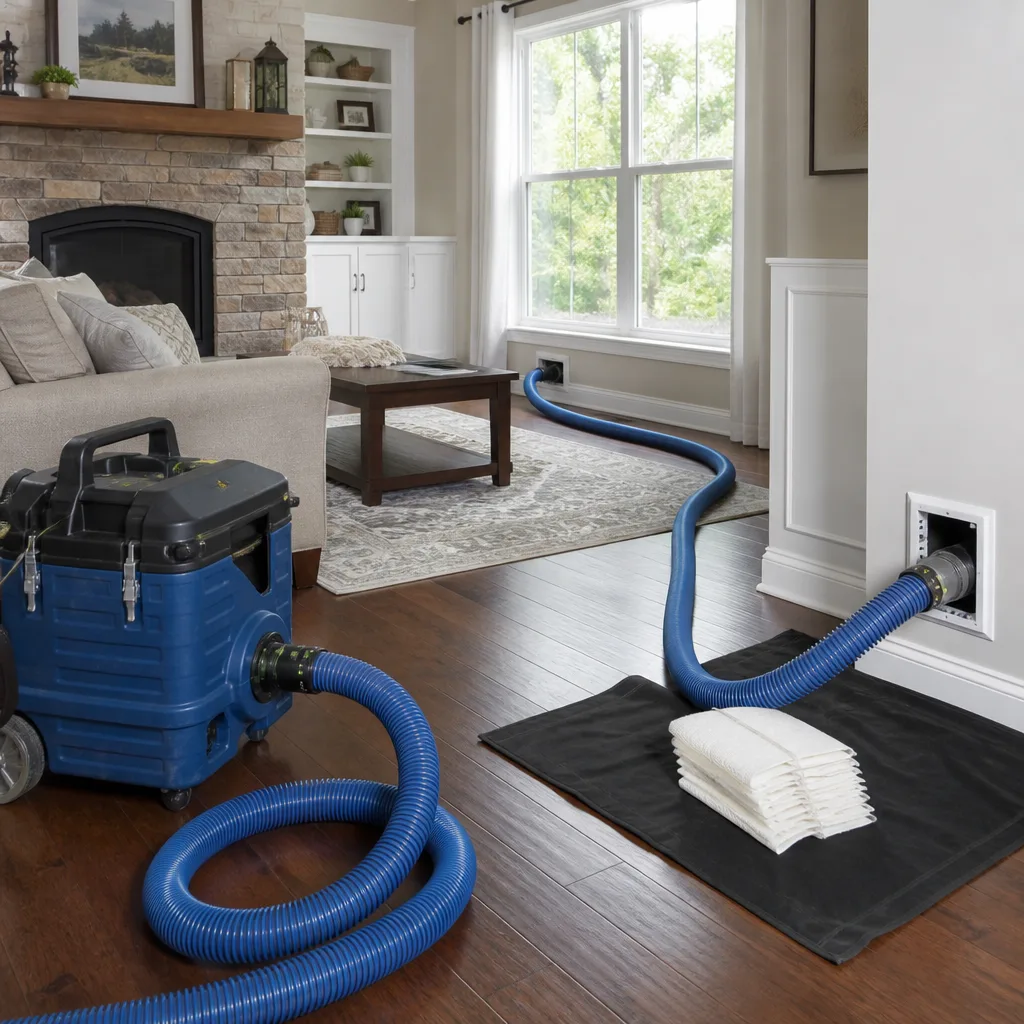 Whole-home duct cleaning
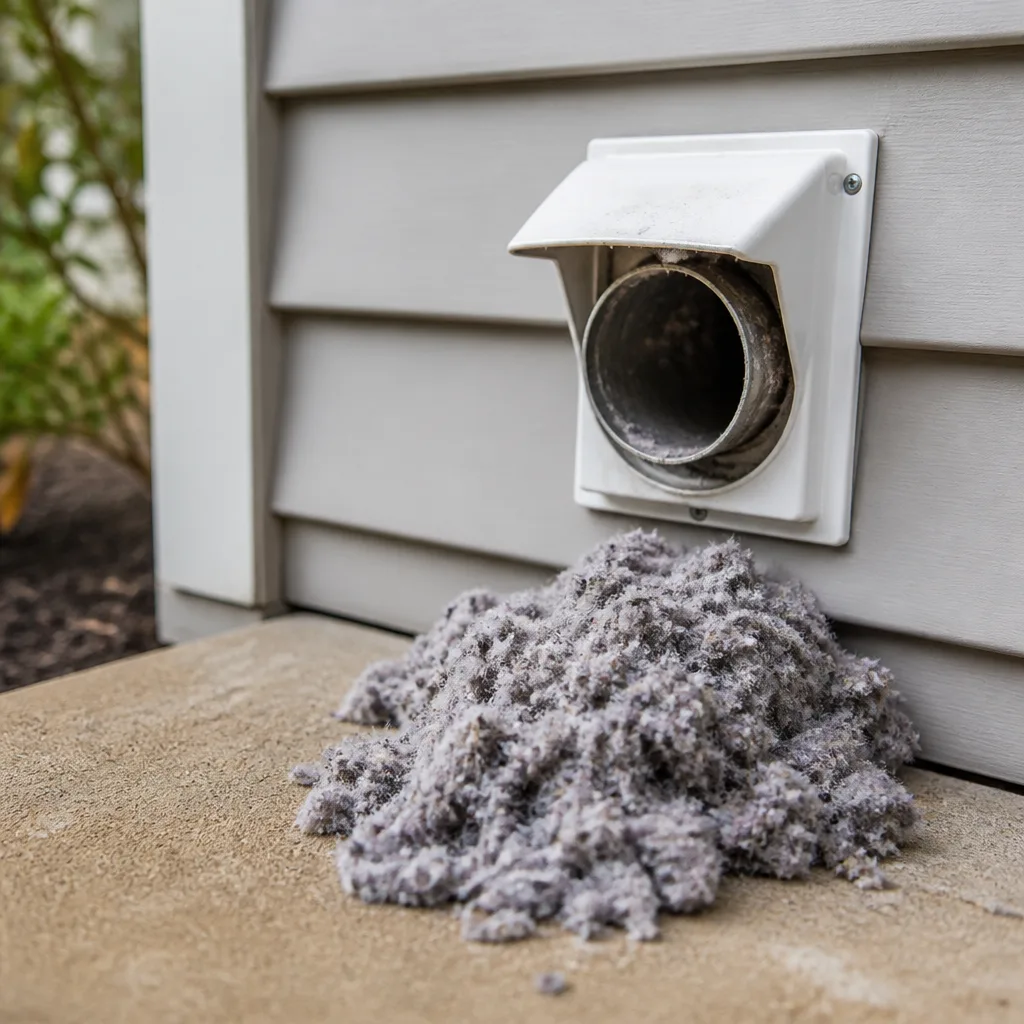 Dryer vent cleaning
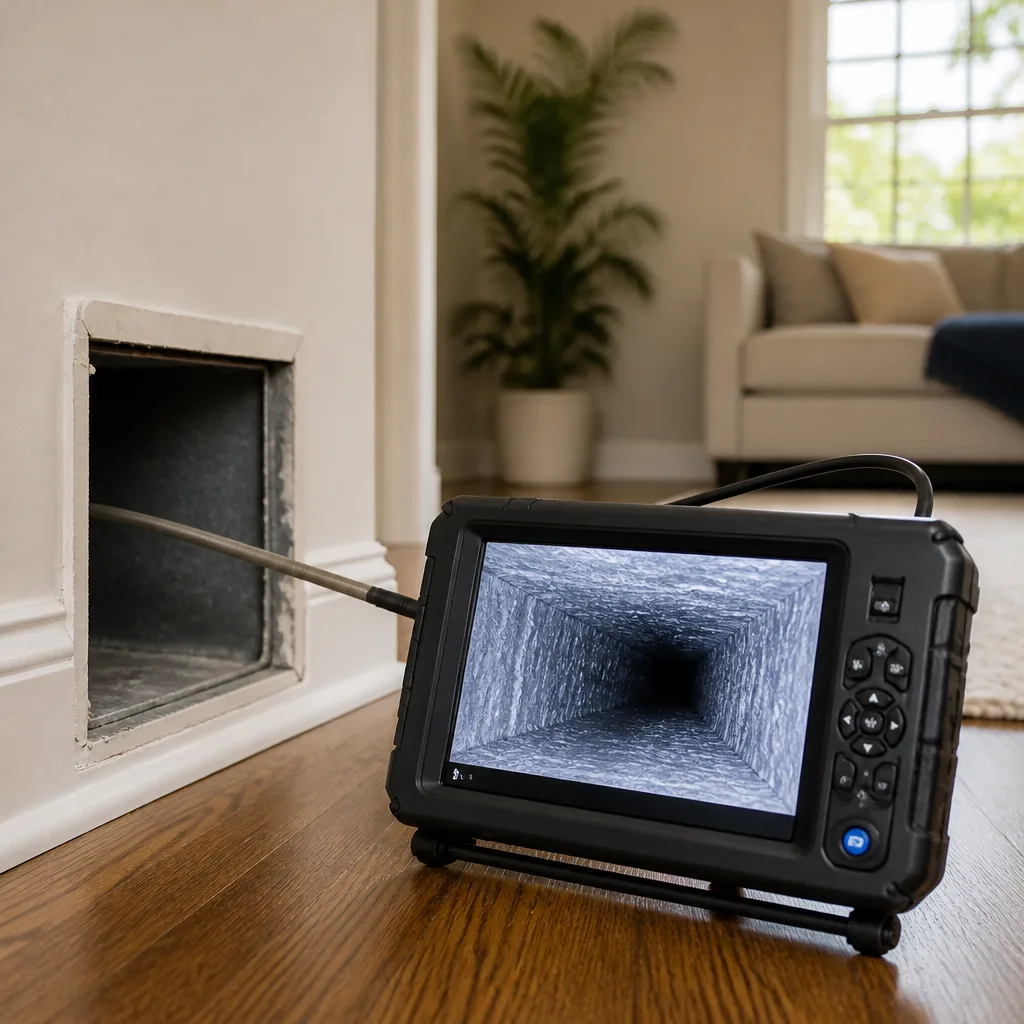 Camera inspection
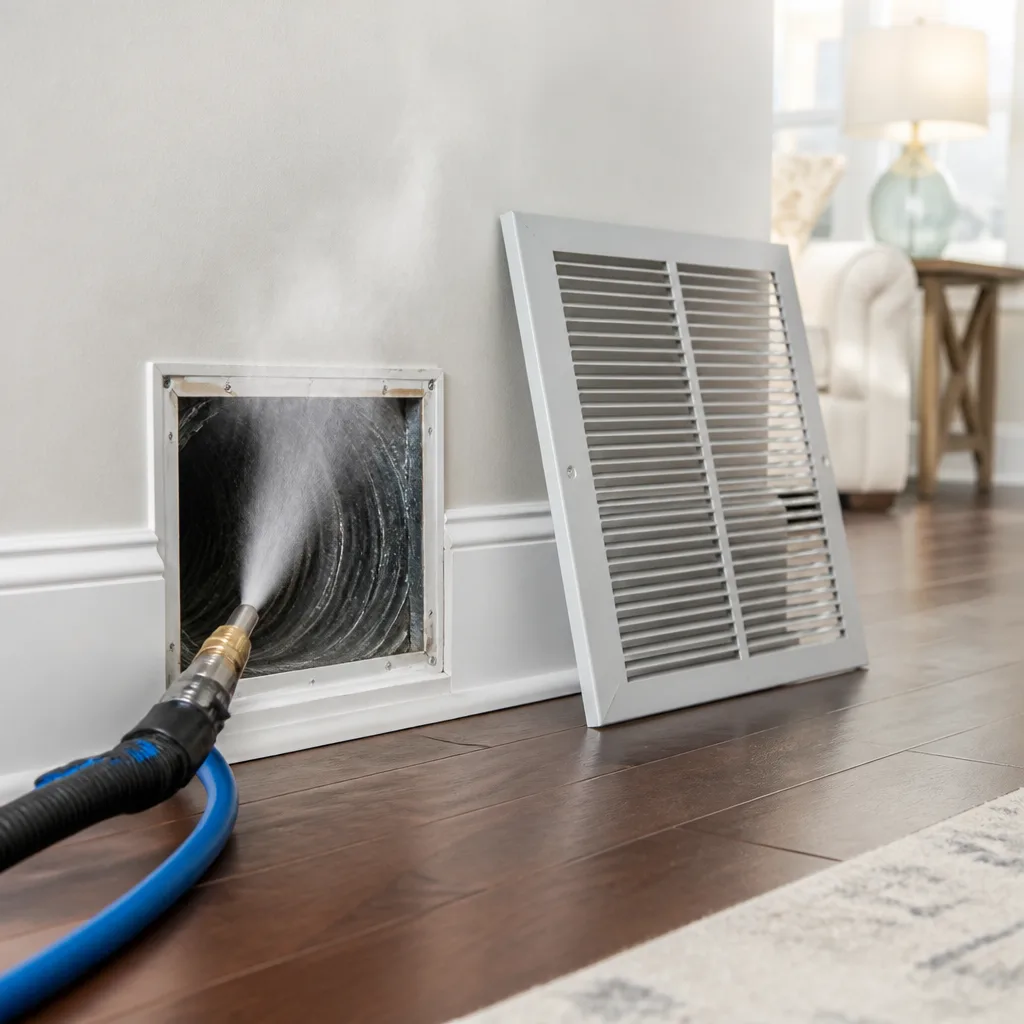 Sanitizing & deodorizing
Whole-system duct and dryer vent check with before-and-after photos - you see exactly what came out of your vents
That "$99 whole-house special" is a bait ad - the real number appears once they are in your hallway, or the "clean" is a shop-vac at the register. We photograph the inside of your ducts before and after instead.
Choosing the Right Air Duct Cleaning Brand: A Buyer’s Guide for Pomona
Most homeowners in Pomona start their search with a simple question: which duct cleaning brand should I hire? That question is built on a false premise. Unlike a furnace or an air conditioner, where the manufacturer’s name on the unit tells you something real about engineering and parts availability, a duct cleaning “brand” doesn’t manufacture anything. It describes a service process and a business entity, not a product you can compare spec sheets on. A national franchise name on the side of a van tells you nothing about what happens inside your ducts. The useful question for a Pomona homeowner is not which brand, but which equipment class, which scope of work, and which documentation standard. By the end of this guide, you’ll know how to evaluate those three variables and cut through the marketing noise that dominates this category.
Quick Answer
The best air duct cleaning company in Pomona isn’t defined by a national brand name. It’s defined by the equipment class it deploys (abatement-grade negative-pressure extraction versus a portable shop-style vacuum), whether it can repair ductwork it discovers damaged during cleaning, and whether it provides scope-of-work and before/after documentation as a standard practice. Choose a company that uses contact cleaning with HEPA negative-air extraction, can fix structural duct issues in the same visit, and writes down exactly what it will do before the work starts.
Styles & brands we work with
- Whole-home duct cleaning
- Dryer vent cleaning
- Camera inspection
- Sanitizing & deodorizing
Table of Contents
- What “Brand” Actually Means in Duct Cleaning
- The Three Equipment Capability Tiers That Determine Results
- Franchise Operators, Independent Technicians, and HVAC Companies: How the Business Model Affects Your Results
- Why Repair Capability Is the Most Overlooked Differentiator in Pomona
- What Online Reviews Measure, and What They Miss Entirely
- The Three Documents That Define a Reputable Operator, Regardless of Brand
- How to Evaluate a Duct Cleaning Company in Pomona: A Site-Visit Checklist
- Contact Cleaning vs. Air-Only Systems: What the Rotobrush Class Actually Does
What “Brand” Actually Means in Duct Cleaning
In the HVAC equipment world, a brand means something. A Trane furnace and a Carrier furnace are different machines with different part availability, different dealer networks, and different warranty structures. In the duct cleaning service world, the word “brand” gets stretched to cover three very different things: a national franchise name, an independent local company’s reputation, or an HVAC contractor that added duct cleaning as a side service line. None of those categories guarantees a specific cleaning outcome. What they do tell you is something about the business model behind the estimate.
A national franchise typically sells a territory to a local operator who follows a standardized process, but that process is built around the franchise’s equipment package and pricing model. The local operator may be excellent or may be racing to cover franchise fees. An independent operator in Pomona, by contrast, owns every decision: what equipment to buy, how to train technicians, and whether to stand behind the work. The independent’s name is on the van, so the incentive structure is different. An HVAC company with a duct cleaning division brings duct-system knowledge to the job, but the cleaning equipment may be secondary to their core heating and cooling business.
For a Pomona homeowner comparing options, the brand question should be reframed. Ask instead: who owns the company that will show up? What equipment do they run? And will the same crew that cleans also be able to fix a disconnected duct, a crushed return line, or a leaking plenum if they find one? Those questions get to outcomes. The name on the invoice doesn’t.
Our market serves Pomona and the surrounding San Gabriel Valley, where homes range from 1940s bungalows with original duct runs to newer track-built homes with flexible duct systems. The age and material of the ductwork matters more than the brand name on the cleaning company’s marketing. Galvanized steel from a 1950s home cleans differently than flex duct from the 1990s, and a competent operator should be able to say how and why.
The Three Equipment Capability Tiers That Determine Results
This is the section competitors rarely write, because it makes the industry uncomfortable. Duct cleaning equipment falls into three broad capability tiers, and the tier a company runs determines what actually happens inside your ducts. Here’s how to think about it.
Tier 1: Portable Consumer-Grade Equipment
At the bottom are portable units that look like heavy-duty shop vacuums with long hoses and rotating brushes. These machines connect to your ducts through a single access point and pull air through a small filter while a brush agitates the duct walls. The fundamental limitation is airflow: a portable unit moves a fraction of the air volume needed to pull dislodged debris out of a full duct run. What often happens is dust gets loosened from the duct walls, suspended in the air stream, and then resettles downstream when the airflow can’t carry it all the way out. The machine is doing something, but the cleaning is partial, and in some layouts it can make things worse by loosening material without extracting it.
Tier 2: Truck-Mounted Negative-Pressure Systems
Truck-mounted systems solve the airflow problem. A powerful vacuum unit mounted in the vehicle generates substantial negative pressure throughout the duct system, pulling air and debris toward the collection point. These systems move enough air to extract what a brush loosens. They represent a major step up from portable units, and many reputable companies run them. The limitation is what happens at the duct surface: if the company uses air alone to dislodge debris, without direct mechanical contact on the duct walls, some built-up material stays. Negative pressure is extraction. It is not, by itself, cleaning.
Tier 3: Abatement-Grade Contact Cleaning with HEPA Negative Air
The highest tier combines direct mechanical contact with containment-grade extraction. Contact cleaning means a rotating brush physically scrubs the duct surfaces, not just moving air past them. Negative air means a HEPA-filtered unit, like the Nikro machines used in abatement environments, pulls the dislodged material out of the house airstream entirely rather than recirculating any of it. Add Abatement Technologies filtration standards, and you have a system designed to capture the fine particulate that matters for indoor air quality. This is the class of equipment we deploy in Pomona homes, and it’s the standard a homeowner should ask about directly.
The equipment tier question is more useful than any brand question. Ask a company which class they run, by name, and listen to the answer. A company that says “we use professional-grade equipment” without naming the system or the extraction method is telling you something. A company that says Duct Cleaning Pomona runs a Rotobrush contact-cleaning system paired with Nikro HEPA negative-air machines has answered the question.
Franchise Operators, Independent Technicians, and HVAC Companies: How the Business Model Affects Your Results
There are three common business structures behind the duct cleaning estimates Pomona homeowners receive. Each has a different incentive structure, and the incentive structure is what shapes service consistency.
Franchise Operators
A franchise buys a recognized name, a marketing system, and usually a prescribed equipment package. Consistency across locations is the selling point, but the actual service quality depends on the individual franchisee. One franchise owner may be meticulous; another in the next territory may rush jobs to cover overhead. The franchise brand tells you about process design, not about the person who will drive to your house. Some franchise systems also push aggressive upsell targets, which creates a conflict between what the technician finds and what the technician is rewarded for selling.
Independent Operators
An independent company in Pomona owns its reputation directly. If the owner is also the person answering the phone or running the crew, there’s no separation between the business name and the person accountable for the work. Independent operators choose their own equipment, so their capability profile varies widely: some run Tier 1 portables, others invest in Tier 3 contact-cleaning rigs. The brand name tells you nothing; you have to ask the equipment and process questions directly. The advantage is accountability: no franchise parent company to hide behind, no corporate office to route a complaint through.
HVAC Companies with Duct Cleaning Divisions
An HVAC contractor that offers duct cleaning brings legitimate duct system knowledge to the job. When we find a disconnected return or a crushed flex run, an HVAC tech understands what it means for system performance. The risk is that the cleaning operation is a secondary revenue line, not a core competency. The cleaning equipment may be basic, and the cleaning crew may be a different team than the repair crew. Ask whether the same visit handles both cleaning and any repair work discovered, or whether that becomes a separate trip and a separate invoice.
For the specific service itself, our approach in Pomona is the independent model with a twist: we own our equipment, our process, and our reputation, and we carry the repair capability in-house. That means if we find a problem during air duct cleaning, the fix doesn’t wait for a different company or a different appointment. The same crew can address it.
Why Repair Capability Is the Most Overlooked Differentiator in Pomona
Here’s a scenario that plays out in Pomona regularly, and it explains why repair capability matters. A homeowner hires a cleaning-only company. During the job, the technician finds a disconnected duct segment, a rusted-through section of return trunk, or a flex duct that has pulled loose from a boot. The cleaning company documents the finding, hands the homeowner a report, and leaves. Now the homeowner holds a document that says: your duct system has a material defect that compromises air quality and system efficiency. That homeowner must now find a separate contractor, schedule a second appointment, pay a second mobilization cost, and coordinate access all over again. The cleaning invoice was paid in full, but the duct system is not functioning correctly.
A cleaner who can’t fix what they find creates a documentation liability for the homeowner. A cleaner who carries repair capability in-house turns that same discovery into a same-visit correction. That’s the “clean it, then fix it” model. It’s not about upselling. It’s about completing the job the homeowner actually needs: a duct system that’s clean and functioning.
Air duct repair in Pomona covers a range of work: reconnecting separated duct joints, replacing crushed or damaged flex sections, sealing accessible leaks at plenums and boots, and repairing torn duct insulation. Some of this work is straightforward; some of it requires knowing how much static pressure a specific system can tolerate and how a repair will affect airflow balance. The cleaning technician who also understands repair work is looking at your ducts with a different set of eyes than a cleaning-only operator.
In our experience in Pomona homes, the older the house, the more likely there’s a duct issue waiting to be found. A 1950s home in the Wilshire corridor of Pomona may have original metal ducts with degraded seals. A 1980s tract home may have flex duct that has sagged or separated. A house that’s been through a renovation may have drywall dust compacted in the returns and disconnected boots hidden behind new framing. The cleaning company that can address what it finds is delivering a different service than the one that just writes it down.
What Online Reviews Measure, and What They Miss Entirely
Online reviews are the first stop for most Pomona homeowners researching any service. They’re useful, but they have a specific blind spot in the duct cleaning category. A five-star review tells you that the technicians were polite, showed up on time, and left the house tidy. Those things matter. What the review cannot tell you is whether the ducts were actually cleaned to the level the homeowner paid for. The customer can’t see inside the full duct run. They can see the first few feet past the register, but the trunk line, the returns, and the plenum are invisible to them. A review measures the customer experience, not the cleaning effectiveness.
This creates a perverse incentive. A company can earn great reviews by being punctual, courteous, and fast while doing a mediocre cleaning job, because no one can see the inside of their own ducts. A company that does a meticulous, slow, thorough job might take longer and inconvenience the homeowner slightly more, earning a four-star review for “took a while.” The rating system doesn’t capture the actual work product. It captures the service interaction.
None of this means you should ignore reviews. Read them for what they can tell you: consistency of arrival windows, whether the price quoted on the phone matched the final invoice, whether the crew respected the property, and whether the office communicated clearly. Those are all real signals. Then supplement the reviews with the process questions: what equipment class do you run? What’s your extraction method? Will you show me before and after photos of my actual ducts, not a stock photo from a training manual? A company that answers those questions directly is a company you can verify independently of the review score.
For Pomona homeowners, the review landscape is complicated by the same dynamic you see in the wider Los Angeles market: a high volume of companies competing on price, with review scores that cluster at the top and bottom. A company with 300 five-star reviews and a staff of three is a signal worth investigating. Ask for a scope-of-work agreement and an equipment spec sheet. If the company can provide them, the reviews are probably earned. If it hesitates, the reviews might be borrowed.
The Three Documents That Define a Reputable Operator, Regardless of Brand
Strip away the brand names, the marketing copy, and the review scores, and you’re left with three documents that tell you whether a duct cleaning company operates at a professional standard. In our experience, these three documents separate the serious operators from the rest.
1. The Scope-of-Work Agreement
A scope-of-work agreement is a written description of what the cleaning job includes: which access points will be cut or used, how many supply and return runs are in scope, what the cleanup protocol is, and what specific outcomes the company commits to. Without this document, “duct cleaning” means whatever the technician decides it means on the day of the job. With it, you have a reference point for whether the work was actually completed. A reputable operator will provide one before the job starts, not after you’ve paid. The scope should also state what’s excluded: if the company can’t access a particular run or if a section of duct is too damaged to clean safely, that should be disclosed up front, not discovered later.
2. The Before/After Documentation Standard
Every professional duct cleaning company should be able to show you the inside of your ducts before and after the work. Camera inspection equipment is standard at this point, and the documentation standard matters. Ask what you’ll receive: photos of the trunk line before and after? Video of the returns? A written report with images attached? A company that offers “we show you what we found” as a standard practice, not as an upsell add-on, is a company with nothing to hide. The before/after record also serves as a baseline: if you have a future indoor air quality issue, you’ll know what the ducts looked like at a specific date.
3. The Equipment Specification Sheet
A one-page document listing the contact-cleaning system, the negative-air extraction unit, the filtration standard, and the air volume moved by the equipment. Not a marketing brochure. A spec sheet. It tells you the equipment class. A homeowner in Pomona who asks for this document and receives it has already filtered out most of the Tier 1 operators, because a company running portable consumer-grade gear rarely puts it in writing. The spec sheet should name the systems: Rotobrush for contact cleaning, Nikro for HEPA negative-air extraction, Abatement Technologies for filtration. If the company runs a truck-mounted system from a different manufacturer, that’s fine too, as long as the tier is clear and the equipment is named.
These three documents, more than any brand name or franchise logo, define what a Pomona homeowner is actually buying. If a company provides all three without being asked, they’ve told you who they are. If a company balks at any of the three, the quote probably isn’t worth taking seriously.
How to Evaluate a Duct Cleaning Company in Pomona: A Site-Visit Checklist
Here’s a practical sequence for evaluating an air duct cleaning company in Pomona, from first phone call to job completion. It’s built around the equipment and documentation questions that actually predict results.
- Ask directly what equipment class they run. Write down the answer. If it’s vague (“we use professional tools”), ask for the model names. If they can’t name the systems, move on.
- Ask whether they clean and repair in the same visit. If the answer is no, ask what the repair process looks like: who handles it, when, and at what cost. A cleaning-only company should be honest about that limitation.
- Ask for the scope-of-work agreement before you commit. Read it. Confirm the number of runs, the access method, and the cleanup protocol. If something’s missing, ask about it in writing.
- Ask what before/after documentation you’ll receive. The answer should be specific: photos of the trunk line, video of the return runs, a written report, or all three.
- Ask how the estimate is structured. A reputable operator prices per job by written estimate, not per vent or per square foot with a teaser rate. The written estimate sets the final price.
- Ask about containment during the job. Negative-air extraction should create negative pressure in the duct system so dislodged debris doesn’t backfill into the living space. This is the difference between cleaning your ducts and redistributing dust throughout your Pomona home.
- Check the answer you get when you ask about your specific HVAC setup. A technician familiar with Honeywell and Aprilaire IAQ systems understands how the ducts integrate with filtration equipment. That’s a signal of integrated knowledge, not just duct-cleaning mechanics.
One more note for Pomona specifically: our summers are long and dry, and the HVAC system runs hard from June through September. The annual cooling season means ducts accumulate conditioned-space particulate, and dust from the surrounding hills and the 10 Freeway corridor gets pulled into homes through return leaks. A duct system that’s cleaned once needs to be cleaned right, because the next cleaning won’t happen immediately. The equipment class question isn’t academic; it’s the difference between clean ducts and politically-clean ducts.
Contact Cleaning vs. Air-Only Systems: What the Rotobrush Class Actually Does
The Rotobrush contact-cleaning system is a meaningful dividing line in this industry, and understanding why it matters will help you evaluate any duct cleaning estimate in Pomona. Most portable and many truck-mounted systems clean by directing high-velocity air at the duct walls. The air stream dislodges debris, and the vacuum pulls it away. That sounds reasonable, and in clean ducts it can be adequate. But ducts that haven’t been cleaned in years, or ducts in homes where renovation dust has settled and caked, present a different problem. The film of dust, pet hair, and particulate on the duct walls can be sticky and adhered. Air alone may not remove it. The air stream glosses over the surface while the vacuum extracts the loose stuff and leaves the adhered layer in place.
Contact cleaning solves that with a rotating brush head that physically scrubs the duct surface while the negative-air system extracts the dislodged material. The brush reaches what air pressure alone can’t. On galvanized steel ducts from an older Pomona home, this makes a visible difference. On flex duct, the brush must be used with care, and the technician’s familiarity with different duct materials matters. The system is a tool, and the tool is only as effective as the operator’s judgment about how to run it.
The combination that works is contact cleaning plus abatement-grade extraction. Rotating brushes without strong negative pressure just suspend debris and let it resettle. Strong negative pressure without contact cleaning leaves the adhered layer untouched. Pair the two, and you have the equipment class that dryer vent cleaning – which should always be the same standard – and air duct cleaning both deserve. The HEPA filtration on the extraction side matters for the same reason: what you remove from the ducts should leave the house, not cycle back into it.
We run Rotobrush contact cleaning and Nikro HEPA negative-air machines on every job, with Abatement Technologies filtration standards. No homeowner in Pomona should settle for less than knowing, by name, what machine class is pulling air through their ducts.
Common Mistakes to Avoid
- Choosing a company by franchise name alone. A recognizable brand on a van tells you about the business model, not the person who will do the work. Ask the equipment and process questions regardless of the name on the estimate.
- Accepting a per-vent price as a real quote. Industry pricing is per job, set by written estimate. A per-vent teaser rate is built to inflate once the technician is in your Pomona home.
- Skipping the scope-of-work document. Without a written scope, there’s no reference point for what was included, excluded, or completed. You’re left comparing your memory against the invoice.
- Hiring a cleaning-only company when you suspect structural duct problems. If your home has visible duct damage, disconnected registers, or a known renovation history, the company that can only clean and report is creating follow-up work, not completing it.
- Relying on online reviews to verify cleaning quality. Reviews measure customer interaction, not what happened inside your ducts. The equipment and documentation questions are the only way to verify the actual work product.
- Ignoring the containment question. A company without negative-air extraction can actually make indoor air quality worse by loosening debris and letting it circulate back into the living space.
See the difference
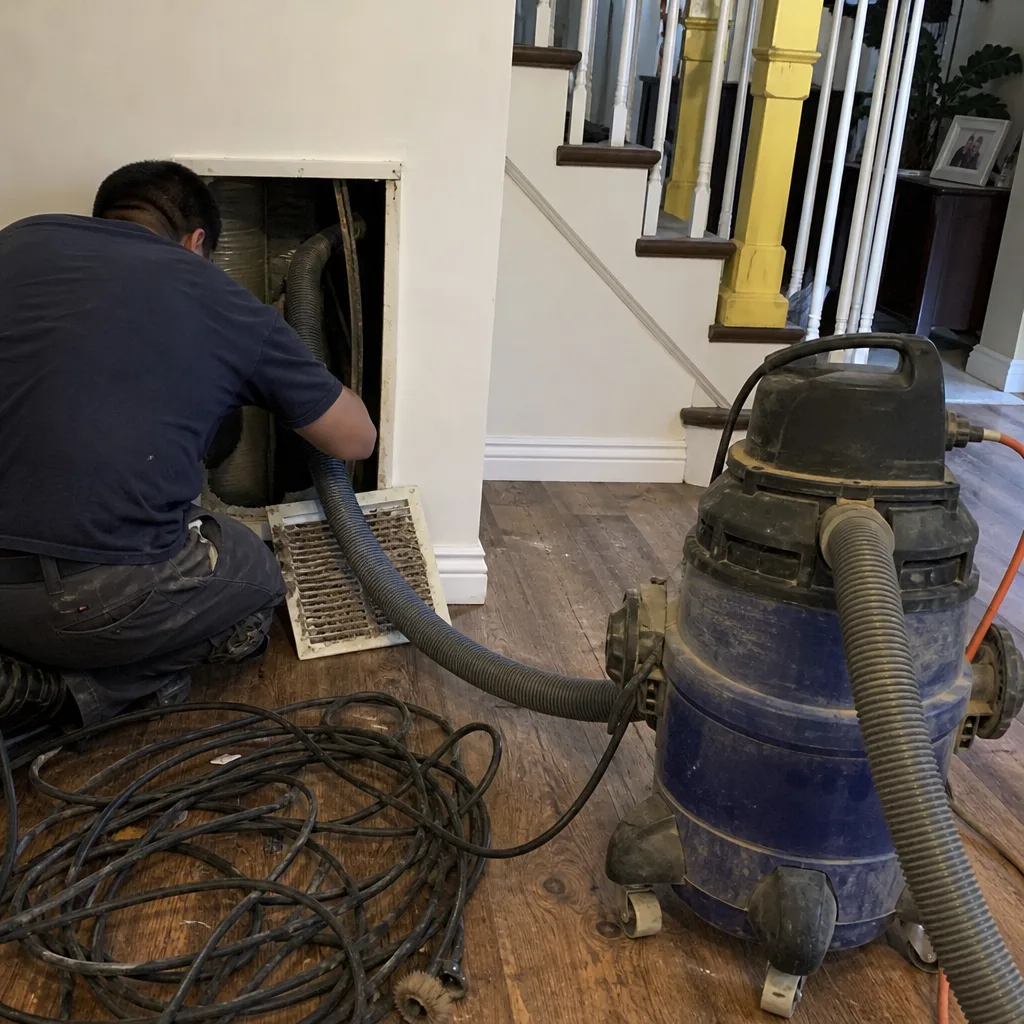 Before
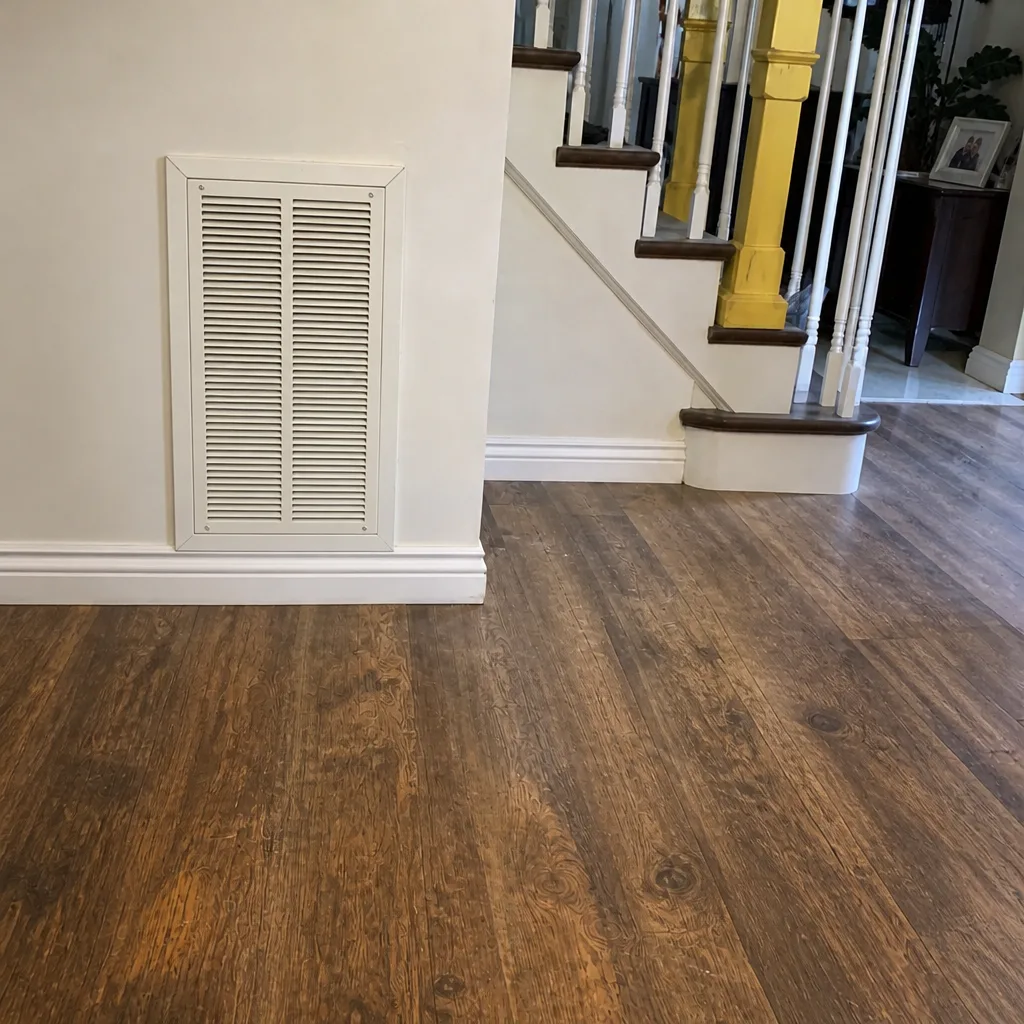 After
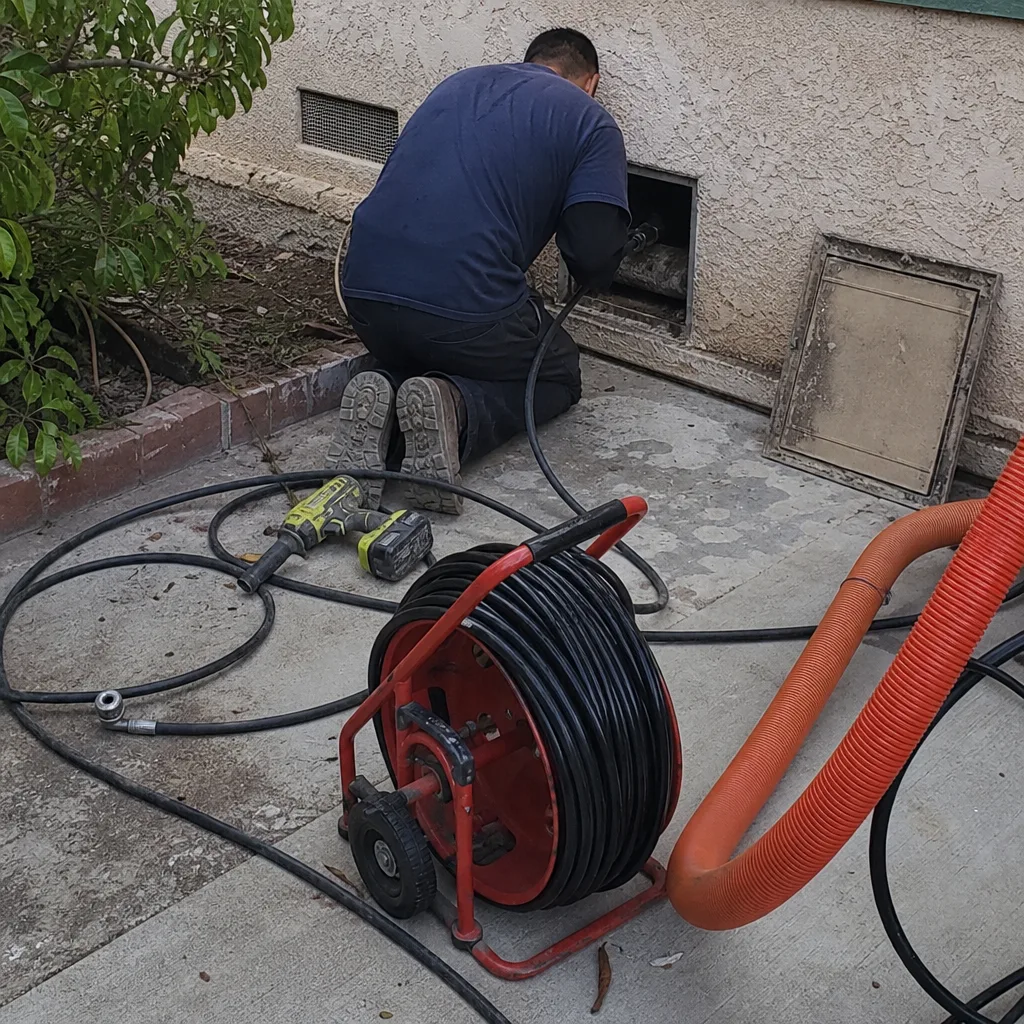 Before
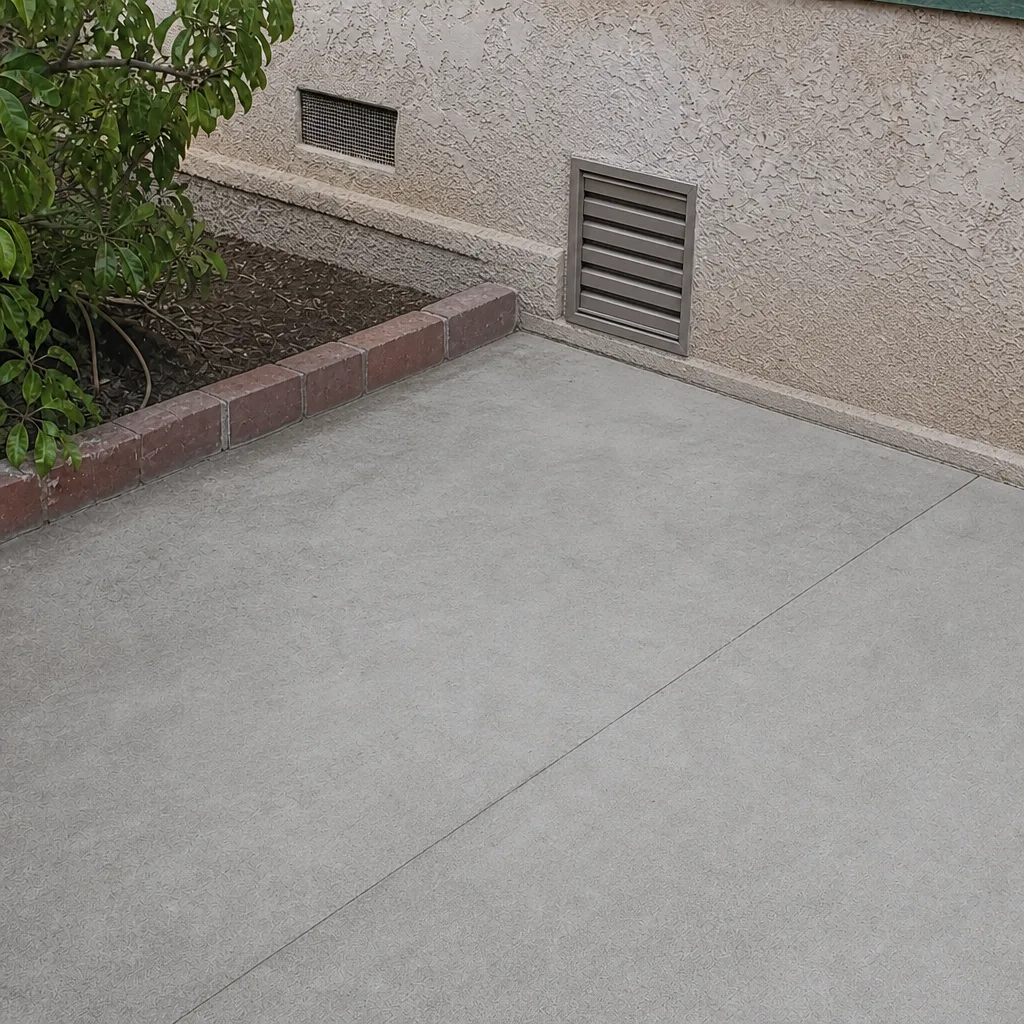 After
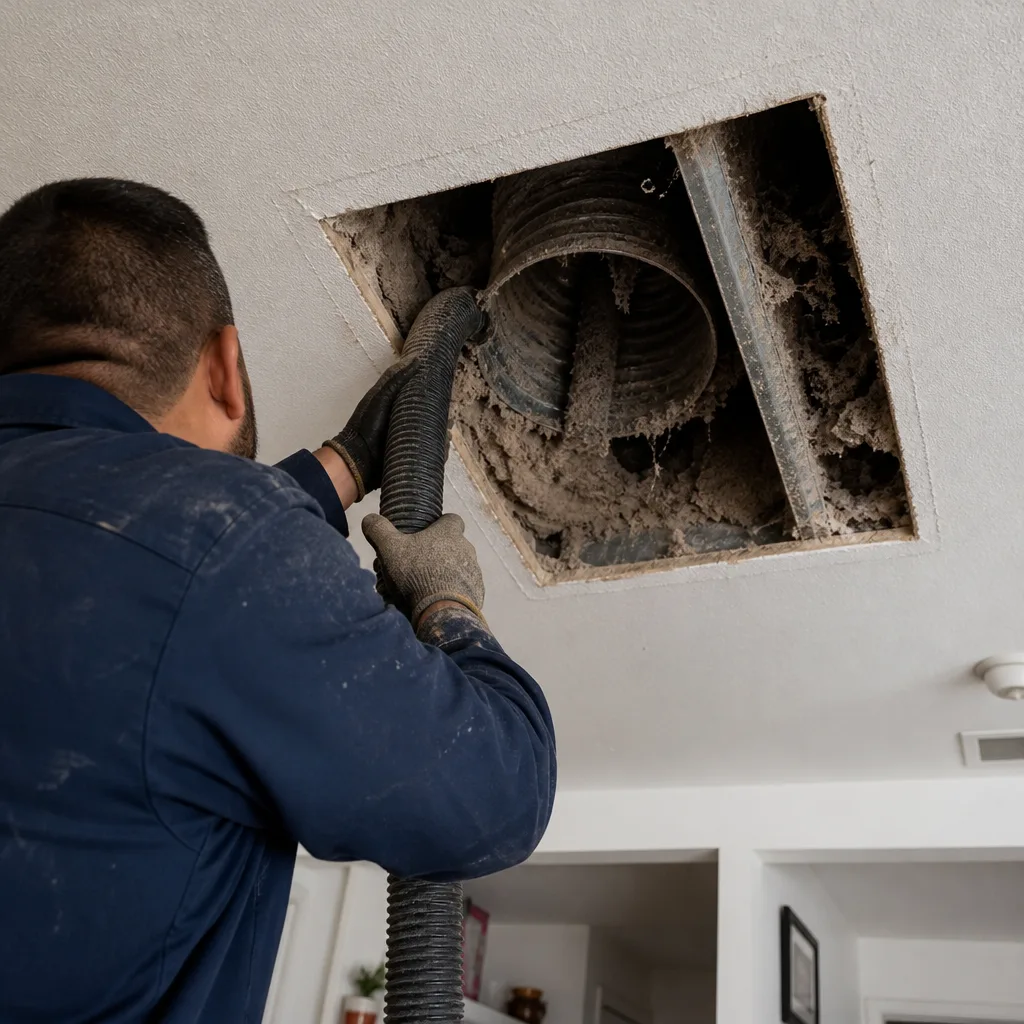 Before
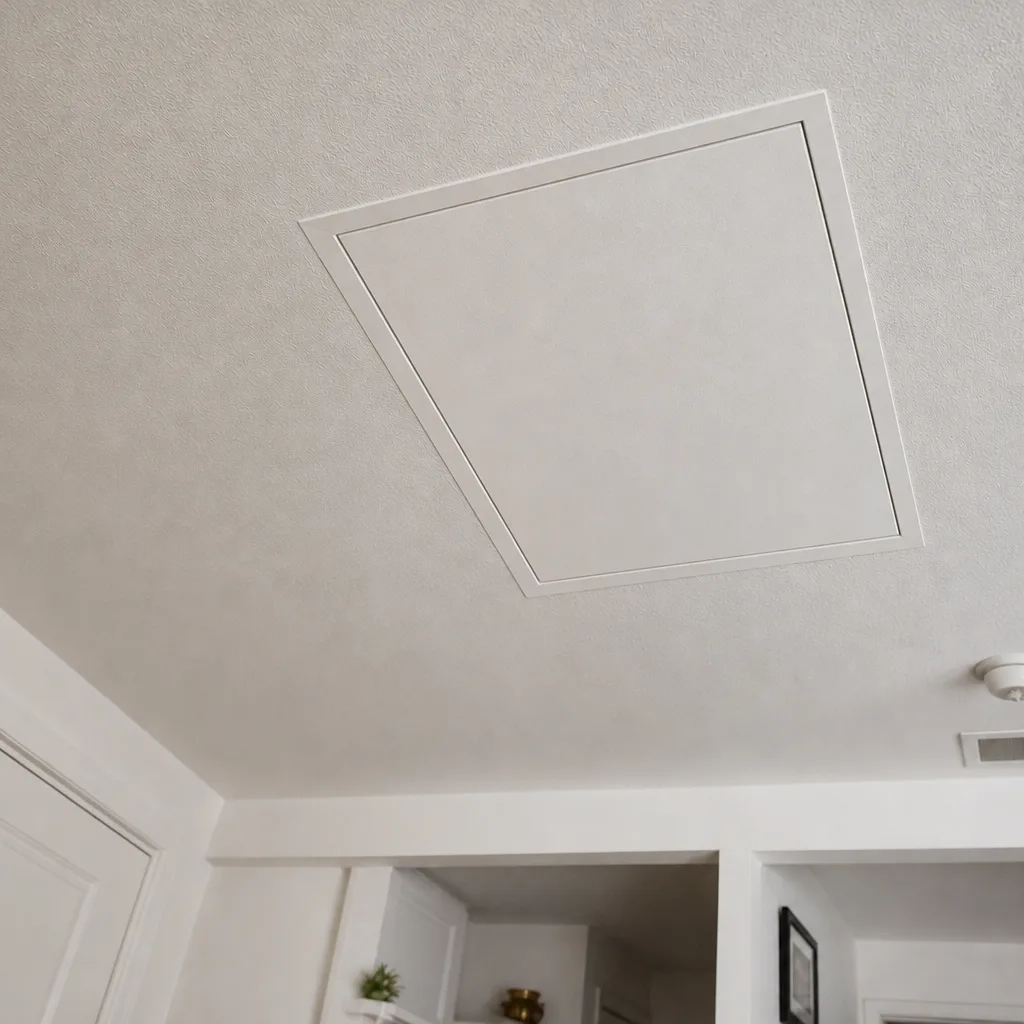 After
When to Call a Professional
You should bring in a professional Pomona duct cleaning company when you can see particulate blowing from your registers, when the ducts haven’t been cleaned in the last several years, after a renovation that generated drywall or plaster dust, or when anyone in the household has persistent allergy symptoms that worsen when the HVAC runs. A dryer vent that hasn’t been cleared recently is a separate fire-prevention issue, and it’s worth booking as its own dedicated service, not an afterthought. If you suspect duct damage from pests, deferred maintenance, or renovation work, a cleaning visit is also the opportunity to document and repair what’s found in the same appointment. Duct Cleaning Pomona offers free estimates in Pomona. Call (833) 589-9571. We answer 24/7. Fast dispatch from 7am to 7pm, Sunday through Friday.
Frequently Asked Questions
Air duct cleaning in Pomona is priced per job by written estimate, not per vent. The estimate reflects the number of supply and return runs, the access points, the equipment class deployed, and any repair work identified during the job. A written estimate sets the final price before work begins. Call (833) 589-9571 for an exact quote. Estimates are free.
Cheaper quotes usually come from companies running portable consumer-grade equipment with a single access point and no negative-air extraction. The job is faster, the machinery is less capable, and the cleaning depth is shallower. A low teaser price may also be the opening move in a per-vent upsell that inflates once the technician is on site. Ask which equipment class the company runs and whether the final price is set by written estimate.
Ask for before-and-after photo or video documentation of your actual ducts, taken during the job with a camera inspection system. A company that offers “we show you what we found” as a standard practice, and provides a written report with images, is a company you can verify. If the documentation is stock photos or a verbal description, the work product is unverified.
Contact cleaning uses a rotating brush to physically scrub the duct walls, removing the adhered layer of dust and particulate. Air-only cleaning directs high-velocity air at the ducts without mechanical contact, which can leave built-up material in place. Contact cleaning, paired with HEPA negative-air extraction like Nikro units, is the higher standard.
Some can, and some cannot. A cleaning-only company will document damage and leave you to hire a separate contractor. A company with in-house repair capability, like Duct Cleaning Pomona, can address disconnected runs, crushed flex duct, leaking plenums, and other structural issues in the same visit. Ask before you book whether repair work is included in the company’s scope.
Yes. If you’ve invested in an integrated IAQ system from Honeywell or Aprilaire, the ductwork it moves air through is part of the same air-quality ecosystem. Dirty ducts mean the filtration system works harder and delivers already-particulate-laden air to the conditioned space. A technician who understands those IAQ systems can clean the ducts in that context rather than treating them as an isolated component. Call (833) 589-9571. We answer 24/7. Fast dispatch from 7am to 7pm, Sunday through Friday.
The Bottom Line
The right air duct cleaning brand in Pomona is not a brand at all. It’s a capability profile: contact cleaning that physically scrubs the duct surfaces, HEPA negative-air extraction that removes what the brush dislodges, documentation that proves the work happened, and repair capability that completes the job when damage is found. The company you hire should be able to name its equipment, provide a scope-of-work agreement before the job starts, and show you the inside of your ducts before and after. Duct Cleaning Pomona operates to that standard, and we’d rather you ask the hard questions of any company you’re considering, including us. That’s how this industry gets better.
Written by the team at Duct Cleaning Pomona, serving Pomona since 2015.