
Last updated November 4, 2026
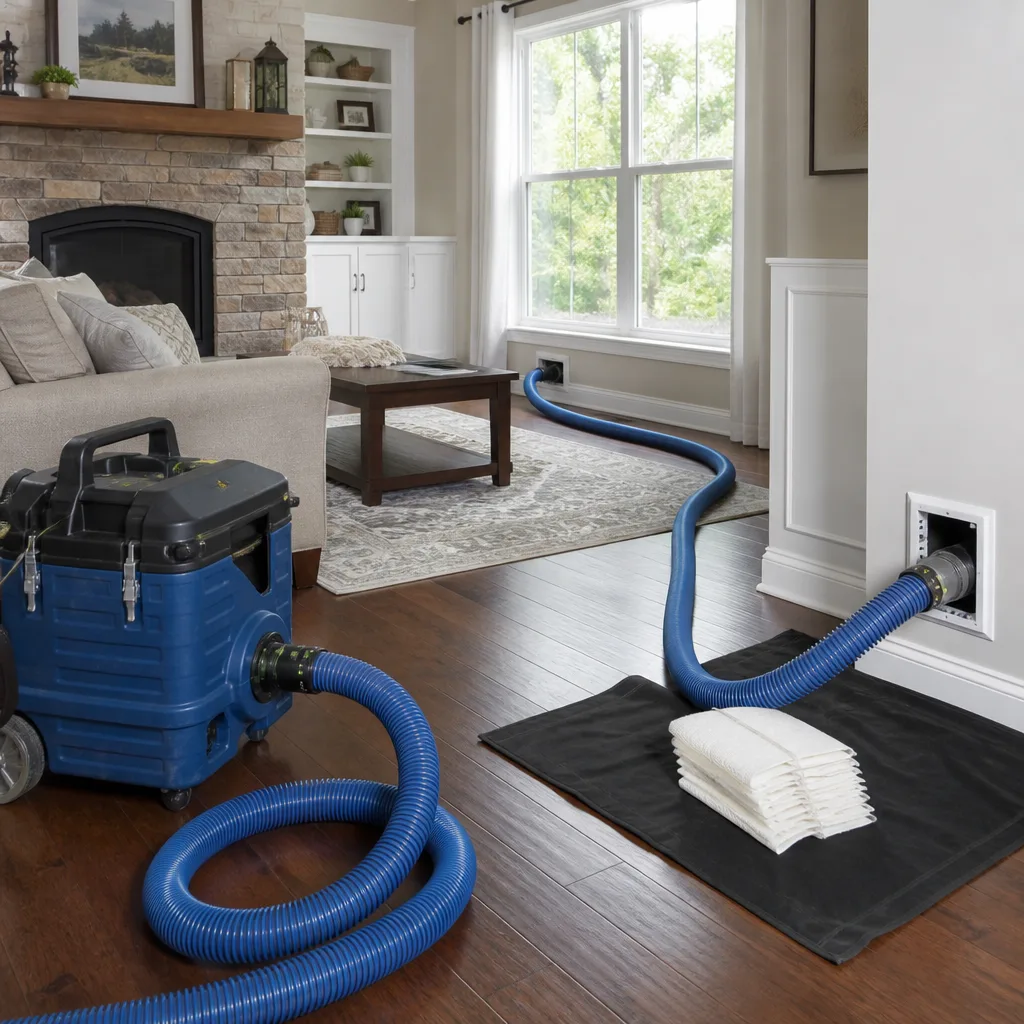 Whole-home duct cleaning
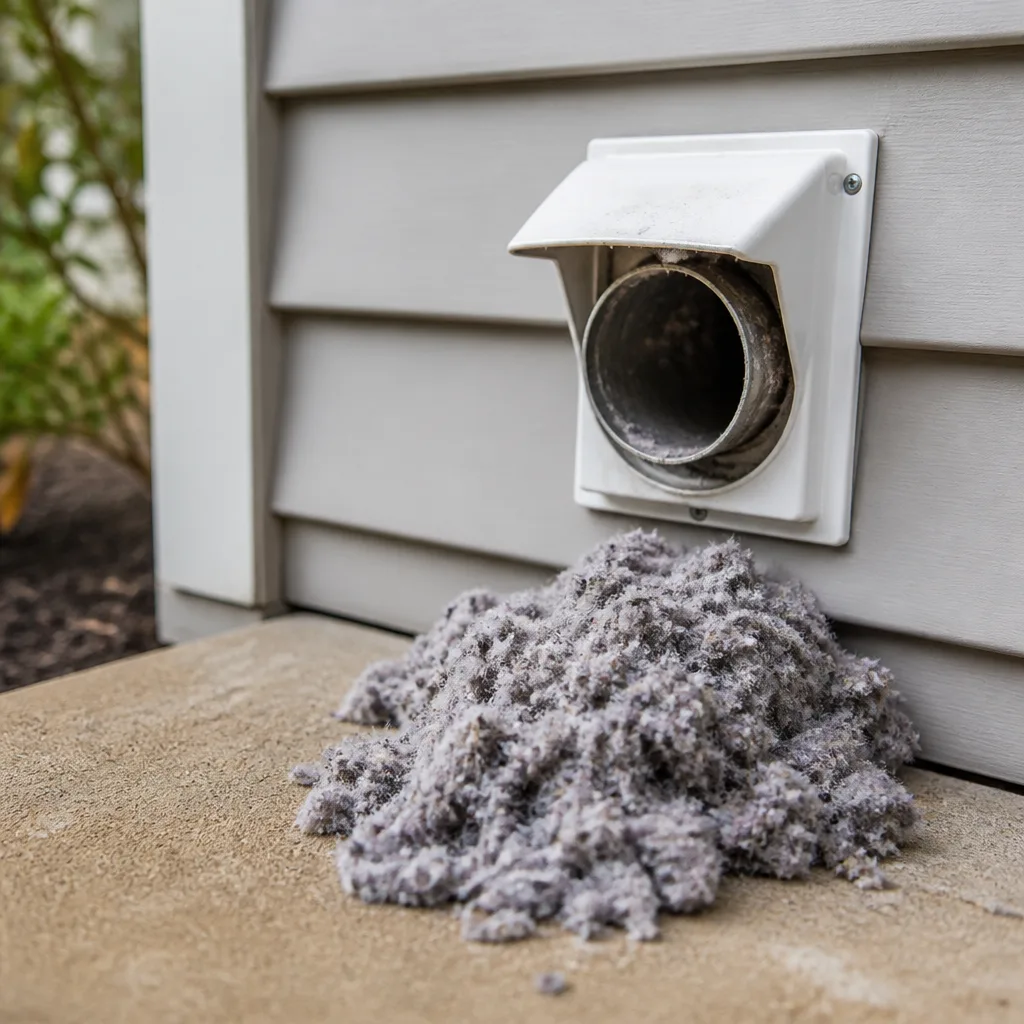 Dryer vent cleaning
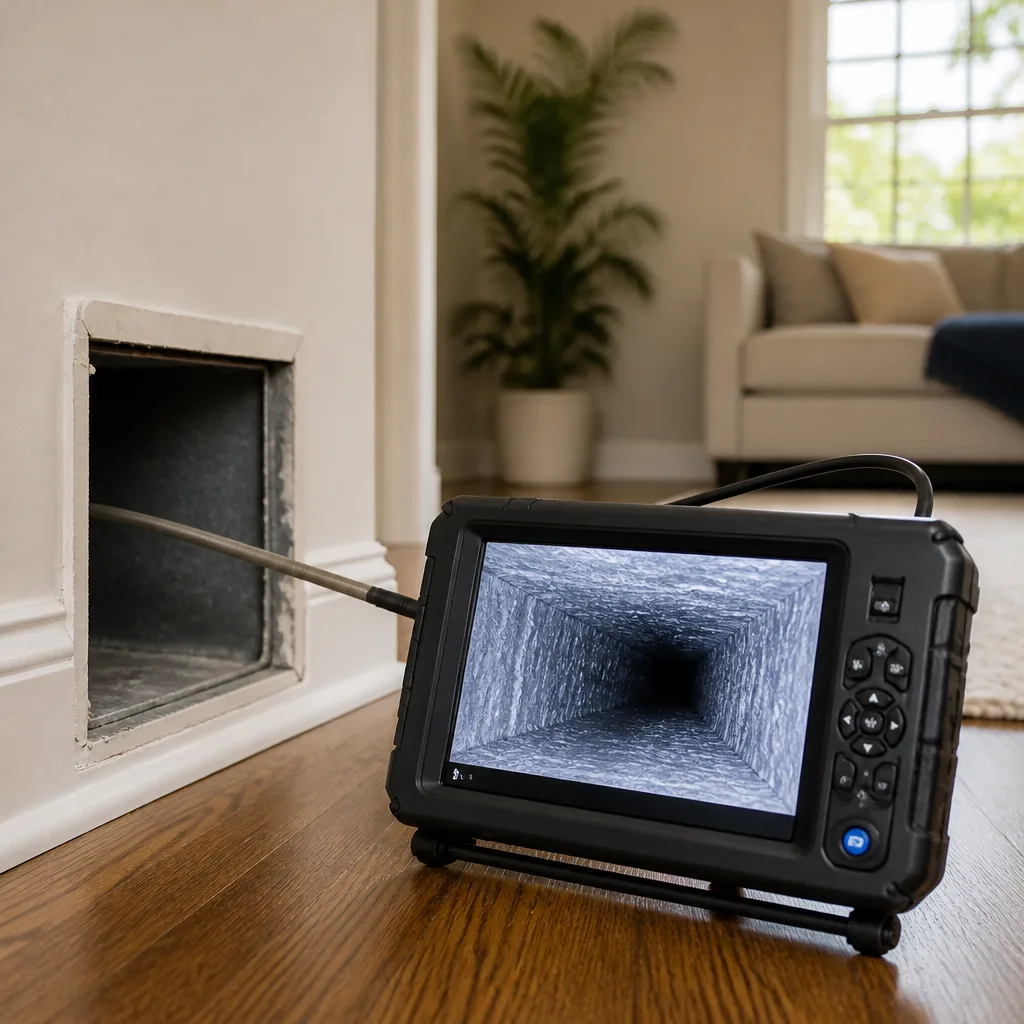 Camera inspection
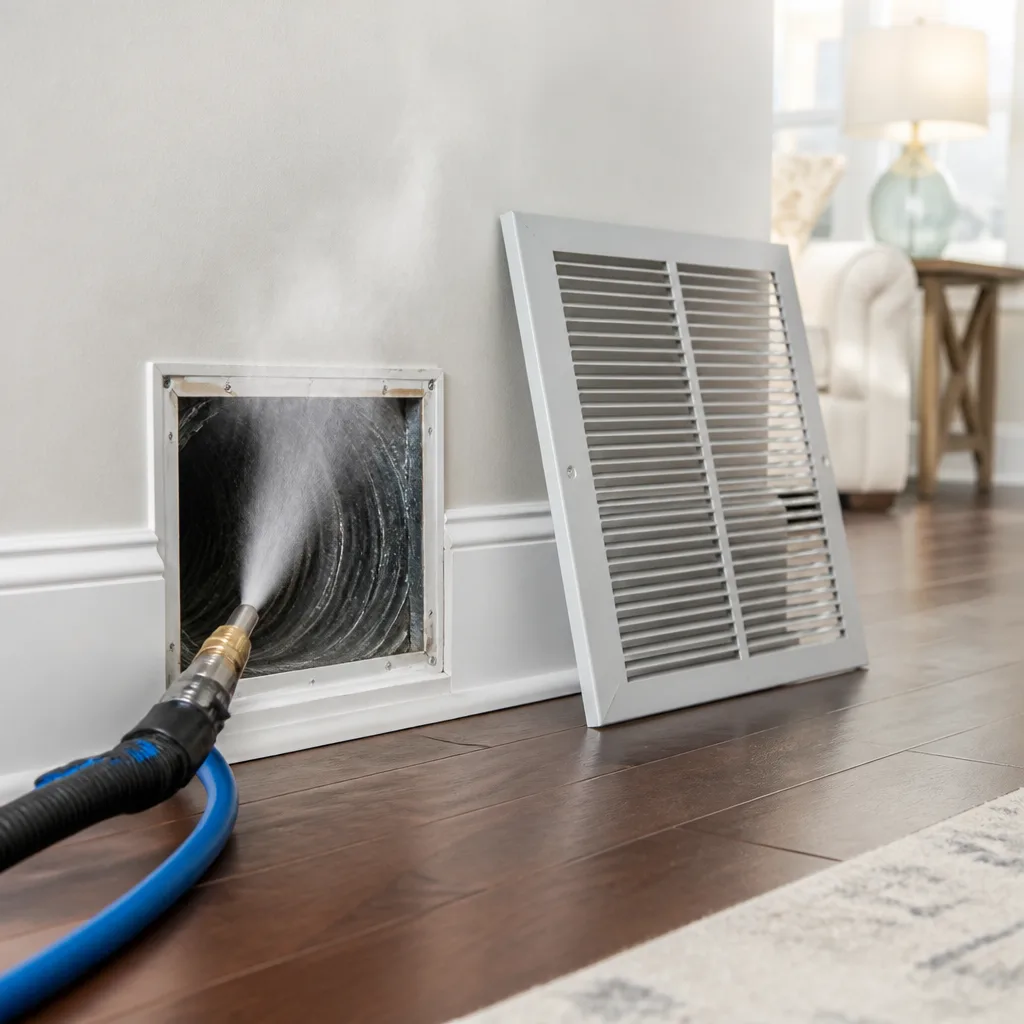 Sanitizing & deodorizing
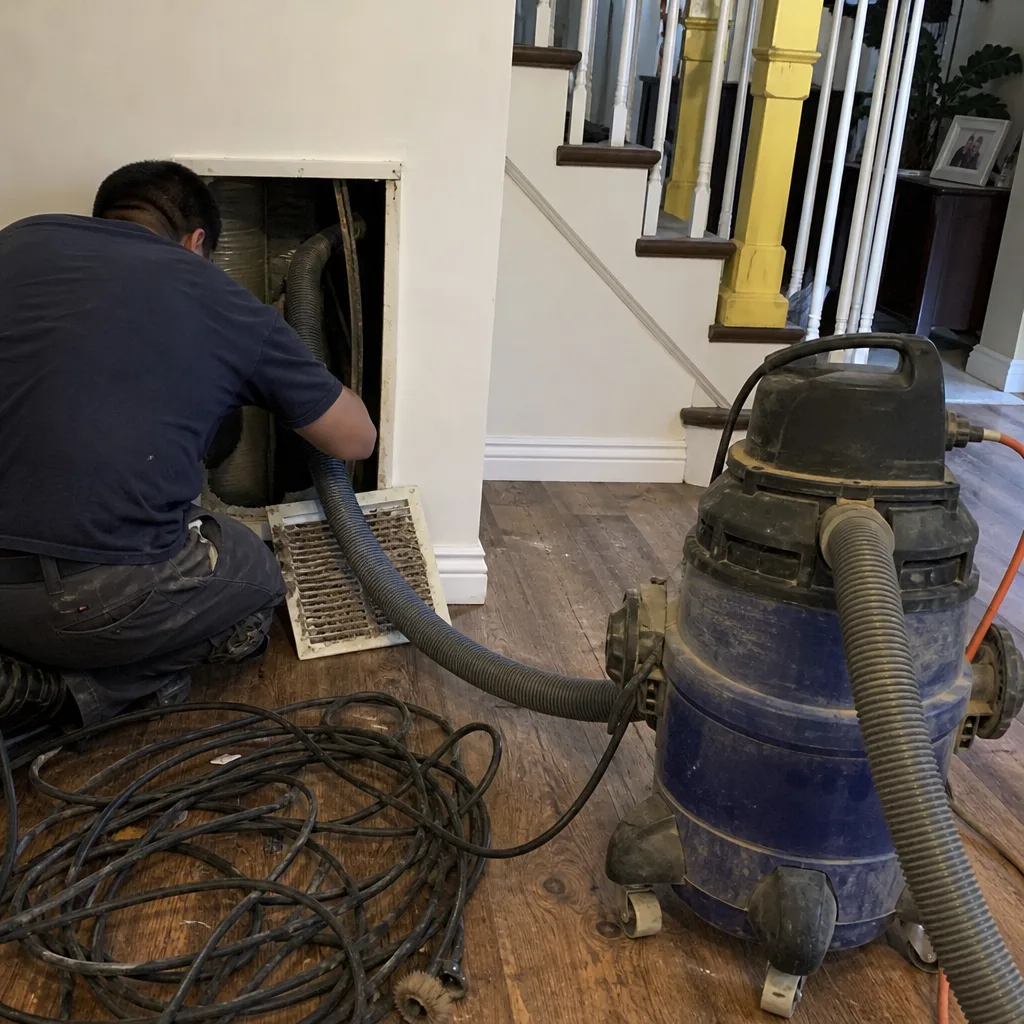
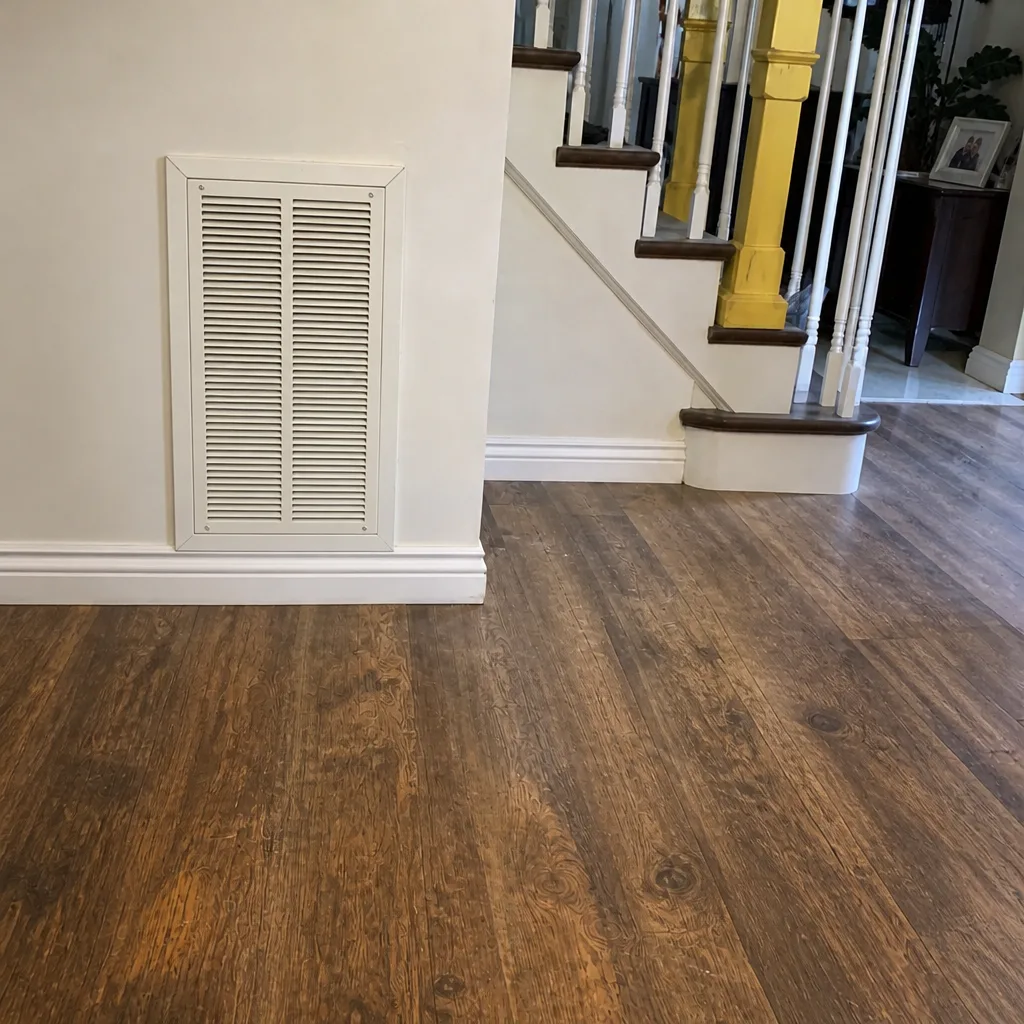
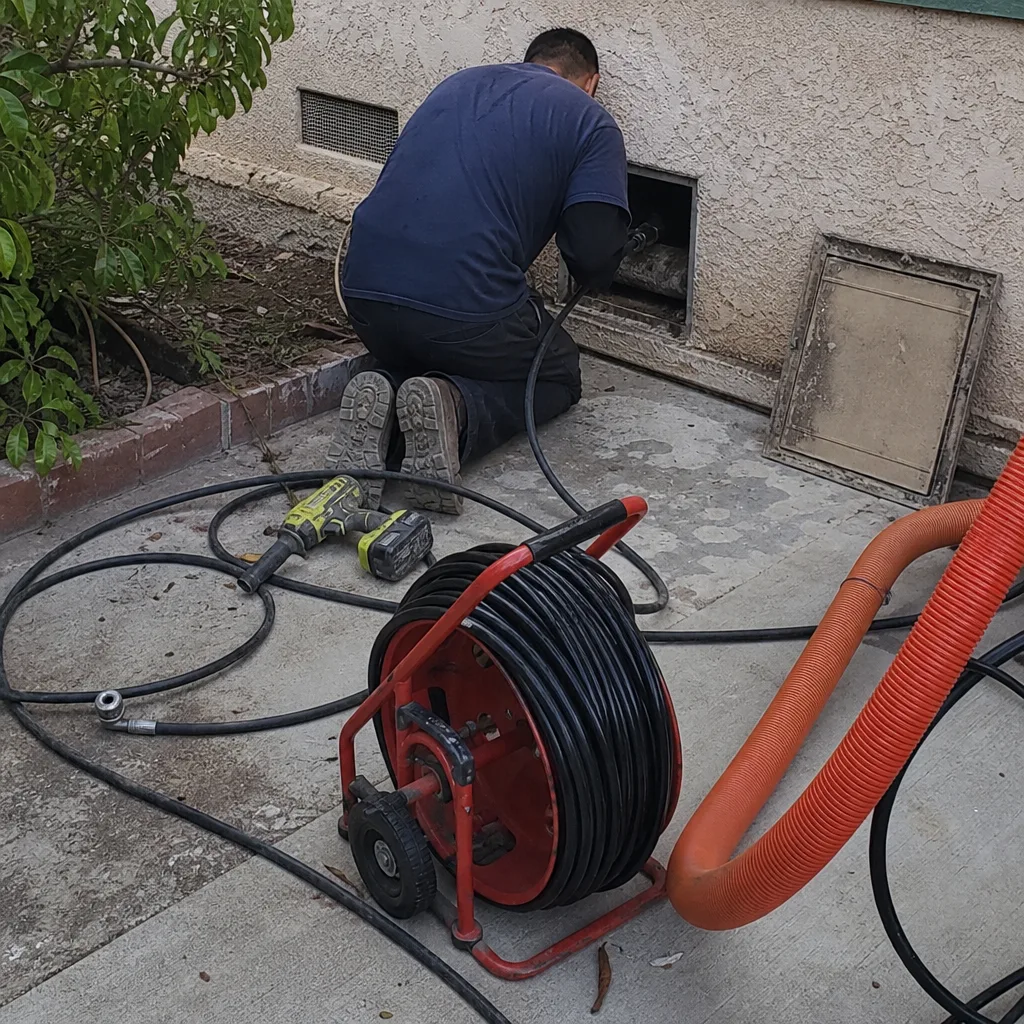
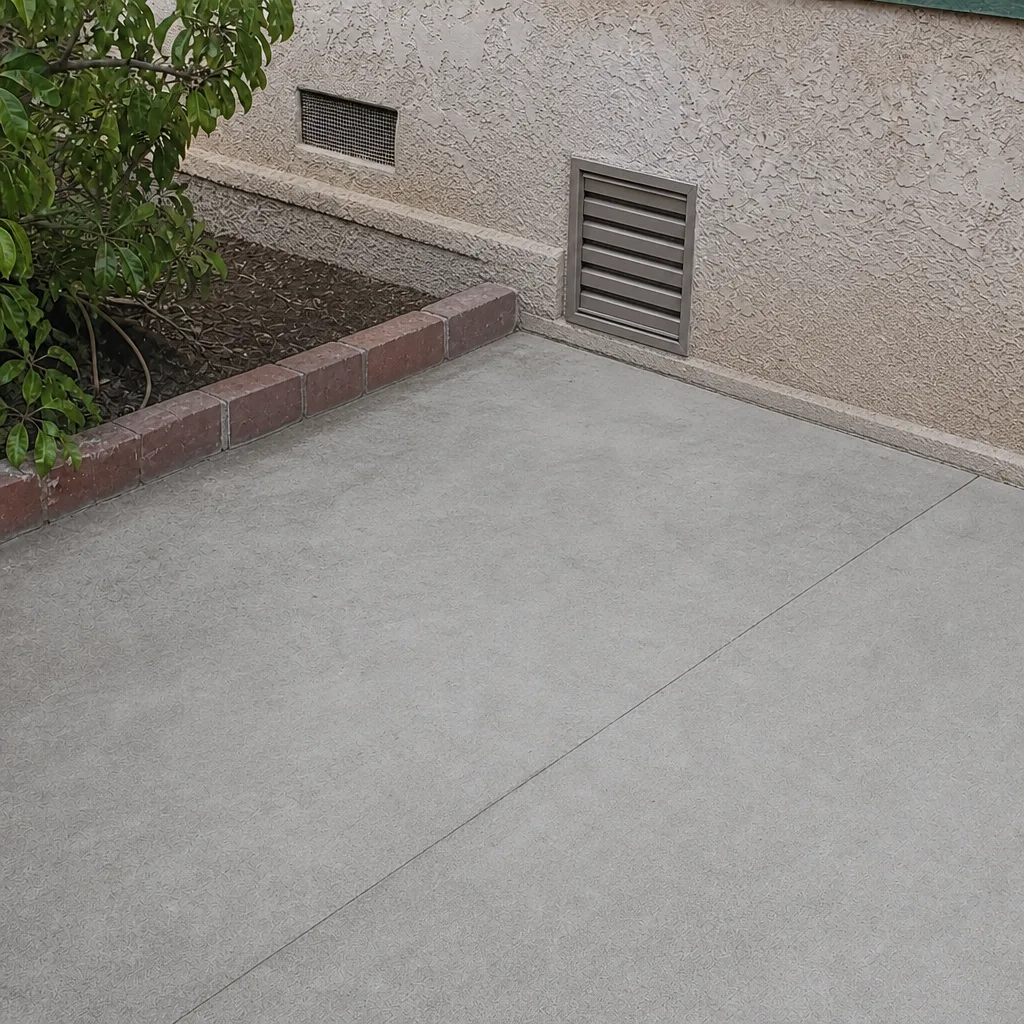
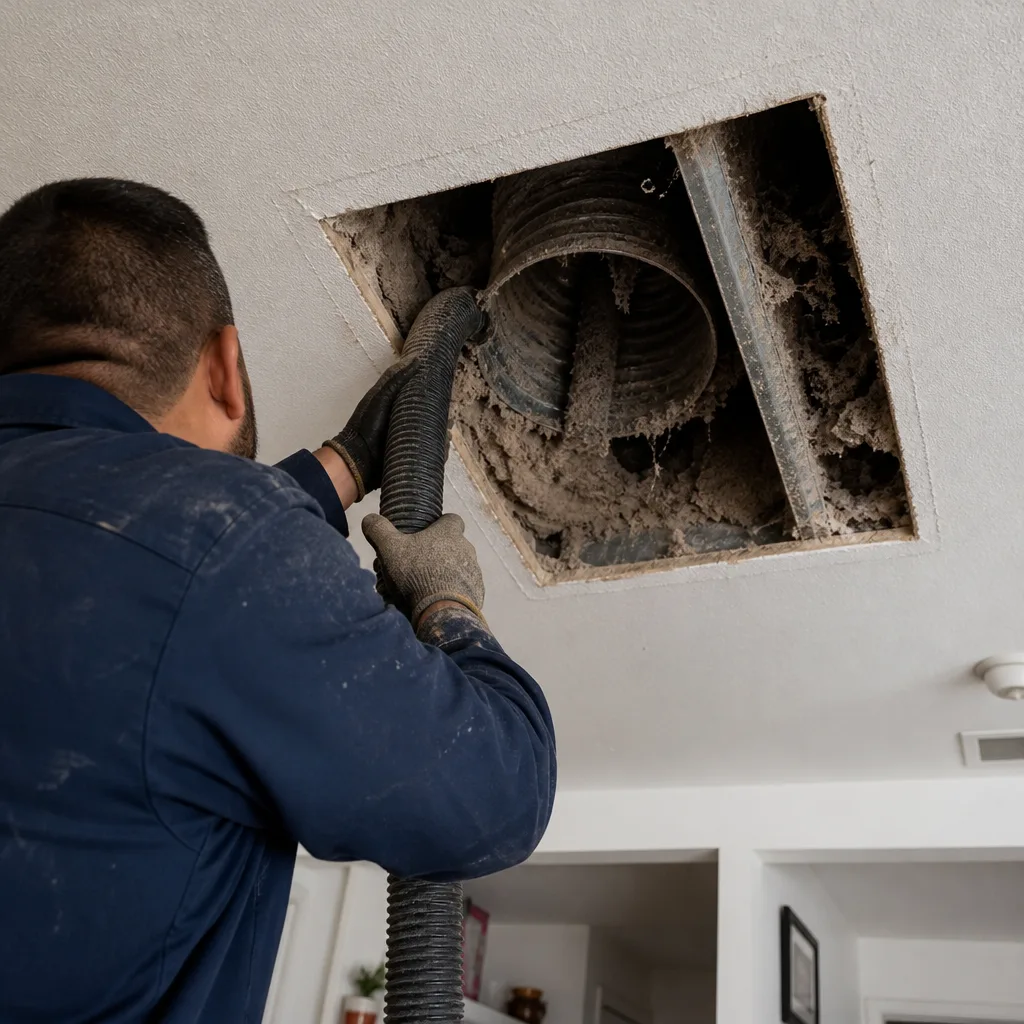
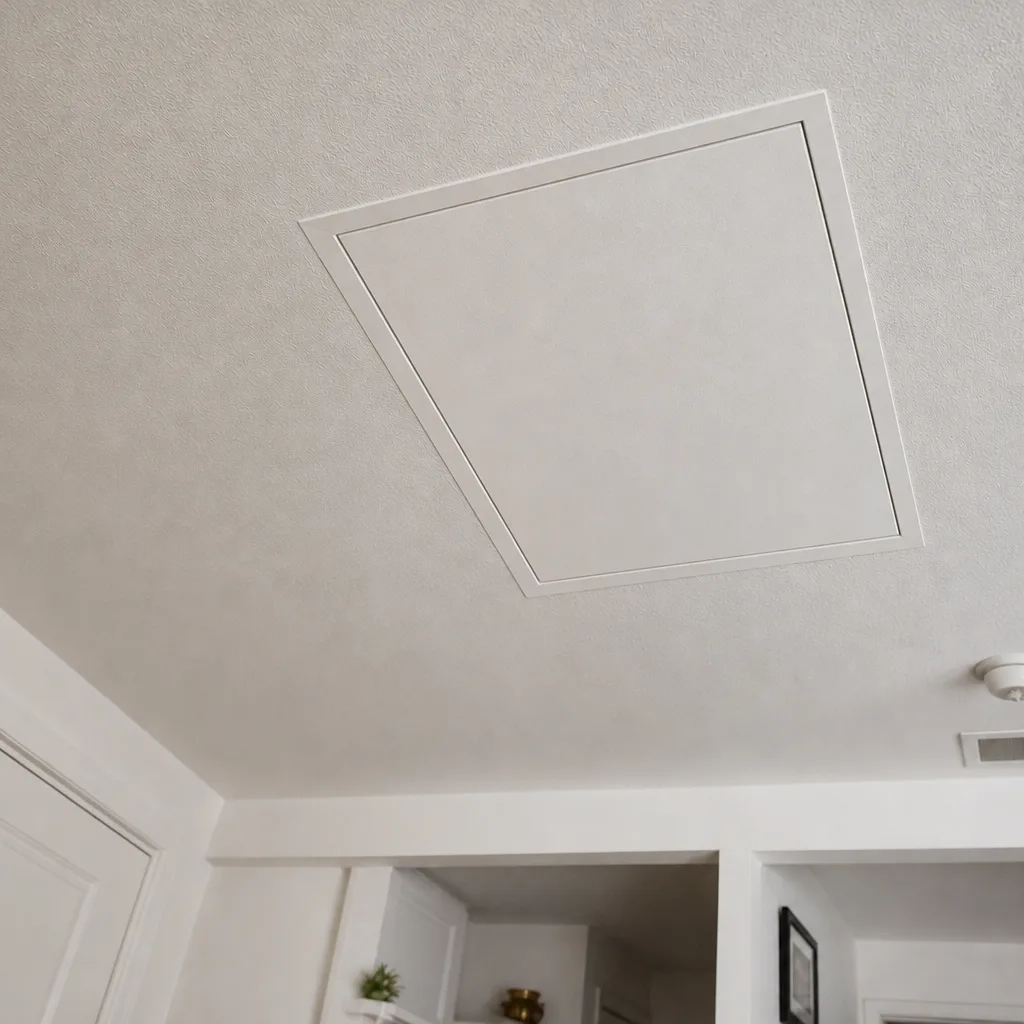
Whole-system duct and dryer vent check with before-and-after photos - you see exactly what came out of your vents
That "$99 whole-house special" is a bait ad - the real number appears once they are in your hallway, or the "clean" is a shop-vac at the register. We photograph the inside of your ducts before and after instead.
DIY vs Professional Air Duct Cleaning: The Pomona Homeowner’s Decision Guide
Most Pomona homeowners assume a DIY duct cleaning is just a smaller, slower version of what professionals do. That assumption is wrong in a way that matters. A consumer dryer vent brush kit and a shop vac will clean approximately the first 18 inches of each duct branch from the register face. The contamination in the main trunk lines, the plenum, the coil housing, and the blower compartment: none of that is reachable with retail tools. This guide maps exactly what you can accomplish yourself, what you cannot, and how to decide which approach actually makes sense for your home.
Quick Answer
DIY duct cleaning in Pomona can handle register faces, the first few feet of accessible branch ducting, and routine filter and grille maintenance using tools under $100. It cannot access the main trunk line, air handler interior, coil housing, or blower compartment, and it cannot create the negative-pressure extraction needed to remove loosened debris without redistributing it through your home. If your goal is actual contamination removal rather than surface tidiness, professional equipment is not an upgrade: it is a different category of work.
Styles & brands we work with
- Whole-home duct cleaning
- Dryer vent cleaning
- Camera inspection
- Sanitizing & deodorizing
Table of Contents
- What DIY Tools Can Actually Reach
- What Professional Equipment Does Differently
- The Physics Problem: Why a Shop Vac Cannot Clean Ducts
- The DIY Tasks That Meaningfully Support Professional Cleaning
- When DIY Attempts Make Professional Cleaning Harder
- The Break-Even Calculation for Pomona Homes
- A Realistic Duct Map for Pomona Homes
- Common Mistakes to Avoid
- When to Call a Professional
- Frequently Asked Questions
What DIY Tools Can Actually Reach
Be precise about what retail duct cleaning products do. A typical kit costs $25 to $60 and includes a flexible rod with a brush head, plus instructions to attach it to a drill and run it through the register opening. Combined with a shop vac at the register face, that setup cleans the register boot and the first 18 to 36 inches of the branch duct where it is straight and unobstructed.
That is the entire scope. Here is what DIY access looks like in a typical Pomona home:
- Register faces and boots: These are reachable by removing the vent cover and vacuuming directly. This is genuinely useful and takes minutes per register.
- Short, straight branch runs: Where a branch duct runs 3 to 6 feet from the register before it elbows or joins a trunk, a brush kit can work through part of that distance, if there are no sharp bends, internal screws, or crushed sections.
- Dryer vents up to the first elbow: A dryer vent brush kit can clear lint from the first few feet behind the dryer, which is where most blockages begin. The full run to the exterior termination is a different matter, especially in Pomona homes where dryers are often in interior utility rooms with 15 to 30 foot vent runs.
- Return grilles and filter housings: Remove the return grille, vacuum it, wipe it down, and vacuum the filter slot. This is simple, safe, and effective.
What DIY cannot reach is everything downstream of the first elbow. The main trunk line that runs the length of the attic or crawlspace, the plenum above the air handler, the coil housing, and the blower compartment are physically inaccessible from a register face. They require access panels, inspection cameras, and in most cases the removal of the blower or coil panel. None of that is a hardware-store project.
In Pomona’s housing stock, which includes a large share of single-story ranch homes built between the 1950s and 1980s, duct systems often run through attics with low clearance. Those trunk lines are frequently flex duct or sheet metal wrapped in insulation, and they hold years of dust from the region’s dry, dusty air. The portions you can reach from inside the house are the superficial layer.
What Professional Equipment Does Differently
Professional air duct cleaning is built around two principles: contact cleaning and negative-pressure extraction. Neither is available at a tool rental counter.
Contact cleaning means a mechanical brush physically scrubs the interior surface of the duct wall. The Rotobrush system uses rotating brushes driven through the ductwork, dislodging debris that airflow alone would leave behind. Debris like construction dust, drywall powder from renovations, and the fine silt that Pomona’s dry climate keeps airborne, tends to adhere to duct surfaces. Air pressure blows across it. A rotating brush removes it.
Negative-pressure extraction means the entire duct system is put under vacuum during cleaning. A Nikro HEPA negative-air machine is connected to the system, pulling air out while the brushes work inside. This matters because it prevents a simple problem: when you loosen debris without extraction, it has nowhere to go except back into the house. Negative pressure captures the loosened material at the source and carries it to HEPA filtration instead of redistributing it through the supply registers.
Filtration matters too. Abatement Technologies filtration standards apply to environments where airborne particle control is a safety requirement, not a preference. A professional system running HEPA-filtered negative air is extracting contaminants from the house, not recirculating them. This is the single biggest functional difference between a shop vac sitting at one register and a full containment setup.
We also work with Duct Cleaning Pomona homeowners whose systems include Honeywell or Aprilaire IAQ components, which means we understand how the ductwork interacts with filtration and humidity control equipment rather than treating the ducts as an isolated subsystem.
The Physics Problem: Why a Shop Vac Cannot Clean Ducts
Here is the technical reality that most DIY discussions skip. Duct cleaning requires two things to work simultaneously:
- Sufficient airflow volume (CFM) to keep loosened dust moving toward the collection point.
- Sufficient static pressure to maintain that airflow against the resistance of the entire duct system.
A typical household shop vac produces 100 to 200 CFM at zero resistance, but that number collapses under the static pressure of even a short duct run. Duct systems are long, narrow, and full of elbows. Each bend adds resistance. By the time the shop vac’s suction reaches 10 feet down a trunk line, the airflow has dropped to a fraction of its open-hose rating. Professional negative-air machines are engineered to maintain meaningful airflow against exactly this kind of system resistance, because they are built for containment and extraction, not for picking up sawdust from a garage floor.
There is also a cross-contamination problem. A shop vac exhausts unfiltered or minimally filtered air. A HEPA filtration setup does not. If you are vacuuming the return side of the system while the vac is exhausting into the same room, you are taking dust out of one opening and putting fine particulate back into the air. In a Pomona summer, when windows are closed and the AC runs constantly, that recirculated dust ends up on every surface in the house within days.
The practical summary: a shop vac can remove large debris from a short, open duct. It cannot clean a branching duct system. The air volume and filtration simply are not there.
The DIY Tasks That Meaningfully Support Professional Cleaning
None of this means homeowners should do nothing. There are specific DIY tasks that genuinely support professional service, reduce what the pros need to do, and keep your system cleaner between cleanings.
- Wash register covers. Remove each supply register and return grille. Soak them in warm, soapy water, scrub off any accumulated film, dry them, and reinstall. Do this every three to four months in Pomona, where dust accumulates faster than in coastal climates.
- Vacuum the register boots. With the register cover off, use a vacuum hose to remove loose debris from the boot and the first few inches of visible duct. This keeps loose material from being drawn deeper into the system.
- Change filters on schedule. A clogged filter forces the blower to work harder and sends unfiltered air around the filter frame. In Pomona’s dusty seasons, typically late summer and fall, check the filter monthly.
- Clean the return grille and filter housing. Remove the return grille, vacuum the filter slot thoroughly, and wipe down the interior surfaces you can reach. This is especially important in homes with pets, which describes a large share of Pomona households.
- Clear visible debris from the blower cabinet, if safely accessible. Some systems have a removable panel that exposes the blower housing. If yours does, and you are comfortable with the electrical disconnect, you can vacuum out loose debris with the system off. If there is any doubt about the disconnect, do not open the panel. Call someone who knows what they are looking at.
These tasks are about maintaining clean surfaces at the access points. They do not clean the interior of the duct system, and they are not a substitute for professional service. They reduce the load and make professional cleaning more effective.
When DIY Attempts Make Professional Cleaning Harder
We have seen DIY attempts create problems that professional cleaning then has to fix. These are the specific scenarios to avoid:
- Compressed debris from too-aggressive brushing. Running a drill-powered brush too fast or forcing it through resistance does not remove debris; it packs it into corners, seams, and flex duct folds. That compressed material is harder to extract than loose dust, which means professional cleaning takes longer and costs more than it would have otherwise.
- Disturbed mold or biological growth. If there is microbial growth in a duct, brushing it with a retail tool releases spores into the air stream without any extraction or filtration. Once those spores are airborne, the problem stops being a duct issue and becomes an indoor air quality problem throughout the house. Professional cleaning with HEPA capture contains it. DIY brushing spreads it.
- Crushed or torn flex duct. Flex duct is not rigid. Push a brush rod too far, or use the wrong type of head, and the internal liner tears or the duct collapses. Crushed flex duct restricts airflow to that room, raises static pressure on the whole system, and requires either dryer vent cleaning or structural repair to correct. A damaged flex run is no longer a cleaning issue; it is now a mechanical defect.
- Disconnected duct joints. Forcing a tool through an elbow can pop a duct joint apart, particularly in older Pomona homes where the ductwork has been through decades of thermal cycling. A disconnected joint in an attic turns into conditioned air blowing into insulation. This is an energy loss and a contamination source, and it will not be discovered until the homeowner wonders why one room never cools properly or why the energy bill keeps climbing.
Each of these is preventable. The pattern is consistent: DIY tools are shaped to go into ducts, but they are not shaped to navigate the bends, seams, and fragile materials that exist inside real duct systems. When resistance is met, the tool keeps going. Something has to give, and it is usually the duct.
The Break-Even Calculation for Pomona Homes
Professional duct cleaning costs money. DIY costs less, at least on the surface. Here is the honest math for a typical Pomona home.
Consider a 1,800 square foot single-story home with 8 to 10 supply registers, one return, and a duct system running through the attic. A professional cleaning for a system that size involves contact cleaning on every branch and trunk line, negative-air extraction throughout, and coil and blower inspection. The work typically takes a full day.
The DIY alternative costs $60 to $120 for a brush kit and shop vac, assuming you already own the vac. What that money buys is cleaning of the register boots and the first foot or two of each branch. The trunk line, where the majority of contamination accumulates in a system of this design, remains untouched.
So the real comparison is not $100 versus a professional invoice. The comparison is $100 for a cosmetic result versus the cost of what it actually takes to remove contamination from the entire system. If the goal is cleaner air, the DIY route spends money without achieving the goal. That is the definition of a false economy.
There are scenarios where professional service is clearly the lower total cost:
- Homes with post-renovation dust. If drywall work, flooring removal, or major remodeling happened at any point, the dust from that work is throughout the duct system. DIY access will not remove construction dust from the trunk line, and that dust will keep circulating for months. A professional cleaning addresses it once, completely.
- Homes that have never been cleaned. A Pomona home built in the 1970s that has never had professional duct work done carries decades of accumulated material. The volume of debris alone is beyond any retail tool’s capacity to address, even if the tool could reach the trunk.
- Homes with occupants who have allergies or respiratory conditions. In these cases, disturbing duct debris without proper extraction is actively harmful. The professional method, with HEPA negative air, is not a convenience; it is the only approach that does not make the indoor air worse during the cleaning itself.
- Homes where the dryer vent has never been cleared. Lint accumulation in a 20-foot vent run is a fire hazard, and it requires the full run to be cleaned, not just the first elbow. A Pomona homeowner who tackles the first few feet with a retail brush has not addressed the fire risk.
Add in the value of your own time, and the calculation shifts further. An inexperienced homeowner spending a Saturday on a partial clean has spent hours on a result that will not hold. The professional work is the lower total cost when measured against the outcome.
A Realistic Duct Map for Pomona Homes
Understanding why professional equipment matters starts with understanding where the contamination actually is. A home’s duct system is not a set of uniform tubes. It is a series of different sections, each with different flow characteristics and different contamination patterns.
Here is the breakdown by section, and what each section means for cleaning:
- Supply registers and boots: These are the visible metal or plastic openings in each room. They collect dust on the exterior face and loose debris in the boot immediately below. This is the DIY-accessible portion, and it represents perhaps 5 to 10 percent of the system’s total interior surface area.
- Branch ducts: The smaller diameter runs that connect each register to the main trunk. They are typically 6 to 8 inches in diameter, run 5 to 20 feet, and include at least one elbow. DIY tools reach the first portion, but not the elbow or the connection to the trunk. Contamination here tends to accumulate at the elbow and along the bottom surface where airflow is slowest.
- Main trunk line: This is the largest duct in the system, running from the air handler through the attic or crawlspace. It carries the full airflow of the system and distributes it to the branches. Because the trunk carries the most air, it also carries the most dust. Over years, a layer of fine material builds up on the trunk’s interior surfaces. None of this is reachable from a register face.
- Plenum and air handler: The plenum is the transition box between the air handler and the trunk. The air handler contains the blower and, on the supply side, the evaporator coil. This is where the system’s most mechanically sensitive components live, and where accumulation causes the most performance degradation. A dirty coil reduces heat exchange efficiency and strains the compressor. The blower wheel picks up dust and imbalance. Access requires removing panels and working around electrical and mechanical components.
- Return air side: The return grille you see in a hallway wall or ceiling is the intake for the entire system. Behind it is a cavity, then a duct run back to the air handler. Return ducts pull air from the living space, so they accumulate the same dust the house accumulates. Because return airflow passes through the filter before the air handler, the return duct itself never gets filtered air. It is among the dirtiest sections in many homes.
- Dryer vent run: Not technically part of the HVAC system, but it runs through the same walls and cavities. Lint accumulates throughout the run, with heaviest buildup at the termination point and at any elbows. This is the most immediately dangerous accumulation in the home, because lint is fuel.
For Pomona specifically, the dry inland climate means airborne dust is a constant. Homes near the 10 and 60 freeways, in neighborhoods like Phillips Ranch, Westmont, and Ganesha Hills, see elevated particulate levels from traffic, and that dust eventually cycles through the HVAC system. The sections that carry the most air carry the most dust, and those sections are the ones DIY tools cannot reach.
Common Mistakes to Avoid
- Believing a register-face clean equals a system clean. The first foot of duct behind each register is less than 10 percent of the system. A clean register face hides a dirty trunk line, and the air you breathe still passes through the dirty portion every time the system runs.
- Using a leaf blower or compressed air inside a duct. Blowing air into a duct without extraction just relocates the debris. Some of it exits through the nearest register. The rest settles back down in another part of the system. In Pomona’s dry air, that unsettled dust stays airborne for hours.
- Running a drill-powered brush without a vacuum attached. The brush loosens debris, and without extraction, that loosened material becomes airborne dust throughout the house. The brush alone is worse than doing nothing.
- Pushing a brush through a bend it does not want to navigate. Resistance means the tool has reached an obstacle. Forcing it risks tearing flex duct, disconnecting a joint, or snapping the brush head off inside the duct, where it becomes a new obstruction that must be professionally removed.
- Ignoring the return side entirely. Most DIY attention goes to supply registers because they are visible in every room. The return side carries unfiltered air and is often dirtier. A home’s single return grille in a hallway should be the first place a homeowner looks, not the last.
- Forgetting the dryer vent. The lint screen catches a fraction of what the dryer produces. The rest goes into the vent run. A clogged dryer vent is a fire hazard that builds slowly and silently, and in Pomona homes with long vent runs, the accumulation point is far beyond DIY reach.
- Assuming a clean-looking register means the whole system is fine. Duct contamination is invisible from the living space. The only way to verify what is in the trunk line, coil housing, and blower compartment is with inspection equipment. That is part of what a professional assessment provides.
When to Call a Professional
Call a professional when any of these conditions exist in your Pomona home. You can see dust blowing from the registers when the system starts. One or more rooms stay dusty no matter how often you clean. Your filters are clogging faster than 60 days. The system has never been cleaned since the home was built, or you cannot verify when it was last done. You completed a renovation and the dust never fully settled. Someone in the home has allergies or respiratory symptoms that worsen when the HVAC runs. Your dryer takes longer than one cycle to dry a load, or the exterior vent hood shows visible lint buildup.
Duct Cleaning Pomona offers free estimates in Pomona. Call (833) 589-9571. We answer 24/7. Fast dispatch from 7am to 7pm, Sunday through Friday.
Frequently Asked Questions
DIY cleaning is worth it only for the access points: register faces, boots, filter housings, and return grilles. It is not worth it as a substitute for whole-system cleaning, because the majority of contamination in a Pomona home’s ductwork sits in the trunk line and air handler, which retail tools cannot reach. Spend the $60 on a good filter and register maintenance, and save the system cleaning for professionals with extraction equipment.
Professional cleaning is priced per system by a written estimate, after the technician assesses the home’s size, register count, duct configuration, and contamination level. For a typical Pomona single-story home, expect the scope to include full contact cleaning, negative-air extraction, and coil and blower inspection. The estimate is free, and the written estimate sets the final price before work begins. Call (833) 589-9571 for a free estimate, with no obligation.
A shop vac cannot clean ducts in any meaningful sense. Duct cleaning requires sustained airflow volume and negative pressure across the entire system, which a shop vac cannot produce against the static resistance of a branching duct network. It also lacks the HEPA filtration needed to prevent loosened dust from recirculating into the living space. A shop vac is useful for register boots and the first few inches of branch ducts, and nothing more.
Inexpensive quotes typically reflect a limited scope of work. Some companies clean from the register face only, skip the trunk line, or skip the air handler interior entirely. Others use blower-only methods without contact cleaning or HEPA extraction, which leaves adhered debris in place. A quote that seems low for whole-system cleaning is usually a quote for a fraction of the system. Ask specifically what sections of the ductwork the price includes, and whether negative-pressure extraction is part of the method.
A professional company documents the work. Ask for before-and-after photos of the interior of the trunk line, coil, and blower. If the company cannot show you what the inside looked like before and after, you have no verification that the cleaning touched those sections at all. “We show you what we found” is not a marketing line; it is the only way to confirm the service you paid for was actually performed.
For most Pomona homes, professional cleaning is appropriate every 3 to 5 years, sooner if the home has had renovation work, pets, smokers, or occupants with respiratory conditions. Pomona’s dry, dusty climate and proximity to freeway corridors add particulate load that coastal homes do not experience. Homes near major roadways or in neighborhoods with older, dustier housing stock may justify more frequent service. Call (833) 589-9571 to discuss your home’s specific situation.
The Bottom Line
DIY duct cleaning and professional duct cleaning are not the same task performed at different scales. They are different tasks entirely. DIY tools reach the register face and the first few feet of branch duct, which is the visible surface. Professional equipment reaches the trunk line, the air handler, the coil, and the blower, where contamination actually accumulates and where airflow, filtration, and system performance are decided. In Pomona’s dry, dusty air, that deeper contamination is not a hypothetical. It builds steadily, and it circulates through the house every time the system cycles. The homeowner’s choice is not between spending a little and spending a lot. It is between cleaning the part you can see and cleaning the part that matters.
Written by the team at Duct Cleaning Pomona, serving Pomona since 2015.
See the difference
 Before
 After
 Before
 After
 Before
 After