
Last updated November 4, 2026
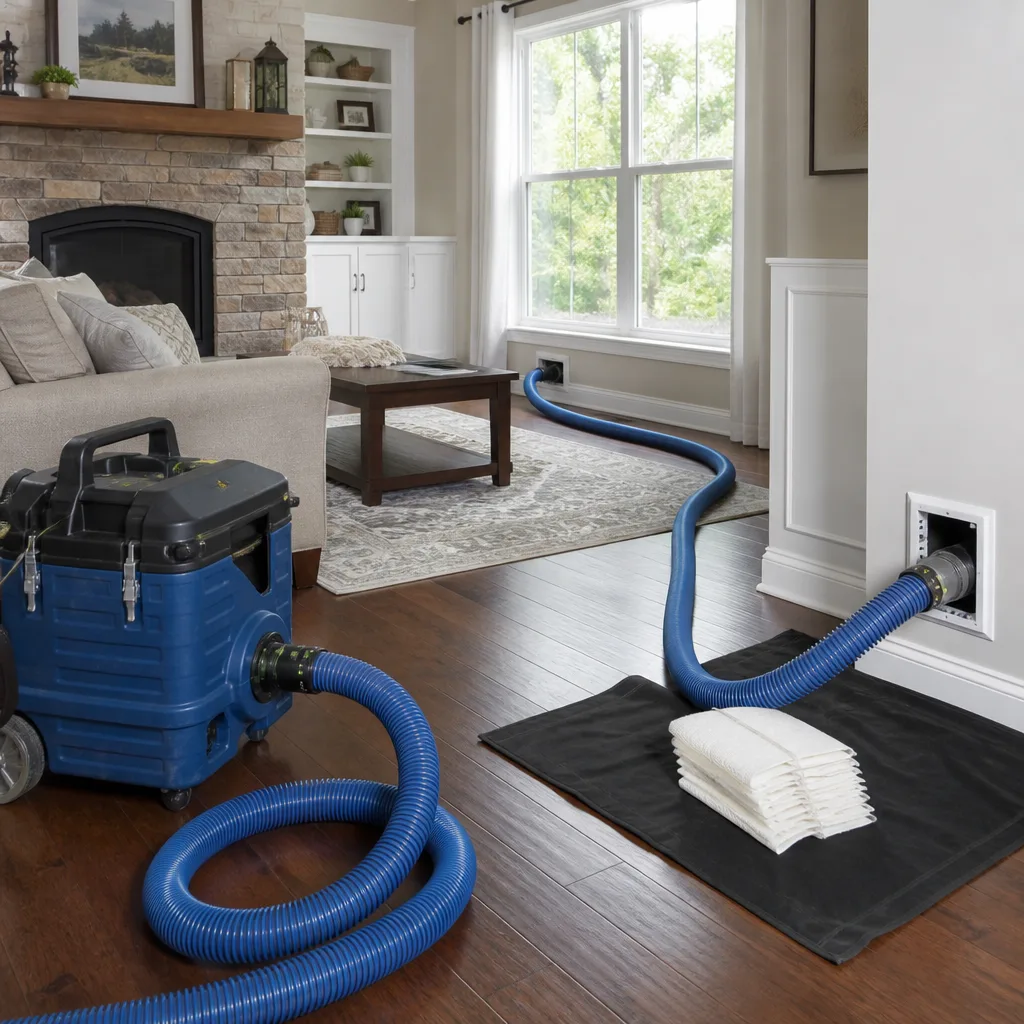 Whole-home duct cleaning
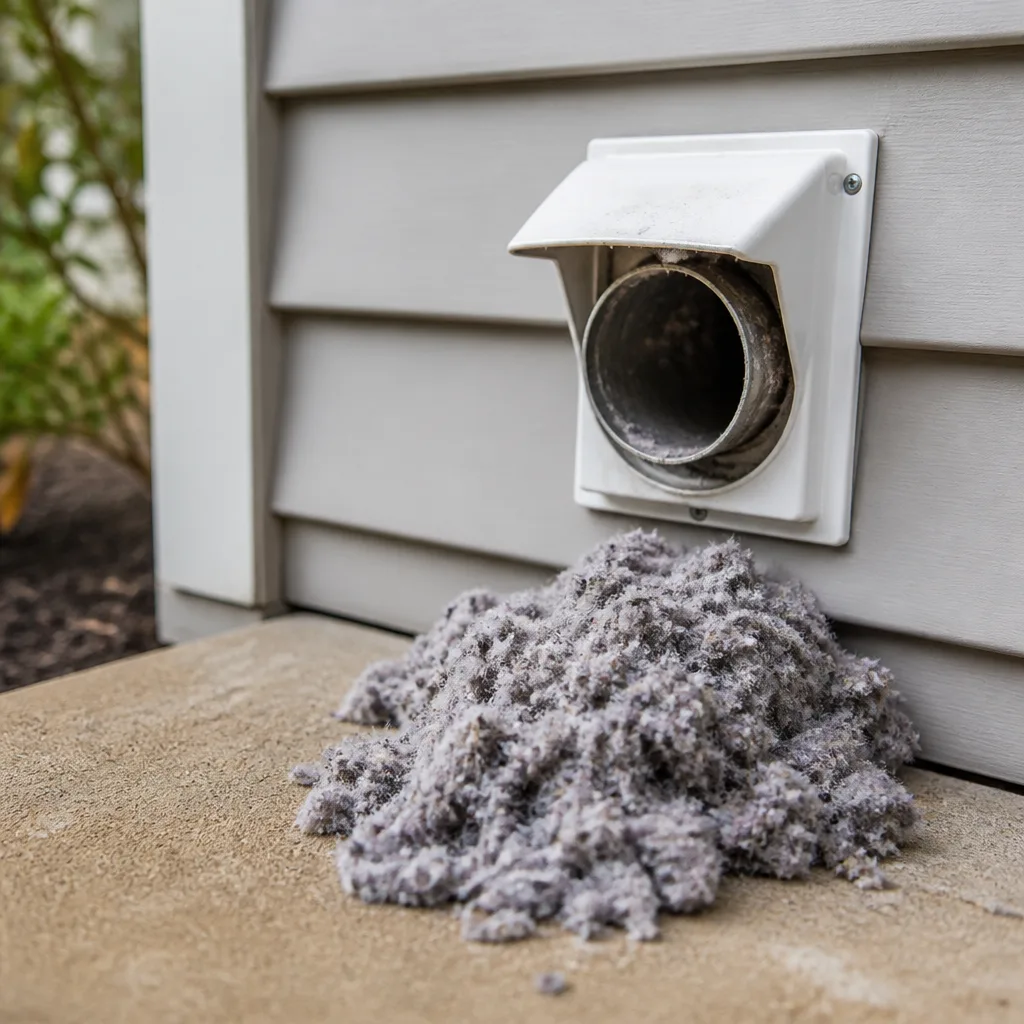 Dryer vent cleaning
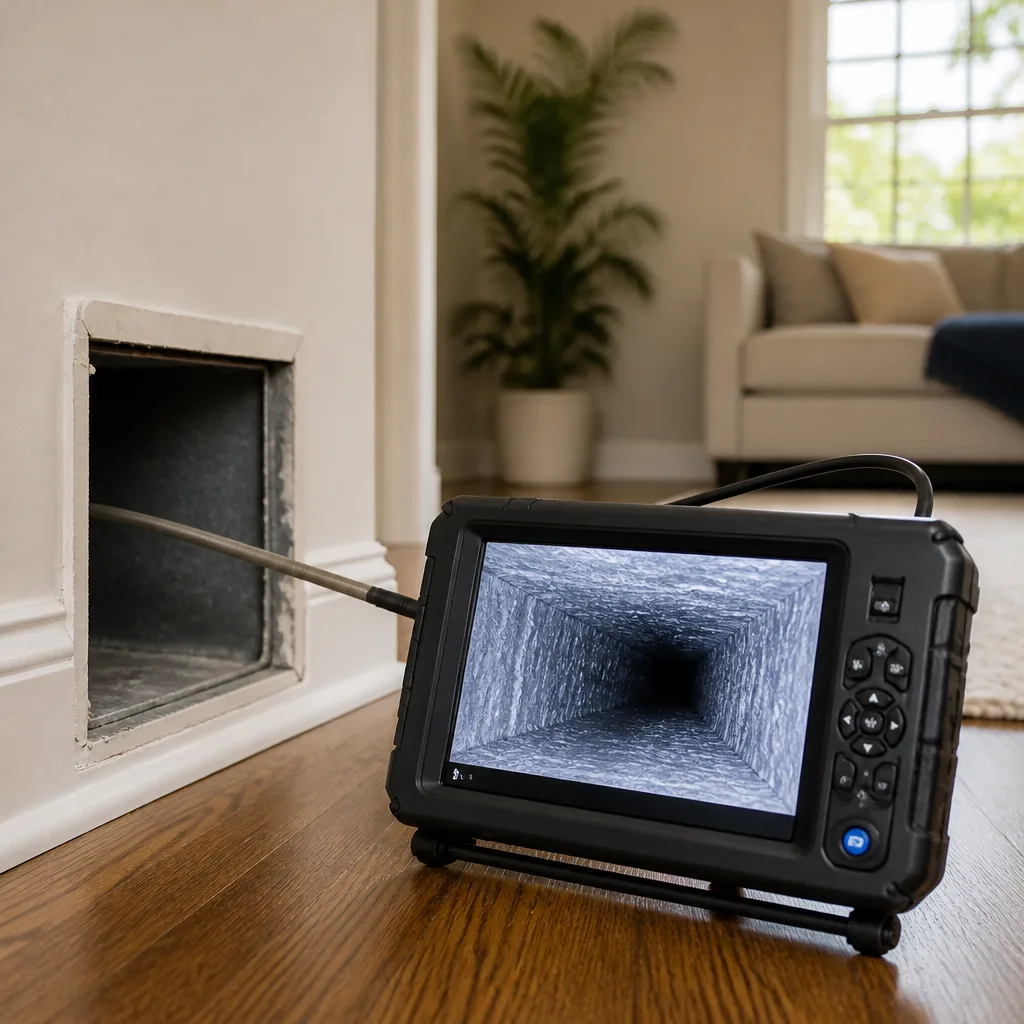 Camera inspection
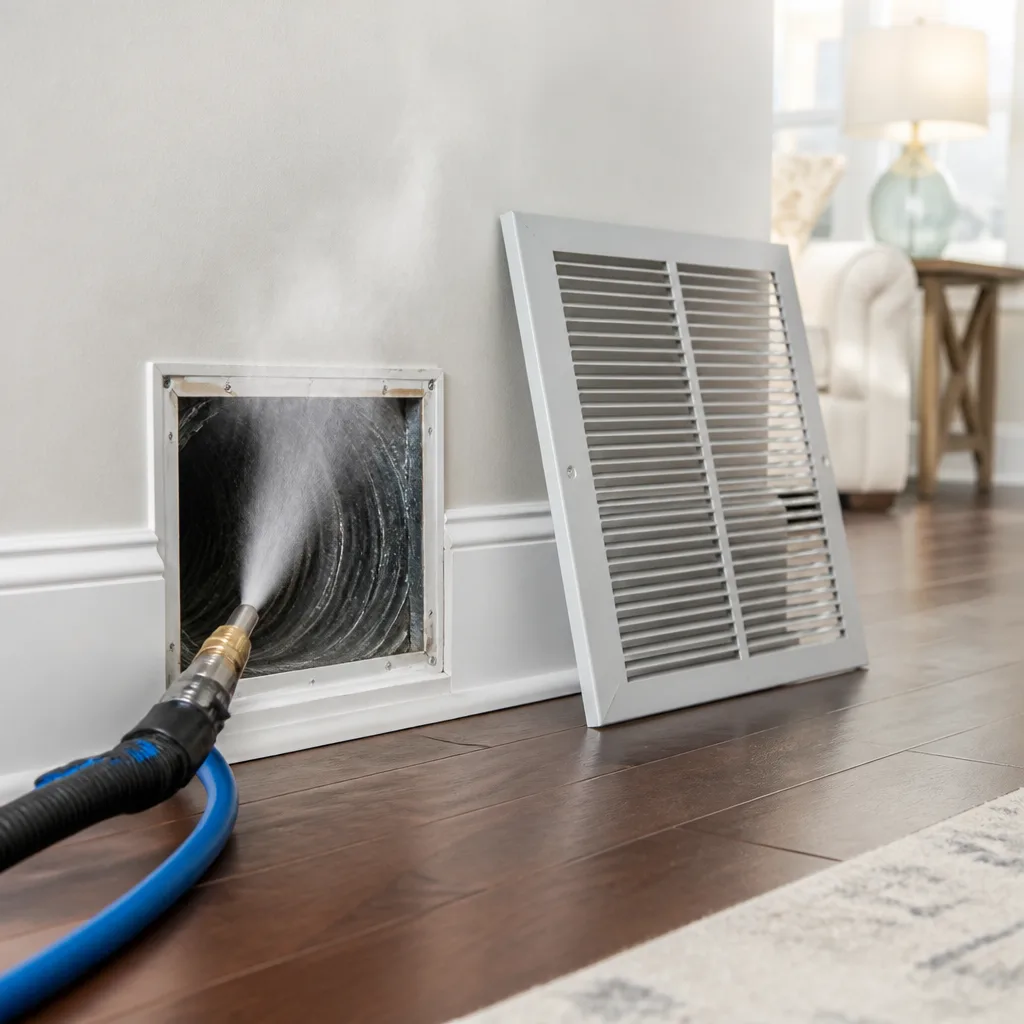 Sanitizing & deodorizing
Whole-system duct and dryer vent check with before-and-after photos - you see exactly what came out of your vents
That "$99 whole-house special" is a bait ad - the real number appears once they are in your hallway, or the "clean" is a shop-vac at the register. We photograph the inside of your ducts before and after instead.
Air Duct Cleaning Warning Signs: A Pomona Homeowner’s Reference Guide
Dust on your registers is not a warning sign. It’s a byproduct of normal operation, and half the homeowners in Pomona who call us about it are chasing a ghost. The signals that actually indicate a compromised duct system are subtler and mostly invisible: uneven room temperatures, a musty odor that appears only during the first minutes of a cooling cycle, and filters that load up far faster than their rated interval. Most people don’t connect those symptoms to the ducts at all. This guide separates cosmetic findings from operational problems, so you know when to act and when to leave the system alone.
Quick Answer
The warning signs that justify air duct cleaning in Pomona are airflow-based and structural, not cosmetic: temperature variance greater than 3°F between rooms, reduced velocity at supply registers, filter saturation at less than half the rated interval, musty odor at startup only, gnawed flex duct insulation in the attic, or visible dust lines on insulation directly above duct runs. Register dust alone does not mean the ducts need cleaning. If you’re seeing operational symptoms like these, call (833) 589-9571 for a free estimate.
Styles & brands we work with
- Whole-home duct cleaning
- Dryer vent cleaning
- Camera inspection
- Sanitizing & deodorizing
Table of Contents
- The Three Airflow Indicators That Precede Visible Contamination
- How to Identify Duct Leakage by Feel
- What Odor Timing Tells You About the Source
- Rodent Evidence Specific to Pomona Homes
- Post-Renovation Warning Signs
- What Is NOT a Warning Sign
- Common Mistakes to Avoid
- When to Call a Professional
- Frequently Asked Questions
The Three Airflow Indicators That Precede Visible Contamination
By the time you see heavy dust buildup inside a duct, the airflow problem that caused it has usually been present for months or years. The earliest indicators are measurable, and they show up long before any contamination becomes visible on a camera inspection. Here’s what we look for when a Pomona homeowner describes a system that “just doesn’t feel right.”
1. Room Temperature Variance Greater Than 3°F
Walk your house on a hot afternoon with a simple thermometer. Check each room at chest height, away from direct sunlight and away from supply registers. If you find a consistent spread of more than 3°F between rooms that share the same thermostat zone, the problem is rarely the HVAC unit itself. It’s almost always distribution: a duct run that’s partially collapsed, disconnected at a joint, or badly kinked in the attic. Ducts don’t fail evenly, and neither do room temperatures. One warm bedroom at the end of a long flex run is a classic sign that the run is compromised or under-insulated for a Pomona summer, where attic temperatures routinely exceed 130°F in July and August.
A 3°F variance doesn’t mean the duct is dirty. It means air isn’t arriving where it’s supposed to. That can be a cleaning issue if the blockage is debris or a collapsed liner, but more often it’s structural. Either way, the fix starts with an inspection that looks at the whole duct path, not just the first five feet from the plenum.
2. Reduced Register Velocity
Hold a tissue or a strip of lightweight paper near each supply register while the system is running. The airflow should push it firmly and consistently. If one register barely moves the paper while others blow it at a sharp angle, you have a velocity loss in that branch line. That loss has three common causes: a partial blockage (often debris, insulation, or a failed damper), a leaky joint that’s bleeding air into the attic before it reaches the room, or a crushed flex duct.
Velocity loss is not subtle once you know how to feel for it. The problem is that most people never check. They get used to one stuffy room and compensate by adjusting the thermostat, which overworks the rest of the system and shortens its life. In our experience, reduced register velocity is the single most common operational warning sign that goes ignored in Pomona homes.
3. Filter Saturation at Less Than Half the Rated Interval
A standard 1-inch filter rated for 90 days should not be visibly clogged at 30 days. If yours is, something is loading that filter far faster than normal. That something is usually one of three sources: excessive return-side leakage pulling attic air and insulation particles into the airstream, a duct system that’s recirculating dislodged debris from construction or renovation, or biological growth shedding into the airflow.
Think about what the filter is doing: it’s catching what the ducts deliver to it. A filter that’s black or heavily gray at the 30-day mark is telling you the duct interior is contributing particulate. Changing the filter more often treats the symptom. Cleaning the ducts addresses the source. This is where the air duct cleaning method matters: a contact-cleaning approach removes what’s adhered to the duct walls, not just what’s loose and airborne.
How to Identify Duct Leakage by Feel
Duct leakage is the most underdiagnosed problem in residential HVAC, and Pomona’s older housing stock makes it especially common. Homes in neighborhoods like Lincoln Park and Westmont with original duct runs from the 1970s and 1980s often have joints that were sealed with materials that degrade after a decade or two in a hot attic. The result is conditioned air pouring into an unconditioned space while the rooms below stay uncomfortable.
You can identify significant leakage with two simple checks, no specialized tools required.
The Hand Test at Joints
Access your attic during a mild part of the day, while the system is running. Target the points where flex duct connects to rigid trunk lines, where two sections of sheet metal meet, and anywhere a duct passes through a register boot. Hold your hand near the connection, not touching it. A noticeable temperature difference, or the sensation of air movement escaping the joint, indicates a leak. In a pressurized supply system, air pushes outward. In a return system, it pulls inward, which is harder to feel but sometimes audible as a faint whistle or hiss.
Don’t dig into the insulation with your bare hands; fiberglass is an irritant. Wear gloves and long sleeves. And keep clear of any wiring. This is a diagnostic check, not a repair. If you find a leak, the fix requires proper mastic or metal-backed tape applied to a clean surface, which a trained technician should do.
The Dust Line Check on Attic Insulation
Look at the top surface of the insulation directly above your duct runs. In a leaky return system, the negative pressure pulls attic air and insulation fibers toward the leak point. Over time, this creates a visible darkening or line of accumulated dust on the insulation surface, converging toward the leak location. Think of it as a stain that points at the problem.
This check works best in daylight, with a flashlight for the shaded corners. If you see a defined dark line or a patch of insulation that looks matted and gray compared to the surrounding area, you likely have an active return leak. Return leaks are worse than supply leaks for indoor air quality because whatever is in your attic gets pulled into the airstream before the filter. Insulation, rodent droppings, dust, and whatever else is up there becomes your breathing air.
What Odor Timing Tells You About the Source
Every duct system has a smell when it hasn’t run for a while. The key diagnostic is when the odor appears and how long it lasts. Timing separates a nuisance from a problem, and it separates a duct issue from an HVAC unit issue.
Musty Odor Only at Startup
You turn on the system for the first time in the morning, or after a period of inactivity, and you get a whiff of something musty or damp. It fades within a few minutes and doesn’t return until the next startup. That pattern points to biological growth on the cooling coil or inside the duct liner near the air handler. The moisture that condenses on the coil during each cooling cycle creates the environment; the growth releases spores and odor-causing compounds. On startup, the first burst of air pushes that accumulated air through the vents.
It’s important to understand what this means for cleaning. The growth is not just sitting in the duct barrel; it’s attached to surfaces. A blow-and-go service that only agitates loose debris will not remove biological growth. It requires contact cleaning with agitation, which is the core of the Rotobrush method. The brushes physically scrub the duct surfaces, then the airstream carries the loosened material downstream for extraction.
Persistent Musty or Chemical Odor
If the smell is there whenever the system runs, and it doesn’t fade, the source is probably not inside the ducts at all. Ducts are a delivery system. A persistent odor means the contamination is somewhere in the path: a dead rodent in a wall cavity near a return chase, a water intrusion under the home, or a chemical source like stored solvents or paints in a garage that shares a return plenum.
We see this pattern in Pomona homes with attached garages. If the garage is under negative pressure relative to the house, fumes from stored products can get drawn into the return and distributed everywhere. Cleaning the ducts won’t fix that; finding and eliminating the source will. A proper diagnosis includes looking at the whole air path, not just the duct work.
Rodent Evidence Specific to Pomona Homes
Pomona’s mix of older residential neighborhoods, tree canopy, and proximity to open land in areas like Phillips Ranch and Ganesha Hills creates ideal rodent habitat. Rats and mice get into attics through gaps in eaves, roof vents, and utility penetrations. Once inside, they find duct insulation to be excellent nesting material. The evidence they leave behind is specific and identifiable.
What to Look For
During an attic inspection for duct issues, look for these signs:
- Gnawed flex duct insulation: The gray or silver outer jacket of flex duct showing ragged, chewed edges or missing sections, with the fiberglass liner exposed. Rodents strip the insulation for nesting and sometimes chew into the inner core itself.
- Fecal debris near return boots: Return boots are the metal boxes where return air enters. Rodents are drawn to the warmth and airflow. Droppings in the insulation around a return boot, or visible inside the boot when you remove the grille, indicate active contamination of the air path.
- Torn vapor barrier: The plastic or foil layer on insulation surrounding ducts gets shredded when rodents burrow through it. The damage pattern is irregular and claw-like, distinct from the clean cuts of a utility knife.
- Nesting material in plenum corners: Shredded insulation, paper, and plant matter packed into corners of the supply or return plenum.
The concern here goes beyond nuisance. Rodent droppings and urine in an HVAC system become aerosolized when the system runs, distributing pathogens through the home. This is not a situation for a homeowner to remedy themselves, and it is not a standard cleaning job. The duct surfaces must be contact-cleaned to remove adhered contamination, and the structural damage to the flex duct insulation often requires section replacement. This is precisely why we built the company around the clean-then-fix model: theDuct Cleaning Pomona team can identify rodent damage, clean what’s salvageable, and repair or replace what isn’t in a single visit.
Post-Renovation Warning Signs
Pomona’s housing market includes a lot of homes built between the 1950s and 1980s, and renovation activity is constant. Kitchen remodels, bathroom gut jobs, and flooring replacements all produce fine particulate that behaves differently from everyday household dust. It’s heavier, more abrasive, and it gets into places regular dust doesn’t.
Construction Particulate in Return Airways
If you’ve recently had drywall work, tile cutting, or floor sanding done, and the HVAC system was running during any part of the project, assume construction particulate entered the returns. Drywall dust is especially problematic. It’s fine enough to stay suspended, alkaline enough to irritate respiratory tissues, and sticky enough to adhere to duct walls, blower fan blades, and the underside of the cooling coil.
The warning signs after a renovation include:
- Visible white or gray powder at supply registers within days of the project, even after you’ve vacuumed and dusted the room.
- A chalky or acrid smell during the first few cycles after the project.
- Filters that go from clean to loaded in two weeks during the month following the work.
- Reduced airflow in rooms that were previously fine, as the coil and blower accumulate a layer of fine particulate that reduces efficiency.
Standard annual duct cleaning doesn’t address post-renovation contamination adequately because it assumes normal household dust profiles. Construction particulate needs a protocol adjustment: more aggressive contact cleaning, more negative-air extraction passes, and often a coil inspection. If you’ve renovated and you’re now chasing dust, mention it when you call. It changes how the job is scoped.
What Is NOT a Warning Sign
Just as important as knowing what to act on is knowing what to ignore. The duct cleaning industry has a long history of marketing cosmetic issues as health emergencies. Here’s what does not indicate a duct problem.
Visible Dust on Register Grilles
Dust on the outside of a supply register is house dust that got blown there or settled there. It does not mean the inside of the duct is caked with debris. Wipe the grille. If the dust returns quickly, the issue might be a return leak pulling attic air in, but the dust on the grille itself is cosmetic.
A Little Dust Inside the First Few Inches
Remove a register and look inside with a flashlight. You will see some dust. Every duct system on earth has some dust in the first few inches near the register, where the airstream slows and falls out of suspension. What matters is whether it’s a light, dry, loose film or a thick, damp, matted accumulation. The former is normal. The latter is a problem.
One Day of Allergies
Allergies are multifactorial. Duct cleaning can improve indoor air quality, but it’s not a cure for seasonal pollen allergies. If you’re sneezing during a specific week in March when the Santa Ana winds push everything from the foothills into the Pomona Valley, the ducts aren’t the primary culprit that week. They may be contributing, but a one-day trigger is more likely environmental.
The distinction matters because the right diagnosis leads to the right action. Cleaning ducts that don’t need it wastes money. Ignoring ducts that do need it wastes comfort and possibly health. The operational signals covered in this guide are the reliable indicators.
Common Mistakes to Avoid
- Treating register dust as a cleaning trigger. Register dust alone doesn’t justify a cleaning. It’s house dust, not duct contamination. Look for the airflow and odor signals first.
- Replacing filters instead of investigating fast filter loading. If a 90-day filter is black at 30 days, something is wrong upstream. Changing it more often is a band-aid. Find the source.
- Ignoring a 5°F room-to-room difference. Temperature imbalances get written off as “that room just runs warm.” It’s usually a duct distribution problem, and it won’t fix itself.
- Choosing a duct cleaning service based on a coupon price. A $99 whole-house cleaning either doesn’t clean the whole house or doesn’t clean at all. The industry’s cheap services often feature a shop vac and a blower, not professional contact-cleaning equipment.
- Assuming all duct cleaning methods are equal. The distinction between air-blown agitation and contact cleaning is significant. Brushes scrub adhered debris; air pressure alone does not. This is the practical difference between a Rotobrush contact-cleaning job and a blow-and-go.
- Waiting until the smell is constant before investigating. A startup odor is an early warning. By the time it’s constant, the source has usually expanded or migrated. Early diagnosis is cheaper and simpler.
- Not checking the attic after renovation work. Post-construction particulate settles in the ducts and then recirculates for months. The time to address it is within the first few weeks, not a year later.
When to Call a Professional
You should call a professional when you can answer yes to any of the following: you measure more than 3°F variance between rooms in the same zone, you feel reduced airflow at one or more registers, your filter loads up in less than half its rated life, you smell musty air at startup, you find gnawed duct insulation or rodent droppings in the attic, or you’ve recently completed a renovation and dust keeps appearing at your registers.
These are not DIY situations. Duct cleaning and repair in Pomona attics means working in tight, hot spaces with fiberglass insulation and electrical wiring, and proper cleaning requires negative-air containment to avoid redistributing contaminants through the living space. Duct Cleaning Pomona offers free estimates in Pomona, and we spend the time to diagnose before we clean. Call (833) 589-9571. We answer 24/7. Fast dispatch from 7am to 7pm, Sunday through Friday.
Frequently Asked Questions
Look for operational signals, not cosmetic ones: room temperature differences over 3°F, weak airflow at some registers, filters loading in under half their rated life, musty smell only at startup, rodent evidence in the attic near duct runs, or persistent post-renovation dust. Any of these justifies an inspection. Call (833) 589-9571 for a free estimate.
Pricing in Pomona is set per job by a written estimate, based on the size of the home, the number of returns, and the level of contamination. We provide honest whole-system pricing with one flat price agreed before any work starts, never per-vent pricing. Call (833) 589-9571 for an exact quote.
Cheaper quotes typically come from companies using air-blown methods with limited extraction, or from companies that use a low price to get in the door and then upsell. Contact cleaning that actually scrubs the duct surfaces requires professional-grade equipment like the Rotobrush system, and abatement-grade extraction requires machines like the Nikro HEPA units. That equipment and the labor to run it correctly cost more. A cheap quote means a cheap method.
Duct cleaning can reduce the amount of particulate, biological material, and debris circulating through the system, which helps some allergy sufferers. It is not a cure for outdoor pollen allergies, especially during periods when Santa Ana winds push pollen through the Pomona Valley.
Yes. We offer dryer vent cleaning and air duct repair alongside air duct cleaning, so structural problems found during the inspection can be fixed without scheduling a second appointment. That’s the clean-then-fix approach.
Pomona’s hot, dusty summers and the age of much of the local housing stock mean attic duct systems face more thermal stress and more rodent pressure than homes in cooler, newer developments. Homes with original duct work from the 1970s and 1980s should be inspected more carefully, but every system is different. The operational signals in this guide are the best guide to timing.
The Bottom Line
The real warning signs of a duct system problem are structural and airflow-based: temperature imbalances, reduced register velocity, premature filter loading, startup odors, rodent damage, and post-renovation particulate. Register dust alone is not a reason to clean. When symptoms do point to the ducts, the method matters: contact cleaning with proper negative-air extraction addresses adhered contamination that air-blown methods leave behind. If you’re in Pomona and any of the signs in this guide match what you’re experiencing, start with an inspection, not a coupon. The right diagnosis saves money and fixes the actual problem.
Written by the team at Duct Cleaning Pomona, serving Pomona since 2015.
See the difference
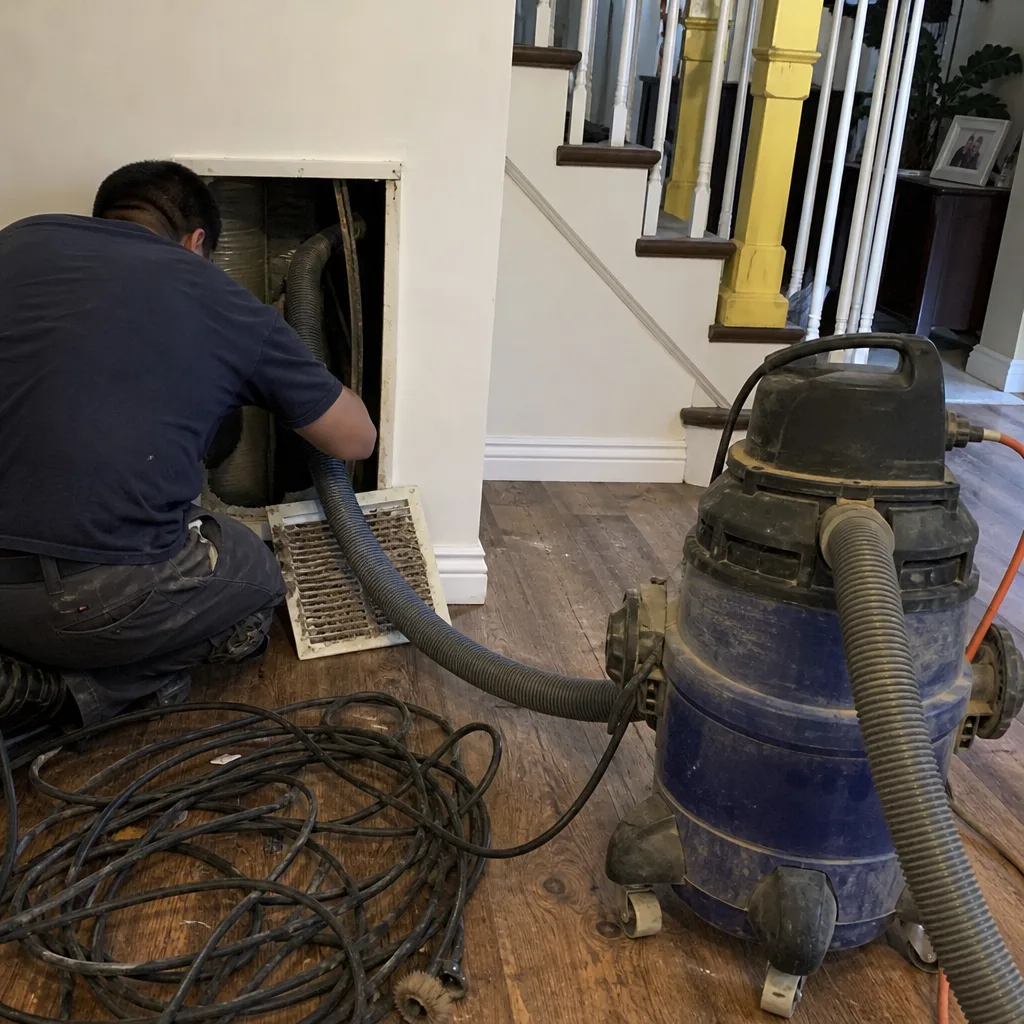 Before
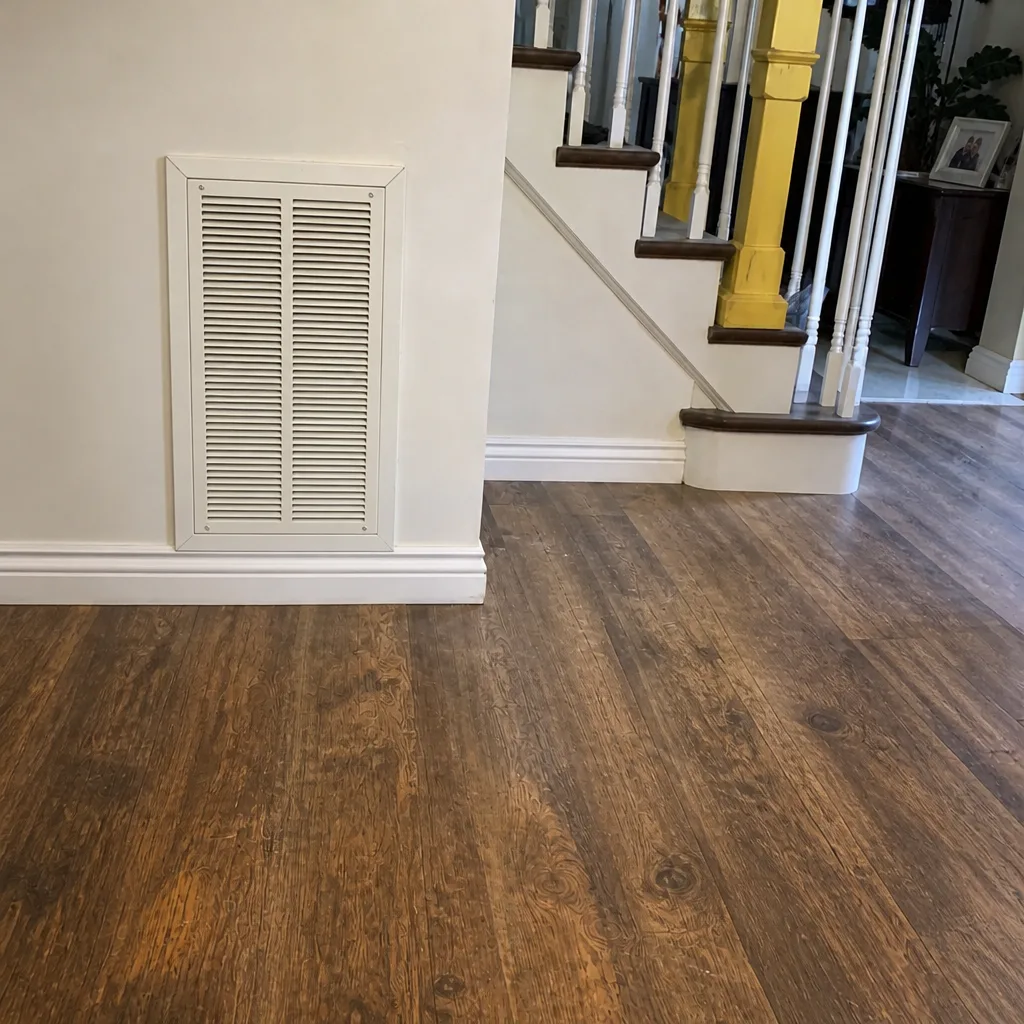 After
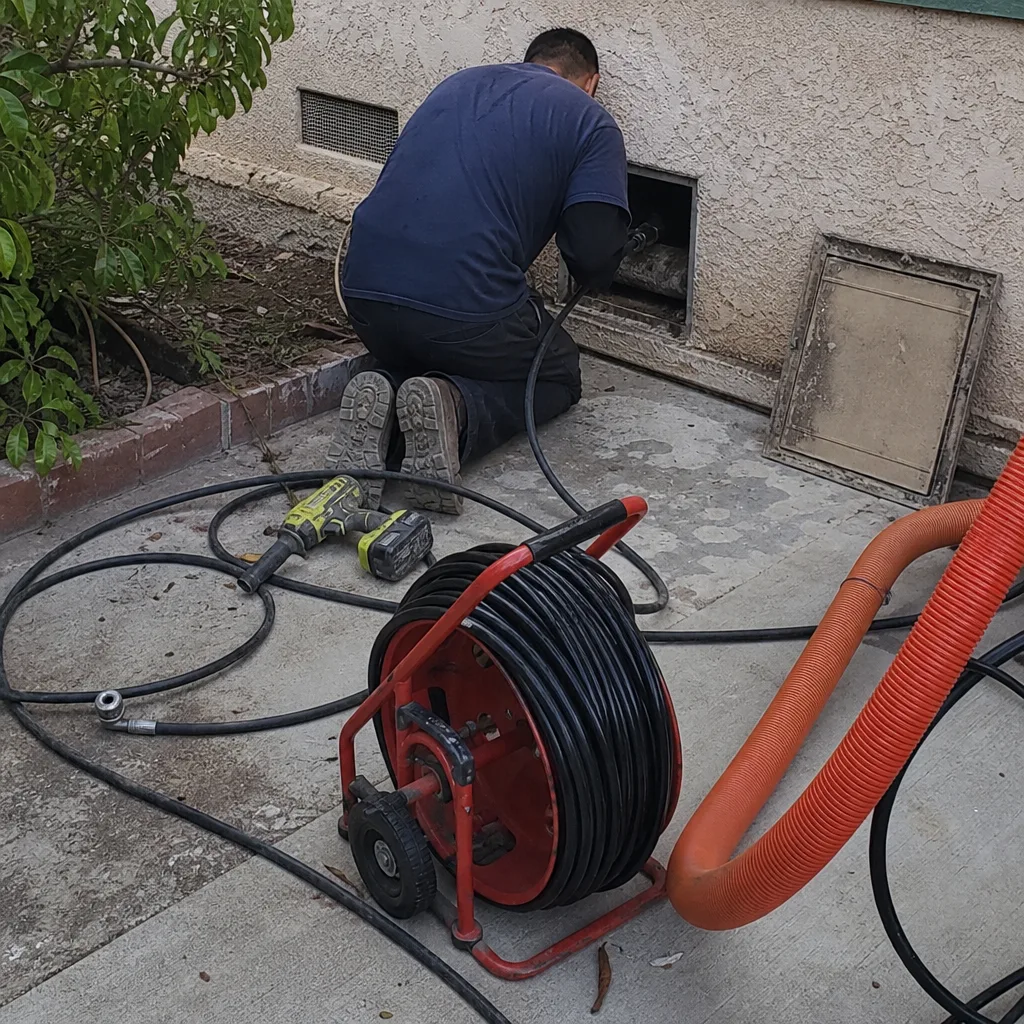 Before
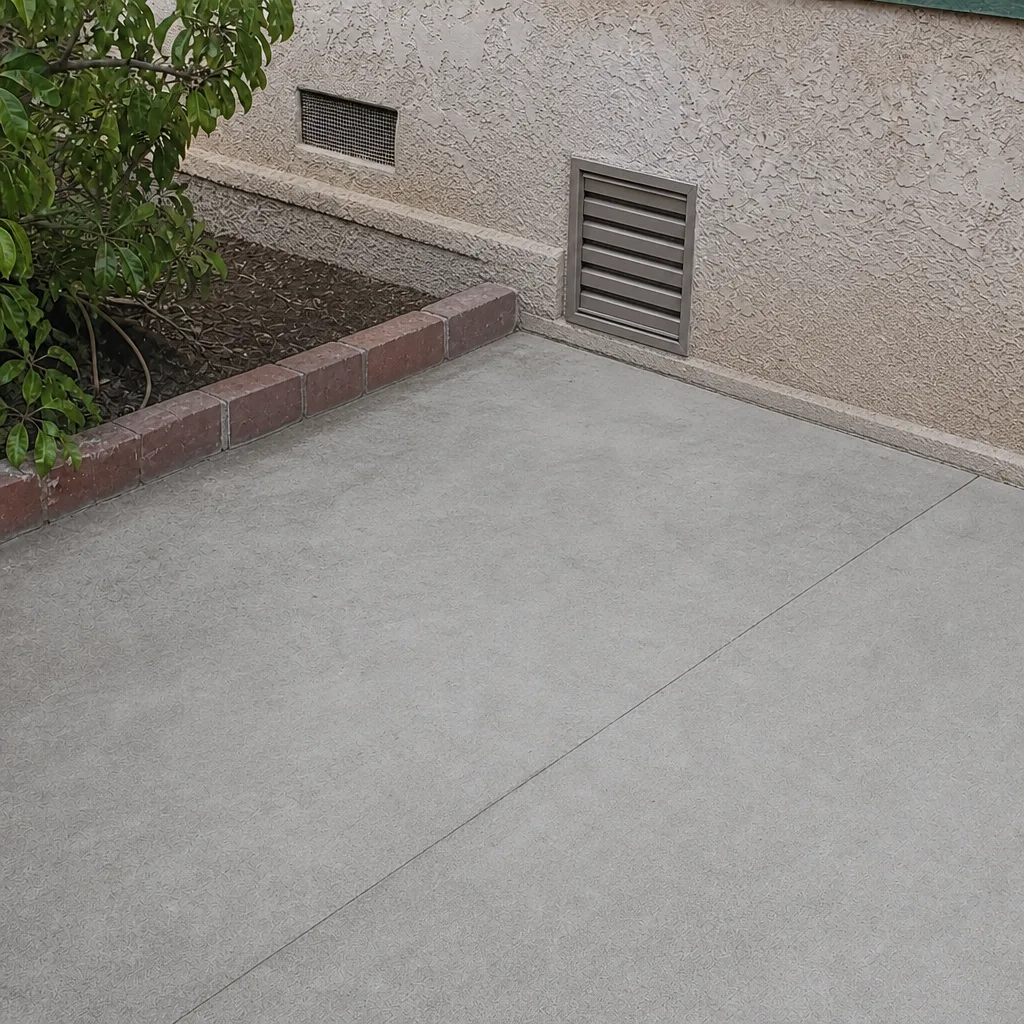 After
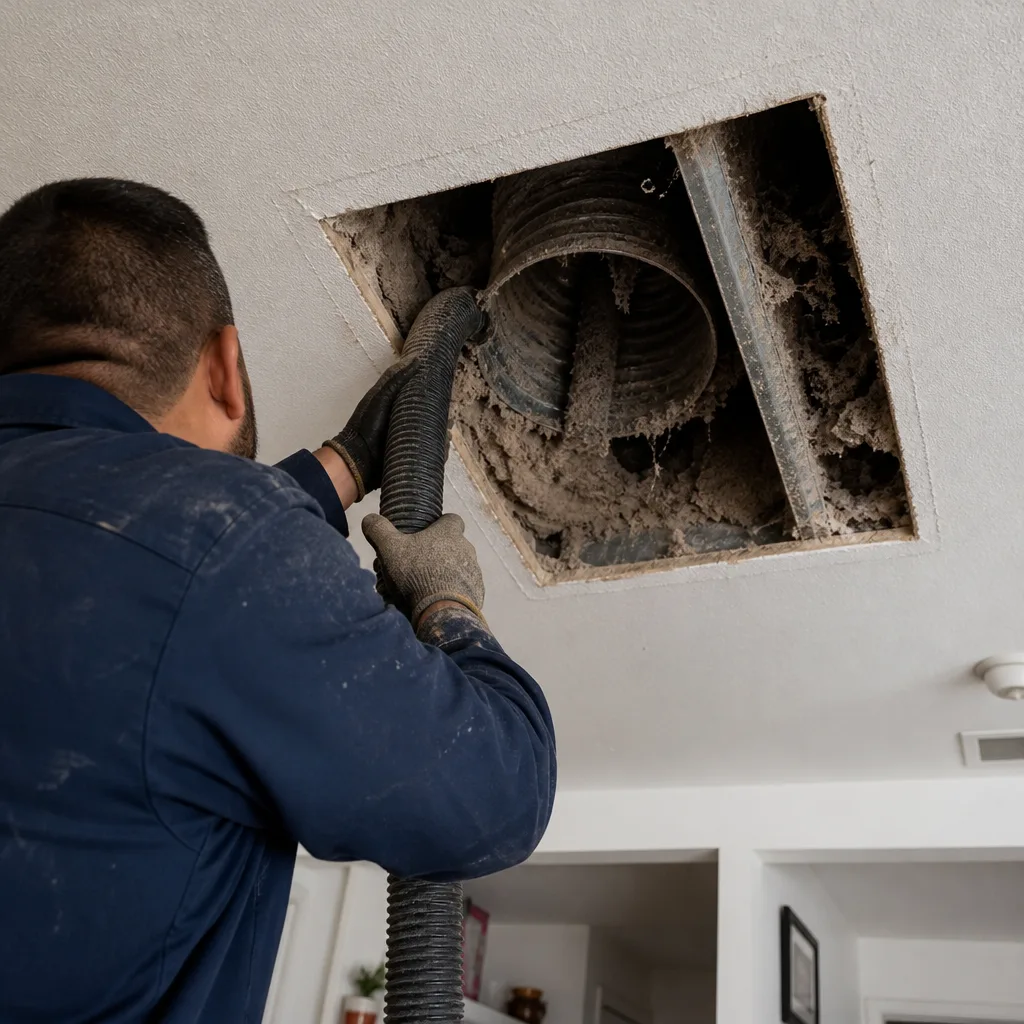 Before
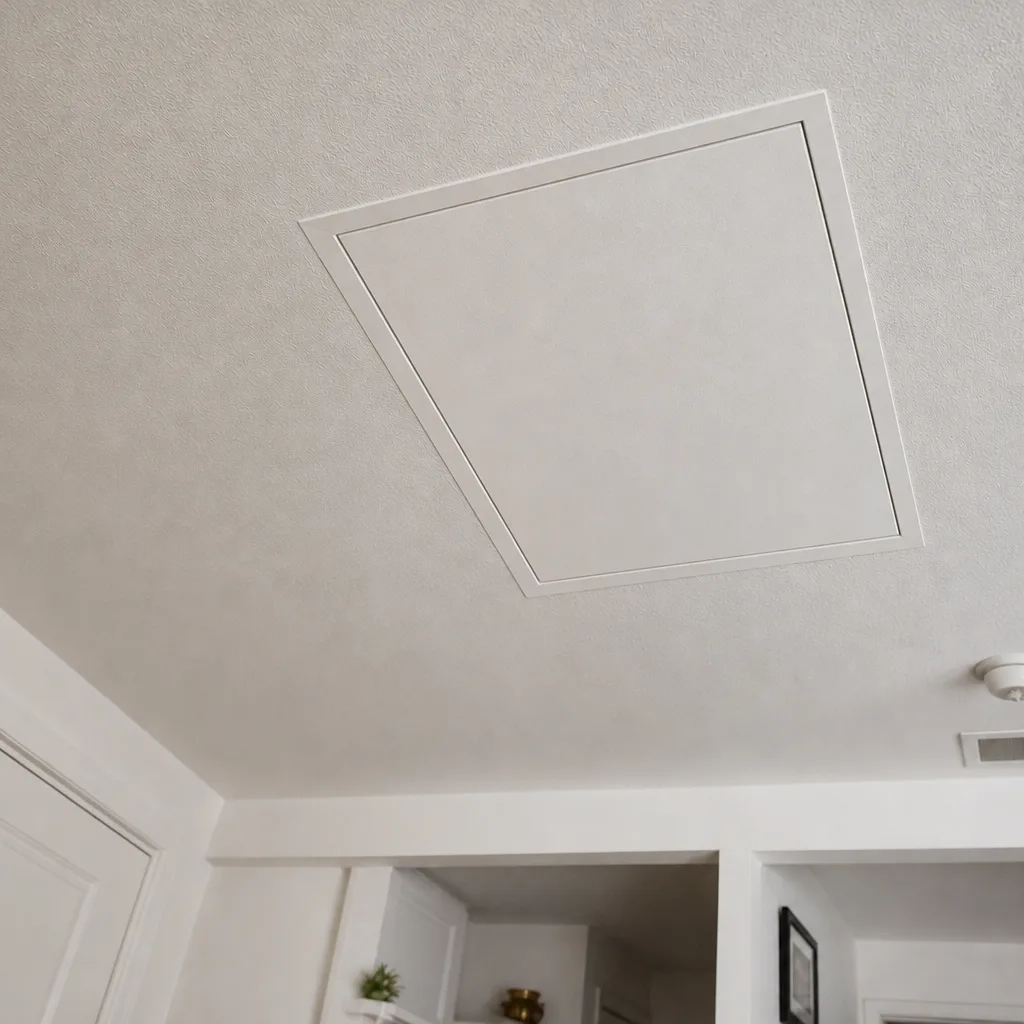 After